



 واتساب
 تویتر
تویتر
 فيسبوك
 يوتيوب
 انستغرام
 نبض
نبض
 ثريدز
ثريدز


 Messenger
 Email
Email
 Print
Print
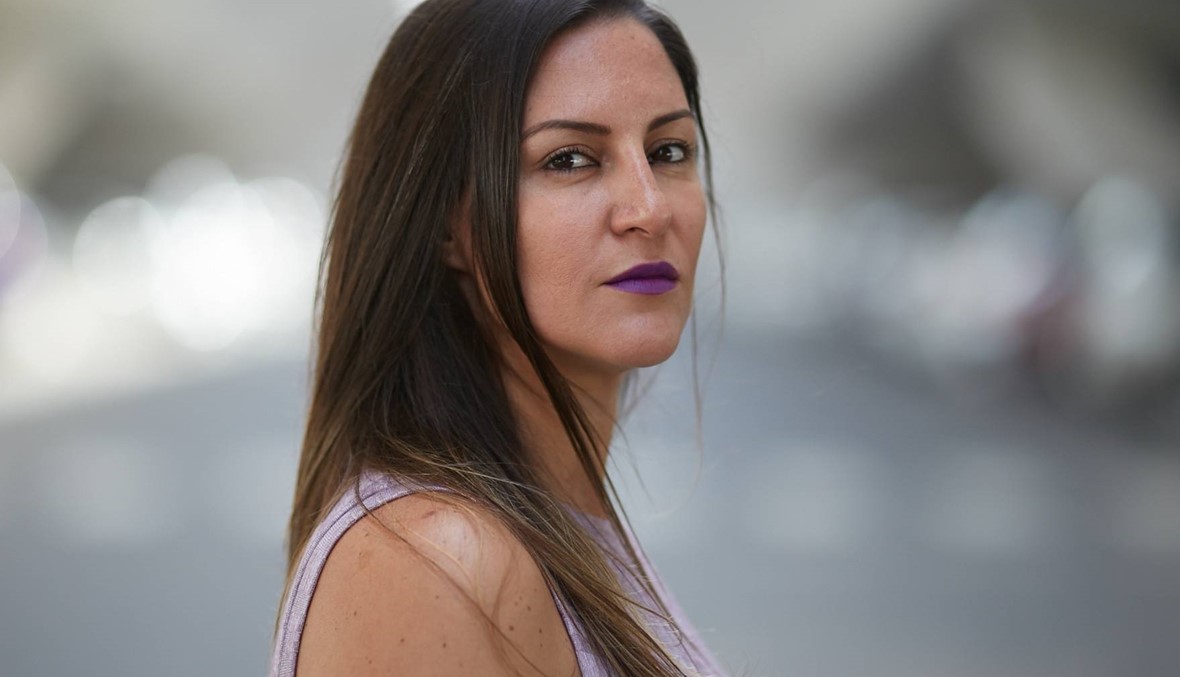


BEIRUT: From death comes life, sometimes. In the case of Zeina Hashem Beck, her poetic life began when, as a child, she read Victor Hugo's elegy Demain, dès l'Aube, and reenacted his daughter's funeral, by reciting, kneeling, pretending, and feeling.
“When I was young, the women around me were storytellers, especially my mother, and I feel that was the earliest poetry I encountered, from my mother and the neighbors and even the noise of the street was poetry,” she said.
Beck is a Lebanese poet who writes in both English and Arabic. Her first collection, To Live in Autumn (2014); won the 2013 Backwaters Prize; her chapbook, 3arabi Song (2016) won the 2016 Rattle Chapbook Prize, and her chapbook There Was and How Much There Was (2016); was a smith|doorstop Laureate’s Choice, selected by Carol Ann Duffy. She won the 2016 May Sarton New Hampshire Poetry Prize for her second full-length collection, Louder than Hearts (2017).
Her work has won Best of the Net, been nominated for the Pushcart Prize, the Forward Prize, and has appeared in Ploughshares, Poetry, and The Rialto, among others.
Born and raised in Tripoli, Lebanon, Beck got her BA and MA in English Literature from the American University of Beirut. Her years in Beirut inspired her first collection To Live in Autumn. She describes it as “the Beirut collection,” which is compiled of poems that deal with the love/hate relationship with the city.
Then, Beck traveled to the Gulf and eventually settled with her family in Dubai. Currently, she performs her poetry both in the Middle East and internationally.
“I didn’t go to the states up until 2016, and I’m not Lebanese-American as many assume just because I write in English,” she said, adding that it frustrates her.
Her second collection, Louder than Hearts focuses on language and home. In fact, Beck incorporates a lot of Arabic words and transliterations in her poetry.
“I’m very much interested in language and what language can do. I like to play around, it’s a big playground that I like to play in,” she said.
At the moment, Beck is developing her own bilingual form known as “The Duet.” In this form, “the English lines are a poem in English, and the same goes for the Arabic lines. Both languages should also form a poem when read together.”
The title of the chapbook There Was and How Much There Was is a translation of the Arabic term “كان ياما كان” which usually is translated as “once upon a time”. This collection focuses on women. It features women from Beck’s own life such as her mother, grandmother, aunt, and neighbors. It also includes fictional and historical female figures as well.
“Every time I’d have these sittings with my women friends where we’d laugh and talk about everything and anything, I always think I must put this in a poem, this must be seen,” she told Annahar.
She was, however, keeping these poems private, as they were quite personal.
“I’m influenced by these women around me, but I was hiding them and hiding from them because some of them were quite personal. I didn’t feel like I could write them, so I wasn’t submitting them to literary magazines,” the poet said. “It wasn’t even in my mind to publish a book about women, I was just writing what came; a memory, a thought...” Beck said.
She also believes that women authors face criticism for writing about themes like motherhood and womanhood, as they are perceived as predictable, stereotypical, and cliché or that female writers should move past these themes in their writings. Nonetheless, these are important issues and stories that need to be told and heard.
“This is a sort of thing that I had to tell myself, that it is okay to write about motherhood, womanhood,” she explained.
It wasn’t until Beck met Carol Ann Duffy at the Arab Lit Fest who recognized her from a poem she had published in the Rialto, which led to smith|doorstop soliciting her to write a chapbook, that she agreed to share these poems about women.
In There Was and How Much There Was, Beck pays tribute to the women she grew up around, saying “thank you and I see you, I see what you’ve done, I see what you’ve been through.”
Regarding being labeled as a representative for Arab women, Beck debated the merits of the categorization and grouping of Arab women as “one thing.” To her, Arab women are much broader, eclectic, and impossible to squeeze under one title or representative.
“I do not represent all Arab women. People have to understand that there are multiple voices within the Arab Woman category that is imposed on us. We are so diverse and multiple, and we disagree. Arab women are not one thing.”
----------
Welcome to “Naya,” the newest addition to Annahar’s coverage. This section aims at fortifying Lebanese women’s voices by highlighting their talents, challenges, innovations, and women’s empowerment. We will also be reporting on the world of work, family, style, health, and culture. Naya is devoted to women of all generations-Naya Editor, Sally Farhat:
Naya on Social Media:
Twitter:@BeirutNaya
Instagram:@NayaBeirut