









 واتساب
 تویتر
تویتر
 فيسبوك
 يوتيوب
 انستغرام
 نبض
نبض
 ثريدز
ثريدز


 Messenger
 Email
Email
 Print
Print
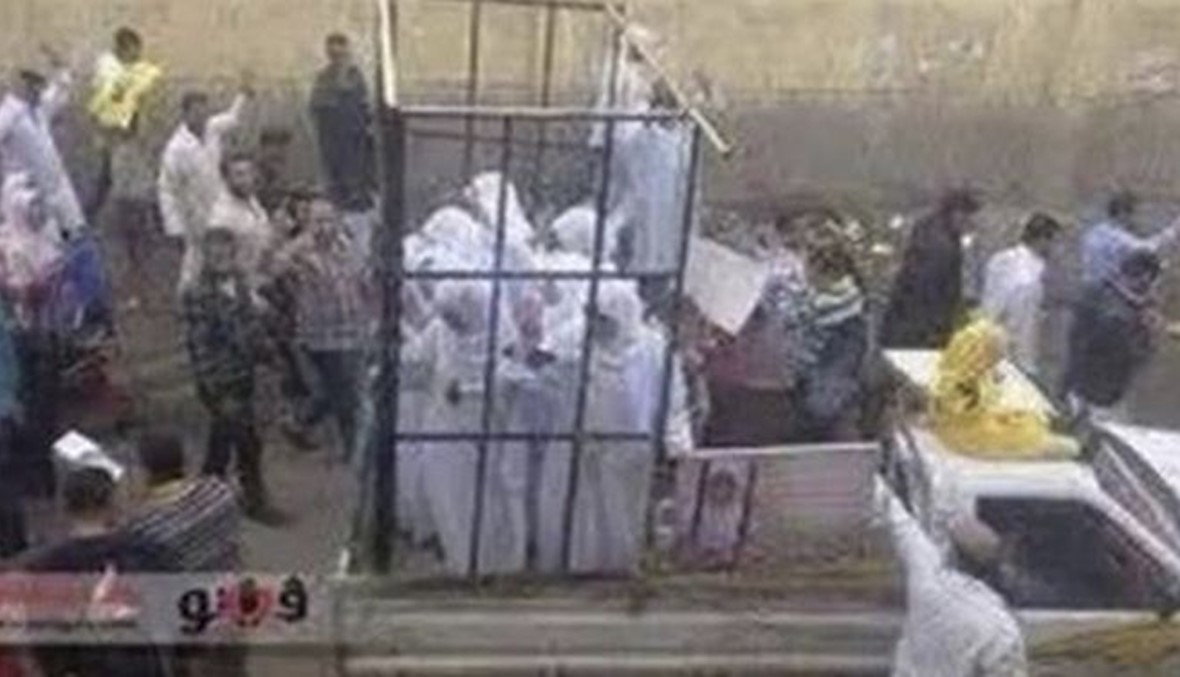


The wholesale sexual slavery of Yazidi girls by ISIS is abhorrent. But its shock factor, writes Miriam Awadallah, is tenfold when you examine the mute reaction of Arab governments who hold little regard for women's rights – just like the extremists they claim to loath.
A local northern Iraqi marketplace now has a new item for sale. And it's not the kind of shiny new import you would typically expect to see. Instead, it's a captured Yazidi girl from Sinjar, Iraq. Held for sale by the self-proclaimed "religious" militant jihadist organization ISIS, the outlook for the young girl's future is as dark as the group's black flag.
Amid a deafening silence from the Arab world, Yazidi women and girls are experiencing brutal sexual assault in the ISIS strongholds of Mosul, Iraq and Raqaa, Syria. While there is no doubt of the large-scale human rights violations and war crimes inflicted upon thousands of Iraqis, young Yazidi women are bearing the brunt of ISIS' crimes. A recently released UN report estimates that at the end of August, ISIS had captured over 4,000 Yazidi women and children. Upon their abduction, they then face two choices: convert to Islam or pay the price with lifetime imprisonment. The disturbing tale of the captured girls continues with witnesses who have recounted horrifying details of hundreds of Yazidi women being sold to ISIS fighters for as little as $10 and repeated rape if they refuse to cooperate. ISIS has even gone as far as to boast this situation as the "revival" of slavery in their propagandistic magazine "Dabiq."
Some Yazidi women, unable to bear the inhumanity, have begun to take their fate into their own hands. In an interview, internationally acclaimed Iraqi-Kurdish filmmaker and founder of the Association of Kurdish Filmmakers, Nawzad Shekhany, who is releasing a documentary detailing the genocide against the Yazidis entitled "The Black Massacre," expanded on this issue and said that "ISIS has begun to kill dozens of women for refusing to accept ISIS, while many of them have committed suicide to protect their dignity."
Building on the successful capture of the Yazidis, ISIS has begun to exploit these young girls in a perverted public outreach campaign to young Iraqis. Within the same UN report, witnesses told the story of a scene in Northern Iraq, in which Yazidi girls were herded like cattle into a marketplace. With price tags attached to them, they were sold to young Iraqi locals in order to entice them to join the ranks of ISIS—a method that Mr. Shekhany describes as providing "physical and sexual temptations to brainwash them on the issue of jihad." This only instills within young men the notion that women are a piece of property that can be bought, sold and controlled.
Little or no attention from Arab world Leaders
Several telling questions arise out of this ominous situation: Why is there even a market for buying young girls? Where is the initial demand stemming from? And more importantly, what does this situation expose about women's rights in the Middle East?
It only further begs the question of why this crime against humanity is not receiving more consistent attention in the Arab world? There is no doubt that Arab leaders have been loud in their denouncement of ISIS for their murderous crimes, but little attention has been placed on the plight of the Yazidi women and their mass sexual enslavement. While major Arab news media outlets have written extensive coverage of the issue, it has proved insufficient in propelling Arab leadership to effectively act and orchestrate a rescue operation in coordination with the United States.This points to bigger issues at play in regards to the overall status of women. Unfortunate as the circumstances may be, the situation of the Yazidi girls presents an opening for the Arab world to reevaluate the treatment of women in their societies.
The statistics are telling—a Thomas Reuters Foundation poll in 2013 found that conditions for women in the Arab states are some of the lowest in the world. For example, in Egypt, 99.3% of women are subject to sexual harassment and 63% of adult women are illiterate. In Iraq, only 14.5% of women are employed and in Lebanon, there is no law in place that prohibits sexual harassment in the workplace. Within the Palestinian territories, 26 women were slain by their families all in the name of honor in 2013—double from the year before. In order to begin a bold new chapter for women's rights, Arab leaders should make a collaborative effort to be at the forefront of holding ISIS fighters liable for the sexual violence committed against the Yazidi women. To strengthen efforts in countering the jihadist ideology, this must be coupled with serious educational reform and public information campaigns. Previously, leading Arab authors and thinkers such as Dr. Abdul Hamid Al Ansari and Mona Elthaway have tackled the issue of women's rights in the Middle East, but little traction has been made in pushing forward serious reform. It is time for discussion of women's issues in the public square and this begins with the next generation—there has been silence and lack of thoughtful discussion for too long.
Beginning at the appropriate age, public schools can begin discussing relevant women's issues to foster the development of an environment where abuse against women is not tolerated. While this form of educational initiatives at a young age may seem inappropriate to more conservative-minded individuals, the UN Women's 57th Session of the Commission on the Status of Women concluded that preventive measures at the elementary-school age are the best means possible in eradicating gender-based discrimination. Smart educational policy can be revolutionary and transformative for the political and economic landscape of the Middle East—women in the Middle East must be given the opportunity to realize their true potential. Only then will the likelihood for true advancement and prosperity return to the Middle East.
A glimmer of hope shines in the Gulf. Major Mariam al-Mansouri has recently received her crowning glory as the first female fighter pilot of the United Arab Emirates. Her success is an example to all young Arab girls who hope to achieve their dreams and significantly contribute to society.
Yazidi girls have had this hope robbed from them—Arab society must implement the proper measures to ensure the prospect for a better future can be revived. We cannot allow this chance to continue to be deprived from hundreds of other women across the Middle East.
Miriam Awadallah is a Palestinian-American Middle East analyst who works at OneVoice in New York. She holds an MA in Public and International Affairs and a BA in International Affairs and Middle East Studies from George Washington University. She also blogs for the Huffington Post on issues related to the Israeli-Palestinian Conflict. Miriam tweets at @Miradallah