



 واتساب
 يوتيوب
 انستغرام
 نبض
نبض
 ثريدز
ثريدز
Winter Solstice: Celebrated since the dawn of time


شارك على
 مسنجر
مسنجر
 بريد إلكتروني
 الطباعة
شارك على


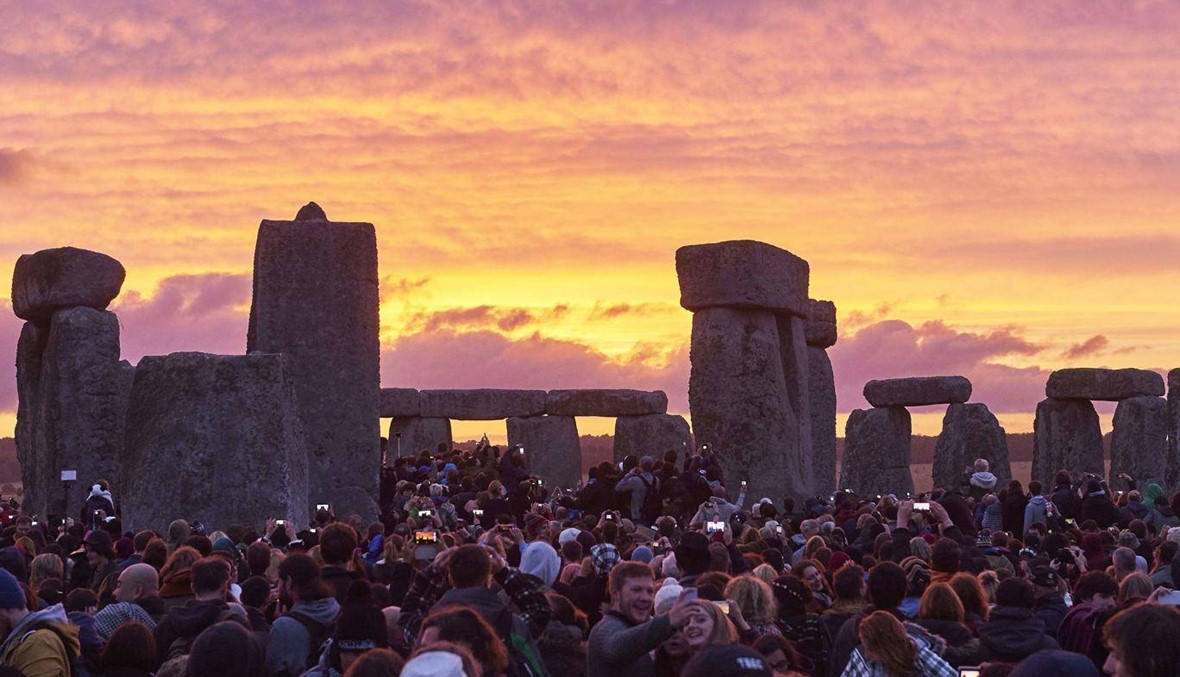


BEIRUT: This Thursday is the Winter Solstice for the northern hemisphere, meaning it is the shortest day of the year, and even more important for celebrants of various walks - the longest night.
Thus it is not only the official beginning of the winter, but since ancient times,has been a day, and a night, for celebration. Recognizing the importance of the solstice come not only from recognizing how life is tied to the cycles of the Sun and Moon, but to the celestial music of the spheres. This custom has roots running back thousands of years in accord with the importance of the season for everything from growing food, living in comfort through the winter, to falling in love during certain seasons and understanding that after the winter hibernation period comes the re-growth and rebirth of the spring.
Stonehenge in England is a neolothithinc monument of large stones, set to record the seasons of the sun, that is almost 5,000 years old. More recent in cultural history is that during this same
time of the year, the Romans held their raucous Saturnalia, which was a "good bye to flesh" before the relatively leaner times of the winter. The history of Saturnalia goes back 2,000 years or more.
Without knowing exactly what festivities as such occurred at the Stonehenge, the more modern recreations of pagan practices mirror in part possible celebrations of millennia ago, though there are no written or artistic records from the time, to know exactly.
That said, not knowing, gives a certain freedom to Pagan celebrants, and allied Solstice groups such as Witches, to throw their celebrations as best they see fit.
Paganism and Witchcraft, to dispel any certain prejudices, are simply believers in the power of the natural world, including the Sun, Moon and the Earth as the centers of their belief system. Some refer to belief to the "Wheel," meaning the cycles of the year and the larger cycles of life and the universe itself.
For the solstice, Pagans and Witches are out in numbers at this ancient stone monolith - and judging from the TV, newspaper, and YouTube coverage, are having a bit of harmless fun, chanting, casting love and peace spells and wishing the Earth well for its spring rebirth.
For Thursday, the Sun comes up at 6:38 am and sets at 4:32 pm in Beirut.
Many will not think overly much about the historical nature of the day -- let alone show any particular acknowledgment - instead, they will depart work and get into their daily traffic jam, driving in the early dark of a winter afternoon...
But around town, there will be a variety of observations and festivities for a holiday mixing for the night.
Music is a fit, if not more fitting way, for reflection and spiritual uplift, on this long evening – tonight from 8-10 pm, at Eglise, St. Joseph des Peres, Jesuites, Rue, Achrafieh, there is an “Un Noel Baroque,” performed by the USJ Choir.
This is part of the Beirut Chants presentation, with Nadinne Nassar, soprano, Michel Bou Rjeily, contrentor, Haitham Haidar, tenor, and Bassam Aboud, basse. All are members of the Lebanese Philharmonic Orchestra.
In the region of Iran and for those Iranians visiting Beirut at the moment, there is the equivalent celebration of Shab-e-Yalda, or “night of birth.” According to custom, it is believed that there is a certain amount of evil lurking during the long night, and celebrants stay up to protect and watch each other. But it’s not all doom and gloom as while keeping an eye on things, family members feast on nuts and more, read poetry and show charity.
This is the time of year, for those who practice Paganism – again which they just consider an Earth religion – to celebrate the Yule period (which might sound familiar!) The Yule is marked as the sun’s rebirth and the beginning of a new solar year.
The Yule log, which has long since become a practice of the Christmas season, is a key part of the celebration, with the log traditionally a large piece of timber, and includes in the fire wood not entirely burned from the previous year.
The end and the start, all at once.

العلامات الدالة
الأكثر قراءة