





 يوتيوب
 انستغرام
 نبض
نبض
 ثريدز
ثريدز
Box Office Justice, Alan Mehanna delivers verdicts in his new show


شارك على
 مسنجر
مسنجر
 واتساب
 بريد إلكتروني
 الطباعة
شارك على


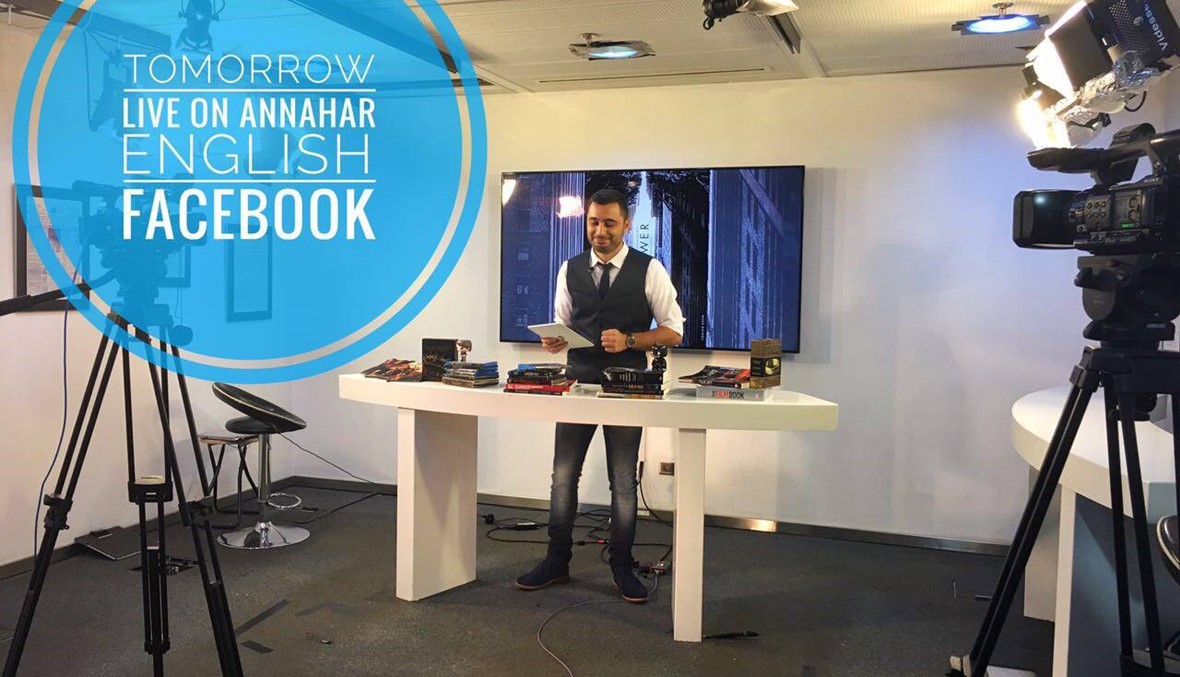


BEIRUT: Cinema maven Alan Mehanna’s meticulously checks each part of the set prior to going live with his introductory show Box Office Justice, streamed through Annahar English's Facebook Page.
The weekly show, which kicked off on August 25, places Mehanna at center screen where he lays judgment upon newly released movies and series alike, a perfect adjunct to his popular weekly written column.
“Anyone got this feeling that this summer’s blockbusters were no-busters?” he asked
The target audience of the show consists of informed individuals who understand the ins-and-outs of the entertainment industry, as well as film students and writers alike, “while keeping the content as accessible as possible,” Mehanna noted.
The young film critic sees hefty movie releases en route with “November quickly coming, accompanied with what Christmas season will offer, thus there is a lot of work and 'judgment' to be done on the movies coming out this year,” he said.
The show's format will range between Mehanna as sole talent to the more classic panel discussion on movies and things film.
For his weekly column, Mehanna decided to change up the generic numerical grade for movies, which is well-known from Rotten Tomatoes and Letterboxd, so he got the idea to use Annahar’s rooster logo for a similar scale that would be “visually pleasing” and “unique.”

“I turned the Annahar logo into a rating which is true to this newspaper,” Mehanna stated.
He currently runs his own website, where he blogs with other fellow screenwriters or film amateurs while linking his column to it. In parallel, Mehanna is rewriting a feature film and soon to be releasing his poetry book later this year with a possible radio show on the way.
The filmmaker completed his film studies at the University of Tampa in the U.S., where he later pursued his Master’s degree in Creative Writing in Media, at Full Sail University. This provided him with the necessary cultural know-how of film theory and the mastery of movies.
“When you study film, it becomes part of you; so you critique movies and look at them in ways that other people don’t,” Mehanna said.
The movie business is not a stranger to his parentage, as his father, Tony Mehanna, is a known longtime Lebanese actor familiar to several generations in his performances across the stages of TV, film, and theatre.
While in Mehanna’s case, he considers acting as just a hobby.
Currently, he teaches film and screenwriting at both the Antonine University and American University of Science and Technology.
To many, Mehanna is known for his appearance on the Middle East Airlines’ safety video, featuring him as the English speaking narrator, as troops of dancers and actors swirl in the background of not only Baalbek, but also featuring Pigeon Rocks, and the Lebanese Mountain Trail.
In his latest written critiques, he reviews HBO’s popular series Game of Thrones, now in its 7th season, as well as various summer movie releases. He described Christopher Nolan’s critically acclaimed “Dunkirk” as “a bleak visual masterpiece that divides audiences upon the cinematic battlefield.”
Mehanna does not hesitate to praise local talent, attributing Hadi Ghandour’s directorial vision in “The Traveler” to have a “Wes Anderson feel which is rather refreshing to see in Lebanese cinema.”
“I am not here to discourage, but I am here to expose, and shed light in a clean diplomatic way with some sarcasm on all things related to the film and TV industry locally and globally,” the film critic told Annahar.
Box Office Justice “delivers justice” to the small and big screen industry, specifically in Lebanon by not just giving an opinion, but aslo informing the audience of the mechanics behind the film, to evaluate it and its genre.
“If a director tells an actor as big as Meryl Streep to be quiet and do it again, she'll be quiet and do it again,” Mehanna pointed out. He considers the Lebanese film scene to be in dire need of serious discipline and humbleness from all the people on set or as his favorite university professor, Tom Garrett, said: “It takes a village to make a movie.”
Mehanna highlighted that he has previously met a “fair number” of big-named American and British actors that regarded acting to be “just a job” and not a reason to have “gigantic egos.”
From a local perspective, he sees a lack of interest in Lebanese TV series from the “Game of Thrones, Breaking Bad, and House of Cards” generation, which is not interested in seeing another “love triangle” on Lebanese TV anymore.
Hence, producers need to start curating to the younger generation, “we need to critique local films because we should be raising the caliber of Lebanese cinema. I don’t want to live in a world where talented filmmakers in Lebanon are looked over,” he added.
The film critic ceaselessly reminds his students “to never forget where they started” even if they temporarily go abroad. “Lebanon’s film and TV industry are constantly in need of fresh new talent,” Mehanna told Annahar.
العلامات الدالة
الأكثر قراءة