






 واتساب
 تویتر
تویتر
 فيسبوك
 يوتيوب
 انستغرام
 نبض
نبض
 ثريدز
ثريدز
The conflict between the mini and legitimate states


 Messenger
 Email
Email
 Print
Print
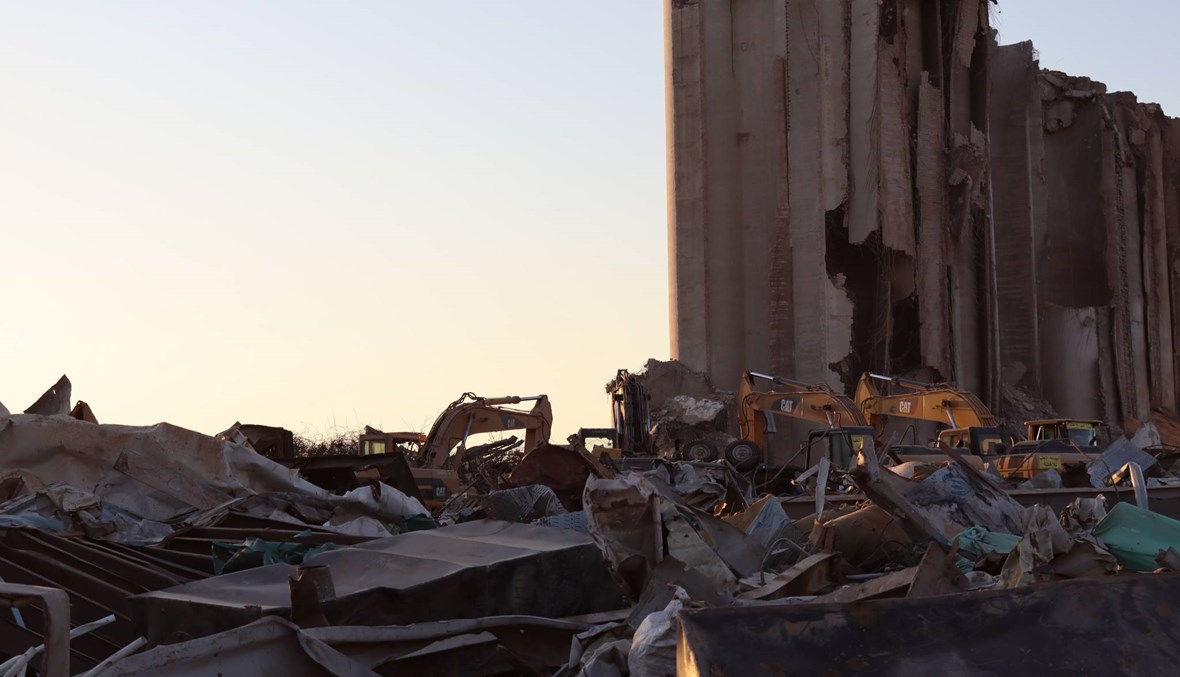


The heated controversy over the dangers of Hezbollah's arms depots emphasizes the impossibility of coexistence between a revolutionary mini state alongside the legitimate state.
On the one hand, criticism against the Maronite Patriarch Bechara Boutros al-Rahi is uncalled for. All what he said is that the authorities have the duty to reassure the public that the storage of weapons and ammunition belonging to militias do not pose a threat to the population. He did not name Hezbollah. But the Iranian-backed party is the only militia that declares that it has heavy weapons.
The Patriarch's demand came in the wake of the huge blast at Beirut port. He did not capitalize on the explosion, as his critics claim. His demand is most legitimate.
Moreover, Sayed Hassan Nasrallah has repeatedly told us that his organization stores thousands of missiles inside Lebanon. He also said that his party manufactures precision guided missiles on Lebanese territory.
Even without the blast at Beirut port, such declarations alone warrant an immediate investigation by the legitimate state to ensure that the weapons are not stored in locations that pose a threat to the civilian population. The explosion at the port only highlighted the urgency of the issue.
On the other hand, Hezbollah, the revolutionary mini state, may argue that revealing the location of its arms depots, even to a trusted ally like President Michel Aoun, is a sensitive issue that could threaten the security of the party. The party demands that it should be trusted that it treats public safety as a top priority in the handling of its weapons.
President Aoun, being a loyal supporter of Hezbollah, may accept its argument. But, with the divide between the president and the people widening, especially following the port blast, it is doubtful whether he can convince the majority of Lebanese to accept Hezbollah's reassurances.
Still, the fact that someone with the weight and authority of the Maronite Patriarch is the one raising the issue gives it added implication. The Patriarch echoes the fears of the vast majority of Lebanese. This includes supporters of Hezbollah. The warnings of the Patriarch may make them suddenly aware that they may be living on top of a huge arms depot that rivals in its destructive power the port bomb.
Moreover, accusations against the Patriarch of collusion with Israel only demonstrate Hezbollah's lack of any logical response to his argument. Invoking accusations of "betrayal" in response to legitimates issue raised by the Patriarch only weakens the revolutionary mini state, and demonstrates the difficulty of coexistence between the two.
At the end of the day, only one state will prevail. Hezbollah is working according to a long-range scheme that uses the Palestinian issue only as an expedient justification. Its true aim envisions a confederation between Lebanon, Syria and Iraq, dominated by Iran. The Maronite Patriarch, on the other hand, is working on recreating a neutral Lebanese state that distances itself from regional schemes and conflicts. The two visions are on two parallel courses. They cannot meet.