Crossing a Bridge Over a Disaster


شارك على
 مسنجر
مسنجر
 واتساب
 ثريدز
ثريدز
 بريد إلكتروني
 الطباعة
شارك على


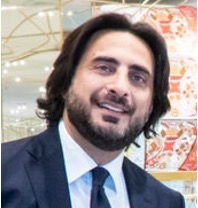
Pascal Abchee*
Looking at the state of the Lebanese economy today, one could say the situation is beyond remedy with a debt level in multiples of GDP, a negative trade balance blown up by an endemic grey market, 60% of the population living under the poverty level, with 35% in deep poverty status. But if we look beyond those disastrous numbers, we can also say that our debt value, when calculated at market value, is worth about 11 billion dollars which brings it down to about 100% of GDP, and our trade balance is still largely supported by 7 billion USD of yearly remittances from Lebanese diaspora. The national budget is full of overspending related to corruption or incompetence. We need to realize that the size of our economy is so small that any positive change will make a drastic difference.
Looking at the state of the Lebanese economy today, one could say the situation is beyond remedy with a debt level in multiples of GDP, a negative trade balance blown up by an endemic grey market, 60% of the population living under the poverty level, with 35% in deep poverty status. But if we look beyond those disastrous numbers, we can also say that our debt value, when calculated at market value, is worth about 11 billion dollars which brings it down to about 100% of GDP, and our trade balance is still largely supported by 7 billion USD of yearly remittances from Lebanese diaspora. The national budget is full of overspending related to corruption or incompetence. We need to realize that the size of our economy is so small that any positive change will make a drastic difference.
The question remains however, where to start from?
Any restructuring plan will carry a heavy burden on an already exhausted population. So, any successful plan will have to be clearly explained to the population through sectoral and regional consultations, multi-stakeholders dialogue and be supported by a transparent communication plan. The first measures will have to be social taking into account the immediate needs of the population in order to avoid a social explosion that will risk to destroy all forces of change. In parallel, a full restructuring of our fiscal and monetary policy will have to be implemented dealing with the government spending while negotiating with all stakeholders related to the debt. Only then we could start implementing a new economic vision for the nation taking into account our existing competitive advantages. All of this must aim for a deep transformation of our economic and social model shifting from a monopolistic neoliberal model to an open people-centric model. It all starts by redefining the role of the state from being a protector of the confessions to being at the service of citizens, all citizens, and their wellbeing.
1- Building a nationwide sustainable, reliable and inclusive social net
Any change will need to start by creating an appeased environment where people can support the needed sacrifices. Three core policies need to be implemented: a Compulsory Free Education program, a proper National healthcare system and a Universal revenue program.
A lot of money is already being spent on education and health care. The issue lies in the lack of planning, consolidation and, of course, badly allocated human resources. For example, in Lebanon, private schools operate with an average of 21 students per professor. Public schools operate with an average of 8 students per Professor. When we benchmark this with an OECD average of 26 students per professor, we realize how good our private schooling system is. We also realize that the poorly performing public system is being gangrened by politically driven staffing and mismanagement.
We, at LNA, have conducted a full study for the implementation of a Compulsory Free Education (CFE) system in Lebanon for all students till the secondary. And we then looked at the cost of integrating the Lebanese University to the program. The results of this study were astonishing.
In 2017, the government spent 1.2 billion dollars on education, while the implementation of a full-fledge CFE model would cost around 1.6 billion USD. Hence, the difference to be financed is only 400 million USD. A complementary study that was also conducted on the Capex to upgrade the infrastructure of public schooling, highlighted that 1 billion USD would suffice to bring it to OECD standards.
A similar study was done on our health system. In Lebanon, health coverage is fragmented and pluralistic leaving it to multiple agencies or insurance schemes for any coverage. Despite this high spending level, health indicators remain below the average of countries having similar spending levels and more than half of the population remains with poor social coverage depending on the MOPH and political clientelism. The state does not fulfill its role in health sector regulation and health policy setting, hence becomes just another health provider, subordinated to the private sector, and unable to properly manage the public services in terms of quality, accessibility, integration and inclusiveness. Whereas the total current government expenditure of 2,161 billion LBP forms around 14% of total budget (excluding debt service) for a low-quality and often unreliable service, a universal health coverage plan would increase that share to only 24 % of total budget. The increase due to instituting the new system (estimated at around 1,375 billion LBP) beside the social benefit expected out of it, also improves efficiency, as cost cutting resulting from increased bargaining power and control mechanisms, is estimated at around 10-20%.
Moreover, the transfer of the burden of health coverage from the labor factor to the capital factor in the economy, essentially removing a tax on labor and replacing it with a tax on a rentier activity, will liberate funds to be used in productive investment, thereby increasing GDP growth and ultimately government tax revenues.
Both plans will have to be worked in parallel with a full reorganization of the human resources, coupled with a strong training program and supported by a strong IT system. A Unique ID number, the one used on the Lebanese identity card for example, will help identifying any citizen across all programs limiting any risk of abuse. Of course, some people will suffer during this process due to the long history of political recruitment. But since our vision is a vision of an appeased society and we intend to Leave No One Behind, we also propose a universal model scheme. This Universal revenue shall be designed to cover the needs of all families to sustain through these times of transition and later allow any citizen to feel safe enough to make his/her own transitions smooth. The estimate for such a plan range between 1,2 billion USD to 2 billion USD depending on the extent we will choose to give to this program once all data will be available to us.
Those numbers might seem extraordinary, yet once we put them in perspective of the actual government spending, it is shocking to see how realistic they become. For example, if we add all three schemes, total needs will add up to about 6 billion USD, which as per the government is about the same amount spent on unnecessary subventions on imported goods which, beyond of their value, drain our foreign accounts.
Beyond the social impact, one needs to account to the amount of money that is freed in the private sector which will be used for the replenishment of their resources and financing future investments. Both macro and micro economic impacts will be positive.
2- Dealing with the currency and liquidity crisis
Much has been said about this. Since October 2019, we have been highlighting the risks of a poorly planned payment freeze on our national debt. Back then, we recommended to negotiate that exit with all stakeholders as all would have had to face the reality of the state’s incapacity to continue paying as per the set terms. Today, not much has changed other than the government stopped the payments on their external debt without an exit strategy, leading to a free fall of the Lebanese currency and the total paralysis of the economy.
Beyond the trust issue which is the backbone of any currency, we are lacking the inflow of dollars from all international organizations due to their mistrust of all the actual political class. The banking system is also totally inefficient with little access to cash being Lebanese pounds or dollars. This created a cash-based economy leaving the government with little control over any transactions, diminishing its access to revenues and reinforcing corruption all along. In our opinion, no solution can be implemented without turning the banking system into an active actor of the economy. To do so, trust in the system is fundamental and this will happen when all actors being bankers or governmental institutions bare their responsibilities and accept to pay their fair share of the losses.
This will take place through a fair redistribution of the losses across the full monetary cycle from inter-government agencies, bank shareholders, and finally and only finally depositors. Small depositors if any left after the ongoing lirafication process shall be protected.
The banking sector shall be reorganized through consolidations first, then recapitalization. The total dilution of existing shareholders is not a pre-requisite. As social-democrats we believe that this can only be achieved through all actors working hand in hand under the supervision of the state.
A comprehensive plan must be agreed upon and clearly communicated. Once reevaluated to a fair value, a repayment plan for the national debt can be set in motion. Then and only then, dollar inflows can be expected outside of diaspora remittances. This will drive our national currency to be stabilized at first and then reinforced. We need to stay afar from any dollarization process that will in the long term weaken our capacity to adapt to our environment.
Finally, no trust can be established without proper accountability. An independent judicial system is at the core of any nation rebuilding effort. A law is currently under review at the parliament and as our political class is used to do, the judiciary commission at the parliament is working on emptying it of its substance. We all need to raise our voices now and exert all possible pressure as no positive change can take place if this law is not passed without any change.
3- Creating a new path to growth
Since always, Lebanon has been recognized for its excellent educational system and has been sadly a net exporter of talent and youth.
Having reinforced the educational system, we can reconnect our universities and technical schools to the private sector encouraging research and development and patent creations. This will push Lebanon in the knowledge economy, the most adapted model for our country and the best performing model worldwide. This doesn’t mean that traditional sectors such as agriculture or industry will be neglected. On the contrary, they will be empowered into value added production which will differentiate us by focusing on higher value products while maximizing our production through technology and research.
Concerning our historical stronghold, tourism, our model will not be only based on luxury tourism and will definitely not be focused on Beirut. Taking care of our environment will help us create a base for an alternative tourism where the preservation of our history and the beauty of our natural environment become an ever-valid reason to visit our country. A proper urban planning will be set to support that action.
Any vision or model for any given country is complex and must take into account so many aspects of the economy. And it must be flexible ever adapting to the new realities but two pillars must always be taken into account: social justice and sustainable growth for all stakeholders. The state’s role isn’t a role of a provider. Its role is to regulate and encourage a continuous conversation among all actors of the economy helping them find the proper solutions for their sectoral needs while keeping the interest of all citizens above everything. Long-term visibility and an appeased social environment will allow the private sector to mobilize and invest.
As it all might sound simplistic, we realize the complexity of the task. So many transformational decisions need to be taken. Taking such decisions in a normal environment is often difficult, even more so in a country as collapsed as ours. Yet change is an inevitable path. We are walking our way to change. And the first step on this path is realizing that we are not doomed. Solutions do exit.
*General Manager of commercial companies in Lebanon and Dubai.
Member of the Political Bureau of Lana, a Social Democratic Party.
He holds an MBA from George Washington University
العلامات الدالة
الأكثر قراءة
المشرق-العربي
12/11/2025 6:15:00 AM
قذائف المزّة والعمليتان اللتان لم يفصل بينهما شهر تحمل رسائل تحذيرية إلى الشرع وحكومته، والرسالة الأبرز مفادها أن القصر الرئاسي تحت مرمى الصواريخ.
المشرق-العربي
12/11/2025 2:25:00 AM
إنّها المرة الأولى التي تتهم المنظمة "حماس" وفصائل أخرى بارتكاب جرائم ضد الانسانية.
المشرق-العربي
12/11/2025 2:10:00 PM
شدد على ضرورة منح المحافظة حكماً ذاتياً داخلياً أو نوعاً من الإدارة الذاتية ضمن سوريا كوسيلة لحماية الأقليات وحقوقها.
اقتصاد وأعمال
12/11/2025 10:44:00 AM
تكمن أهمية هذا المشروع في أنه يحاول الموازنة بين 3 عوامل متناقضة: حاجات المودعين لاستعادة ودائعهم بالدولار الحقيقي، قدرة الدولة والمصارف على التمويل، وضبط الفجوة المالية الهائلة التي تستنزف الاقتصاد