
Fairuz and Ziad Rahbani: The story of a mother, son, and an exceptional artistic partnership.



شارك على
 مسنجر
 واتساب
 ثريدز
 بريد إلكتروني
 الطباعة
شارك على


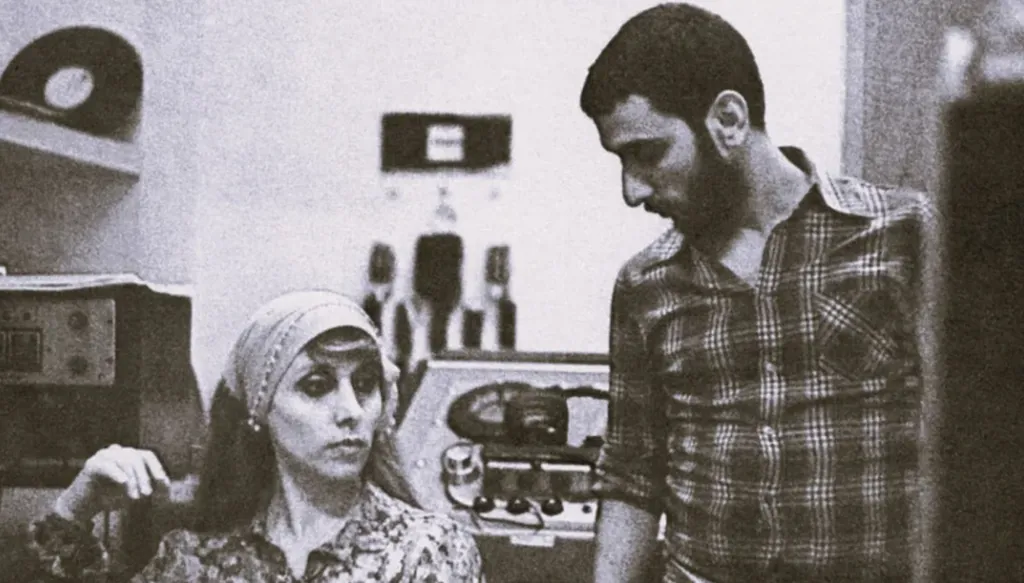


Fairuz’s turn toward jazz was, in itself, an unexpected leap. Guided by a restless artistic curiosity, she and the Rahbani brothers embraced a modern musical current in the 1950s, daring to break away from the dominant classical mold. Later, she would embark on an even bolder journey alongside her son, Ziad Rahbani. In a radio interview, Fairuz described Ziad with quiet certainty: “He is an artistic genius, drawing inspiration from the way he sees life, the homeland, and people.” She then sang a poem written by an Arab mother for her son—a hymn of tenderness that lingered in memory:
“How lovely the scent of a boy—
The scent of lavender drifting through the fields.
Are all children born this way?
Or was no one ever born before mine?”
The collaboration between Fairuz and Ziad was far more than a continuation of the Rahbani legacy; it was a creative upheaval and an artistic earthquake that redrew the lines between tradition and experiment, nostalgia and melancholy, class awareness and emotional candor. It was the natural evolution of the path Ziad had begun with “Sa’alouni al-Nas” in Al-Mahatta (1973).
When Ziad assumed full responsibility for composing and arranging his mother’s music after her separation from Assi and Mansour, Ziad shed the role of the dutiful son. He emerged from a turbulent, inventive artistic climate—born of a moment both fierce and fragile—into an art form seeking its own identity. He pulled Fairuz’s voice out of the romantic mountains and into the cafés and alleyways of the marginalized, where deprivation was sung aloud and social hypocrisy mocked. “Sobhi el-Jeez” was only one such example. In song after song, the shift became unmistakable: this was not the Fairuz engraved in the public’s collective memory. “Kifak enta” was so unexpected that even Fairuz herself hesitated before embracing it.
Ziad reshaped the immaculate image crafted by the Rahbani brothers,not by tarnishing it, but through expansion. He knew precisely where the boundaries of “the queen” ended and where they could be gracefully broken. She trusted him completely, once saying: “Ziad is no longer the son of Assi the king and Fairuz the queen; he has become a great artist. I am ready to sing any melody he composes, because he is remarkable—one of the essential figures in Arabic song.”
In “Ma‘rifti Fik,” “Sabah w Masa,” “Shou Bkhaf,” and others, Fairuz sang of love, fury, betrayal, and tenderness shaped by sorrow. Through Ziad’s music, she stepped beyond the familiar image, proving she could slip into jazz, challenge conventions, and emerge timeless.
The meeting of Ziad and Fairuz was a shock to part of her audience. Who could have imagined her singing, “Stop blowing smoke in my face — even if you smoke ‘light’,” or “Kifak enta? Malla enta!”, or “I loved him, I didn’t love him, I didn’t even ask myself,” and before all of that, “There’s a man and his wife — and oh, how ugly his wife is!”
Who would have expected her to re-record her iconic hymn “Ya Maryam al-Bakr” to a jazz rhythm, or to gift Assi Rahbani a collection of songs in a renewed form on the album “To Assi”?
But the shock was necessary — a testament to the transformation of art from a safe haven into a space for risk, confrontation, and reinvention. For this reason, that chapter of Fairuz’s career remains a subject of debate, held with both affection and critique.

العلامات الدالة
الأكثر قراءة