Bridging continents: North Africa’s strategic role between Sub-Saharan Africa and Europe


شارك على
 مسنجر
مسنجر
 واتساب
 ثريدز
ثريدز
 بريد إلكتروني
 الطباعة
شارك على




Infrastructure projects linking North Africa with sub-Saharan African countries have been underway for years. These wide-ranging initiatives include road and maritime transport, gas pipelines, electrical grids, and fiber-optic networks.
These projects reflect North Africa’s strategic interest in strengthening its economic ties with sub-Saharan Africa, driven by the belief that the continent holds significant promise.
Reports are expected to indicate that economic growth in sub-Saharan countries such as Senegal, Uganda, Niger, Rwanda, and Ethiopia will exceed the 7% threshold by 2025.
Africa is rich in energy and mineral resources, including uranium and rare minerals. The continent’s median age is under twenty, and its population is projected to exceed 2.6 billion by 2050. This points to a young, productive workforce and a vast consumer market for decades to come. It is therefore no surprise that foreign powers are competing to expand their diplomatic, economic, and military influence across the continent.
North African countries see opportunities for expanding imports and exports by strengthening ties with sub-Saharan countries, reducing their excessive reliance on Europe, and mitigating the impact of protectionist measures affecting their products.
The region recognizes that it can secure a distinguished position in manufacturing and global supply chains by focusing on transformative industries that leverage the natural resources available south of the Sahara, as well as its geographical proximity to Europe.
Earlier this month, the Managing Director of the International Monetary Fund called on North African countries to forge closer ties with Europe and sub-Saharan African nations by launching projects that connect the three regions in the fields of industry, energy, and infrastructure. However, she emphasized that the region needs to reduce tax barriers to enhance trade with sub-Saharan countries.
In addition, a study by the International Monetary Fund revealed that strengthening economic ties among the three groups could increase North African exports by 16% and boost its GDP by 7%.
The connection between North and sub-Saharan Africa faces numerous challenges, including ongoing armed conflicts, such as the war in Sudan, and the rise of jihadist activities in both the Horn of Africa and West Africa. These security threats could hinder efforts to establish integrated logistics networks across the continent.
Another challenge lies in the lack of coordination among North African countries regarding their economic policies, making the region one of the least integrated in the world. While regional coordination mechanisms are taking hold south of the Sahara and European Union institutions are being reinforced, the ranks of the Arab Maghreb Union remain fragmented, caught in a stalemate that some describe as clinical death.
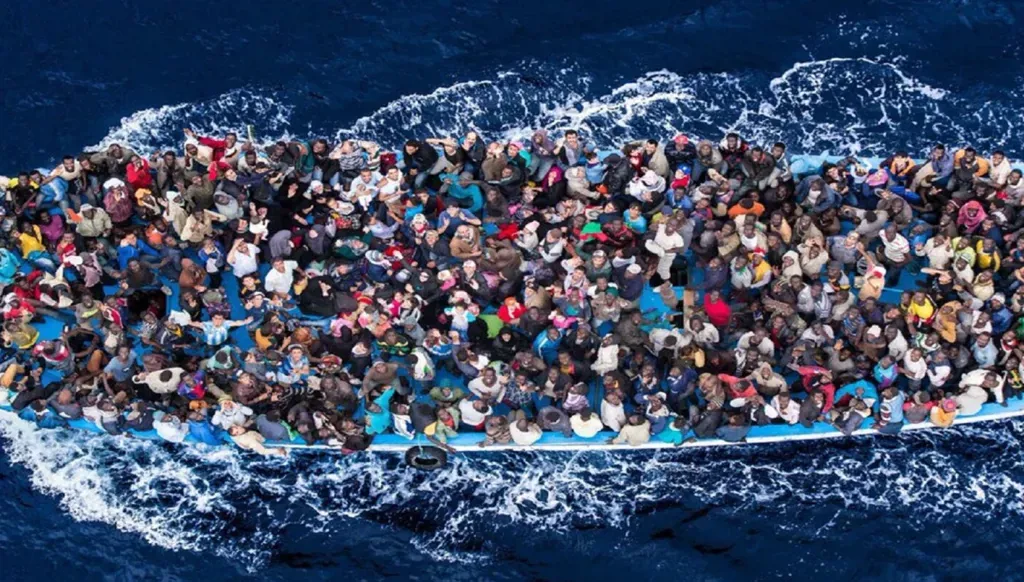
The third challenge is the outdated perception of Africa in the minds of many. While numerous business leaders and economic decision-makers see sub-Saharan Africa as a prime destination for projects and investments, a large segment of public opinion in the Maghreb remains focused on irregular migration from south of the Sahara, as people seek to fulfill their dream of reaching Europe. This perception may be the tree that hides the forest.
At the same time, many politicians in Europe tend to see the Maghreb merely as a buffer zone to curb irregular migration, rather than focusing on fulfilling the European Union’s commitments to invest in joint development across the two shores of the Mediterranean.
The shift south does not imply that the region should abandon its long-standing—albeit economically underdeveloped—ties with other Arab countries, nor should it forgo partnerships with Europe.
For North Africa, positioning itself between Africa and Europe is not a zero-sum game but a strategic necessity that serves its interests and allows it to adapt to a rapidly changing world.
Disclaimer: The opinions expressed by the writers are their own and do not necessarily represent the views of Annahar.
العلامات الدالة
الأكثر قراءة