U.S. exit from Al-Tanf signals new chapter in Syria

Opinion 13-02-2026 | 12:53

U.S. exit from Al-Tanf signals new chapter in Syria

Washington’s exit marks the end of a pivotal military presence, raising questions about regional security, Iranian influence, and the future of coalition operations.
U.S. exit from Al-Tanf signals new chapter in Syria
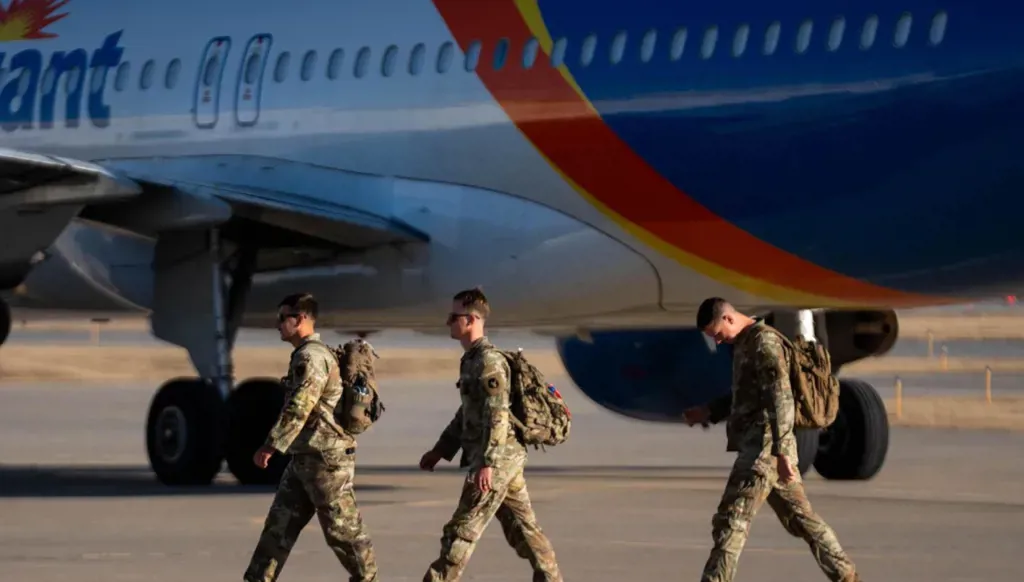
U.S. soldiers return to Iowa after completing missions in Syria and Iraq.
Smaller Bigger

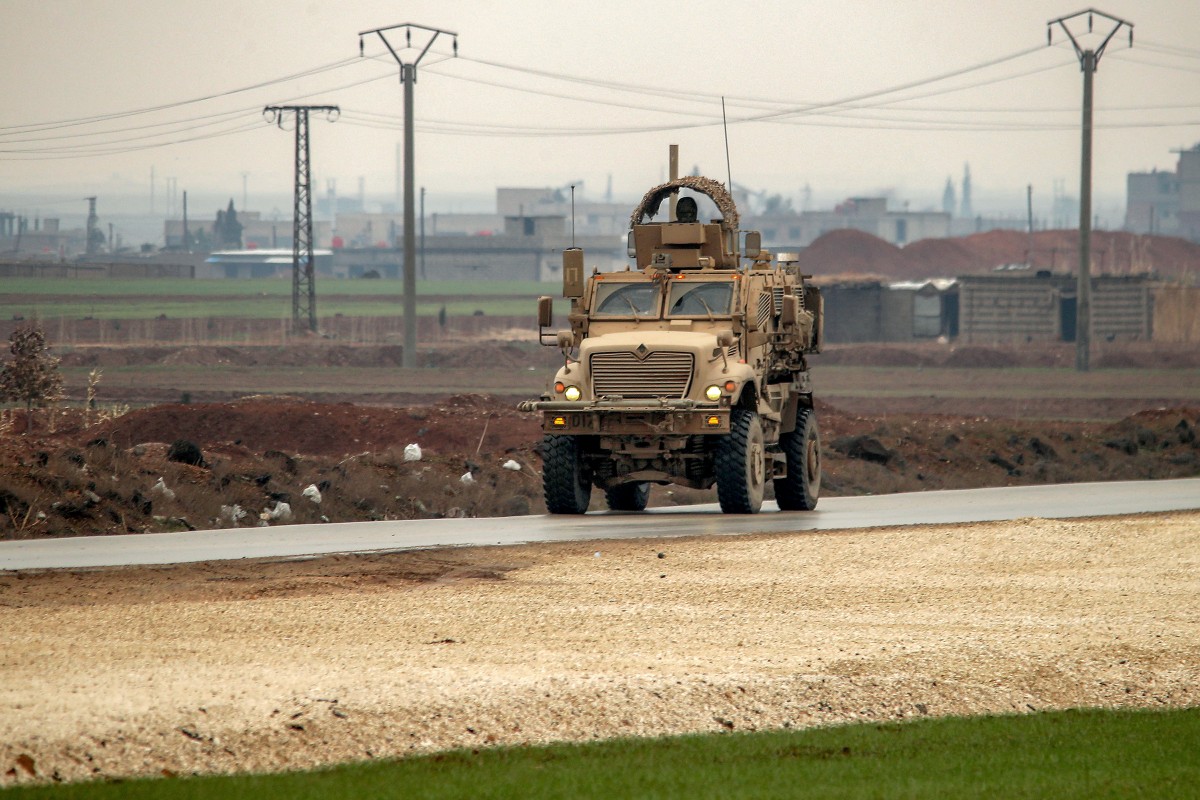
On Wednesday, U.S. forces departed the Al-Tanf base at the Syrian-Iraqi-Jordanian border triangle, relocating to Al-Burj base in Jordan, marking the end of a military presence that had lasted since 2016. The move concluded a long phase, while simultaneously revealing accumulating signs over the past months that Washington is rethinking its deployment strategy in Syria.


The evacuation came at a tense regional moment. On the same day, U.S. President Donald Trump met with Israeli Prime Minister Benjamin Netanyahu in Washington to discuss the stance on Iran, while Iraq witnessed rapid political movements, most notably the re-nomination of Nouri al-Maliki amid public opposition from Trump to this candidacy, as the potential for escalation grows in multiple arenas involving Iran and Lebanon. Although there are no indications of a direct link between these developments and the decision to evacuate Al-Tanf, their coincidence situates the move within a regional context undergoing rearrangement on several levels.


Repositioning in a turbulent regional context

On the ground, Reuters, citing two security sources, reported that U.S. forces vacated their Al-Tanf position and moved to Jordan. Over the past two weeks, American movements suggesting a broader repositioning beyond the south have been observed. U.S. forces have evacuated several bases in northeastern Syria and are preparing to leave other sites, reflecting a clear reduction in the scope of their military deployment in the country, without any official announcement of a full withdrawal.


These movements cannot be separated from the ongoing American debate over the years regarding the feasibility of remaining in Syria. Since 2018, when Donald Trump first announced his intention to withdraw U.S. forces, only to retract under military pressure, withdrawal has remained both an option and a deferred decision. Last month, however, leaks resurfaced about a serious study to end the military presence, coinciding with significant developments on the ground: Damascus joining the international coalition against ISIS, the withdrawal of the Syrian Democratic Forces from Deir Ez-zor and Raqqa and their concentration in Hasakah, along with changes in the management of prisons and camps housing the organization’s members. These developments have renewed questions about the justifications for maintaining the American presence in its previous form.


From a geographical complexity to a leverage tool

To understand the importance of this step, it is necessary to recall the role of the Al-Tanf base in the southern Syrian equation. Since the U.S. established its presence there in 2016, the site has served as a pivot point at the crossroads between Baghdad and Damascus beyond combating ISIS or monitoring the desert.


The history of the base explains how this role was solidified. The site did not become an active American base until March 2016, following the expulsion of ISIS from the area. Since then, Al-Tanf served as a training center for the “Revolutionary Commando,” which later evolved into the “Free Syrian Army,” before the latter integrated with the Ministries of Defense and Interior. Between 2016 and 2018, the base expanded, the surrounding buffer zone was established, and Washington began using it to block the land route Iran sought to secure. The base reached its peak between 2018 and 2021, becoming an undeclared “red line” in southern Syria. Its role, however, gradually declined with the reduced activity of ISIS in the desert, the weakening of the regime, and Iran’s withdrawal from Syria, amid shifting U.S. regional and international priorities.


Based on the above, evacuating the base is not merely a logistical maneuver but reflects a shift in how the United States manages its presence in Syria. Moving from positions within Syrian territory to locations beyond its borders signals a transition from “direct positioning” to “remote management,” especially as the original reasons for the base’s existence have diminished—primarily the elimination of ISIS’s territorial caliphate and Syria’s integration into the international coalition, which enables its military forces to conduct field operations with American intelligence and logistical support. This shift is further reinforced by reduced Iranian influence and the evolving mission focus from combating Iran directly to preventing its resurgence.


American armored vehicle accompanies a convoy transporting ISIS detainees from Syria to Iraq in Hasakah province. (AFP)


Syrian implications and open prospects

At the Syrian level, the evacuation of Al-Tanf carries significant implications. It closes the chapter on the American presence in the southern region, as the base had long served as a pivot point independent of the broader dynamics in Syria. With the operational role of the Syrian Democratic Forces reduced and the arrangements for prisons and camps altered, the deployment equation established in 2014 now appears less sustainable in its former form, even without an official statement from the Pentagon regarding a comprehensive strategic shift.


This step gains significance as the southern region is set to enter new security arrangements, amid discussions of a security agreement between Damascus and Tel Aviv, which would include a joint military mechanism and an operations center based in Jordan to monitor developments in the south. The impact on the Turkish military presence in the north remains unclear, particularly given the shifting rationale for that presence following the agreement between the Syrian Democratic Forces and Damascus.


Against this backdrop, the Russian presence on the coast continues, alongside a relative improvement in DamascusRussia relations. This remains a sensitive issue for Washington, particularly among circles that view the expansion of Russian or Iranian influence as a red line in the regional security equation, even as on-the-ground realities often call for less clear-cut settlements.


It remains unclear whether the Al-Tanf evacuation represents part of a broader American reconfiguration of military deployment in the region—shifting from direct presence to managing the balance through allies and foreign bases—or whether the reduced U.S. presence in Syria could create a vacuum in the desert, potentially exploitable by other forces, ranging from ISIS to regional actors seeking to reposition themselves in the Syrian arena.


But one thing is certain: the Al-Tanf base was not merely an isolated desert outpost, but a hallmark of the American presence in Syria. Its evacuation—along with that of other bases—raises a strategic question that cannot be ignored regarding the shape of the next phase.


Disclaimer: The opinions expressed by the writers are their own and do not necessarily represent the views of Annahar.


العلامات الدالة

الأكثر قراءة

ثقافة 4/19/2026 8:10:00 PM
إيرادات "سوبر ماريو غالاكسي" تقترب من 750 مليون دولار عالمياً.

لبنان 4/21/2026 10:32:00 AM
طهران تتمسّك بالسيطرة على القرارات الإستراتيجية اللبنانية، بما فيها قرار الحرب والسلم من خلال "حزب الله"، وتطالب بأداء حكومي يمتثل لترك القرار العسكريّ والأمنيّ الإستراتيجيّ في لبنان لمحور "الممانعة"