Mojtaba Khamenei’s first speech: Signals of continuity, conflict, and control in Iran
The first speech was strict, essentially a warlike address, delivered under extremely complex circumstances. This strictness reflects that Iran’s "hard core" remains committed to its rhetoric and military operations


شارك على
 مسنجر
مسنجر
 واتساب
 ثريدز
ثريدز
 بريد إلكتروني
 الطباعة
شارك على


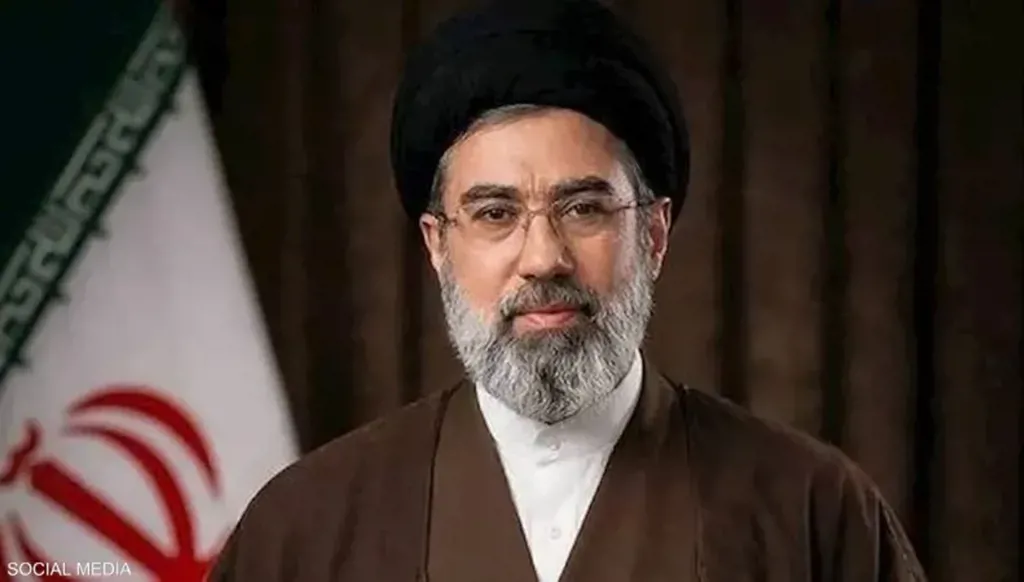


This is an important moment for Iran, as it conveys messages both domestically and internationally. In this context, Mojtaba Khamenei’s absence from his first public appearance, despite raising questions, is less harmful than showing him publicly while injured, as that could weaken the morale of supporters. A key point is that Mojtaba Khamenei would not have been appointed Supreme Leader of the Revolution if his father, the previous leader Ali Khamenei, had died a natural death. According to the prevailing norms in Shiite seminaries—whether in Najaf, Karbala, Qom, or Mashhad—religious authority is not passed from father to son, as such behavior is seen as a desire for leadership that contradicts piety.
There is also another important reason: the legitimacy of the Iranian revolution is based on rejecting political inheritance. The late Shah Mohammad Reza Pahlavi was overthrown to establish a republic, not a hereditary system. Iranians do not want to replace a crowned shah with another wearing a turban.
So what changed, and how did Mojtaba Khamenei become the third Supreme Leader?
The fundamental factor that brought about this radical change was the assassination of his father, in which several members of his family were also killed. This was a pivotal event in Iran, creating both a major leadership vacuum and a profound shock.
The current Supreme Leader now carries "the legitimacy of blood" as the "heir" whose father and several family members were killed. This "family-based legitimacy," steeped in "sacrifice" according to his followers’ narrative, was present in his first speech. He spoke of his late father, Ali Khamenei, describing how he visited him after his death, saying: "I had the honor of visiting his body after his martyrdom. What I saw was a mountain of strength, and I heard that his clenched hand remained firm."
It seems that Mojtaba Khamenei will continue to maintain the iron fist, emphasizing messages that form the pillars of his speech. The first is that he will follow in his father’s footsteps and avenge the death of the previous Supreme Leader as well as the leaders and Iranians who were killed alongside him. The second is the continuation of the war against the United States and Israel. The third is the ongoing targeting of American interests in the Gulf countries. Although he affirmed, "We have always been and remain keen to establish friendly and constructive relations with all these countries," he added that "the enemy has for years been establishing military and financial bases in some of these countries to consolidate its dominance over the region," implying that the Islamic Revolutionary Guard Corps will continue launching ballistic missiles and drones at Gulf states. These attacks have already caused civilian casualties and targeted energy, tourism, and economic infrastructure, undermining Iranian claims that they only target U.S. forces.
The fourth message in the speech was a salute to Iran’s allies in the Middle East, specifically Iraqi militias, Lebanon’s Hezbollah, and Yemen’s Houthis. This indicates that Tehran continues to rely on its proxy groups to become more engaged in regional conflicts, even though the Houthis have not yet participated.
The fifth important message was domestic: preserving unity among the people and their various factions and preventing any breach of that unity, with an emphasis on "overlooking points of disagreement." This reflects the Iranian regime’s desire to prevent internal rebellion, large-scale protests, or separatist movements among ethnic groups, particularly Kurds, Arabs, and Baloch. According to the U.S. Intelligence Community, the Iranian regime remains cohesive, and the new Supreme Leader aims to maintain that cohesion.
The first speech was strict, essentially a warlike address, delivered under extremely complex circumstances. This strictness reflects that Iran’s "hard core" remains committed to its rhetoric and military operations, without offering even a tangible goodwill initiative toward neighboring Arab countries.
Most importantly, the question is what policies will follow this speech. Will Tehran continue to expand the scope of the war, creating more chaos that would harm not only the region but Iran itself? In doing so, Tehran risks advancing Tel Aviv’s objectives rather than thwarting them.
Disclaimer: The opinions expressed by the writers are their own and do not necessarily represent the views of Annahar

العلامات الدالة
الأكثر قراءة