The night economy of Ramadan: How arab cities come alive after Iftar


شارك على
 مسنجر
مسنجر
 واتساب
 ثريدز
ثريدز
 بريد إلكتروني
 الطباعة
شارك على


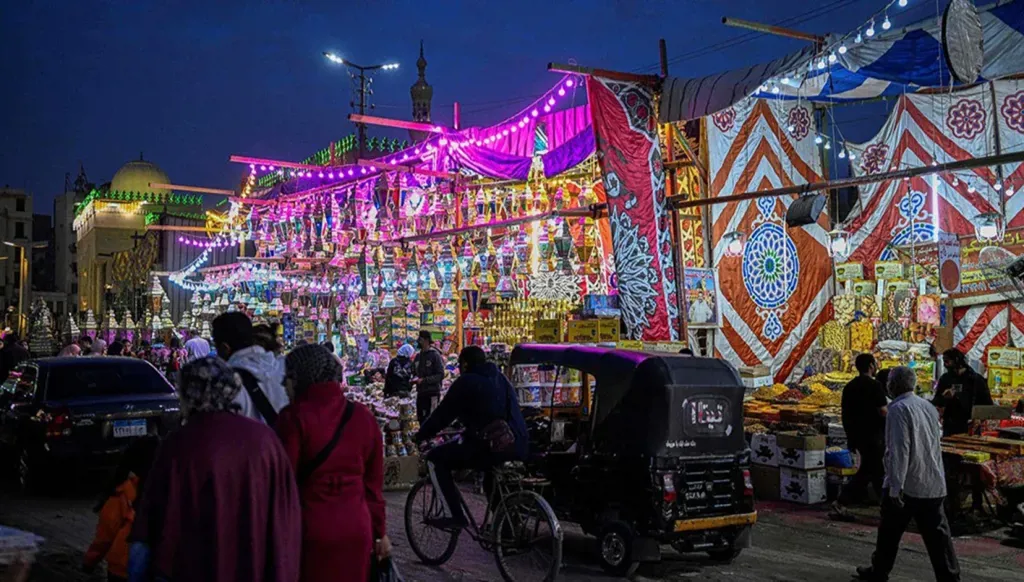


During Ramadan, it’s not just the amount of consumption that changes—it’s the timing as well. The daytime slows down relatively, while the period between Iftar and Suhoor becomes the heart of economic activity. This is what market experts call the "night economy": a full cycle of restaurants, cafés, sweet shops, shopping centers, traditional markets, delivery services, and digital commerce. In the Gulf, this pattern has moved beyond a social phenomenon to become a measurable economic trend.
The clearest evidence comes from payment data. According to an economic report by Visa, the share of transactions conducted between 10 p.m. and 4 a.m. rises sharply during Ramadan in the Gulf. In the United Arab Emirates, it increases from 15.9% in regular months to 26.9% during Ramadan. In Saudi Arabia, it jumps from 17.6% to 35%, and in Kuwait from 17.1% to 38.2%. These figures reflect not only an increase in spending but also a shift in the “peak hour” from day to night, reshaping operational patterns for restaurants, stores, and digital services.
In the UAE, the night economy has a structured character. Alongside rising nighttime transactions, estimates by Redseer Strategy Consultants suggest that retail spending linked to Ramadan could reach around AED 36.7 billion (USD 10 billion), driven by extended shopping center hours, increased restaurant activity, and the overlap of the month with entertainment and shopping events—especially in Abu Dhabi and Dubai, which practically operate on a near-nighttime schedule.
Saudi Arabia offers a clear example of the expansion of the Ramadan season even before the month begins. Official figures show consumer spending in the week preceding Ramadan surged 34.7% to reach SAR 17.5 billion (USD 4.6 billion). This indicates that Ramadan begins economically before it officially starts, as families prepare with extensive grocery and household purchases, which later transform into intense nighttime activity in the markets.
The phenomenon is not limited to the Gulf, but it is more visible there due to the availability of data. Most Gulf countries have widely used digital payment systems, allowing precise measurement of spending patterns and timing. In other Arab countries, the night economy is inferred more from consumer behavior indicators and market studies than direct financial data, due to the lack of official measurements.
In Egypt, Ipsos reports that 75% of consumers are more inclined to shop in stores during Ramadan, compared with 47% who prefer online shopping. In both cases, one preference does not cancel out the other but rather complements it, alongside a clear increase in the search for special offers. Al-Ahram newspaper noted that usage of shopping apps and websites rose by around 47% during Ramadan in recent years, reflecting a shift of some consumer activity to the evening and night hours.
In Jordan, Ipsos finds that about eight out of ten consumers prefer in-store shopping during Ramadan, and advertisements clearly influence purchasing decisions, explaining the nighttime activity in shopping centers after Iftar. In Morocco, studies by TGM Research show that 92% of consumers prioritize price when making purchasing decisions during Ramadan, while fast delivery becomes a crucial factor, boosting evening demand and increasing households’ reliance on delivery services.
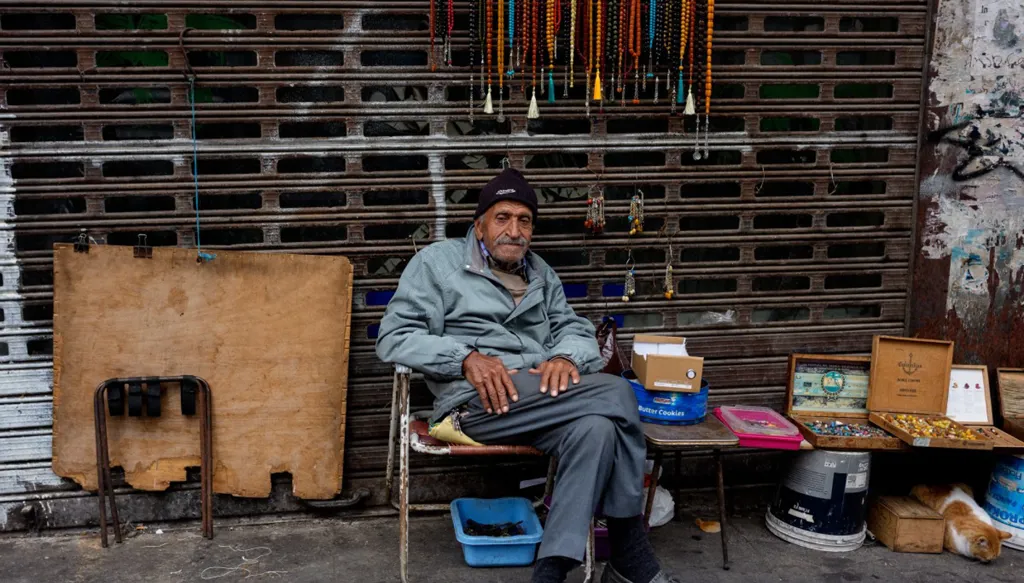
These indicators show that the night economy during Ramadan is not only a Gulf phenomenon but a broader Arab trend, although it is more visible in Gulf countries due to data availability and digital infrastructure. Restaurants and traditional markets in Cairo, Casablanca, Amman, and elsewhere become lively after Iftar, and social gatherings turn into economic drivers with a direct and significant impact.
However, this shift comes with costs. Extended working hours mean higher energy consumption, increased demand for nighttime labor and transportation, and added pressure on infrastructure and municipal services. Therefore, the success of the night economy depends not only on spending levels but also on the ability of cities to organize and manage it effectively.
In the end, Ramadan does more than redistribute spending—it also shifts the timing of economic activity. Arab consumers spend later, shop later, and make purchasing decisions at night. Those who understand this “new market hour” can gain a competitive advantage. Between Iftar and Suhoor, a complete economic cycle begins, transforming cities into vibrant centers of consumption, with nighttime becoming a season of its own in the Arab economy.
العلامات الدالة
الأكثر قراءة