Rebuilding Beirut: How Rafic Hariri left a lasting legacy


شارك على
 مسنجر
مسنجر
 واتساب
 ثريدز
ثريدز
 بريد إلكتروني
 الطباعة
شارك على


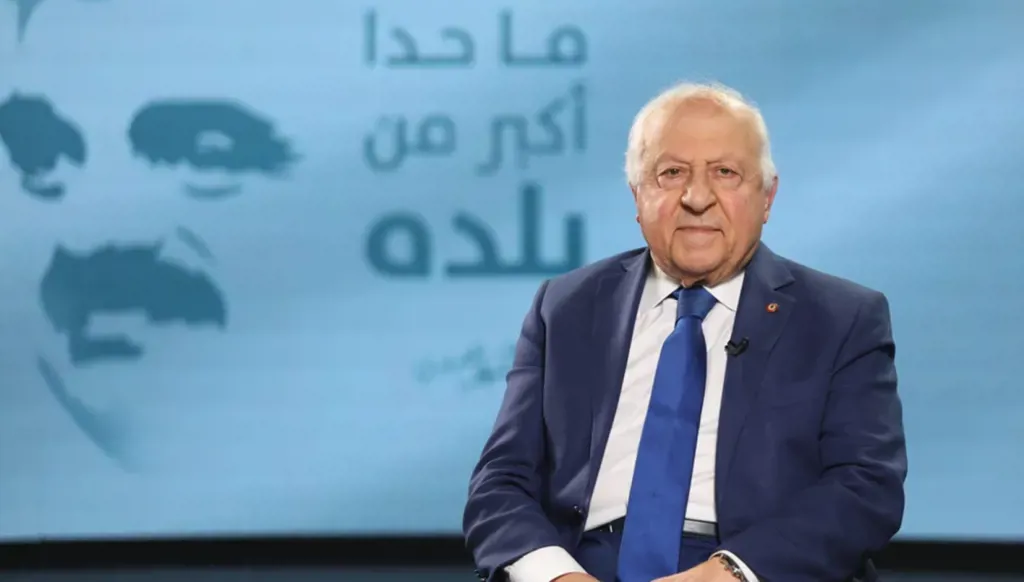


Jaroudi disclosed to Annahar that the first thing that comes to his mind when mentioning the name Rafic Hariri is his love for education and his deep belief in building people before stones: "God rest his soul, he built, founded, and left with his heart set on the country. I cannot forget his interest in education and his assistance to the youth of Lebanon. More than thirty thousand students studied at his expense in various countries of the world. I had the honor of being close to him in this regard and contributed to selecting many of these students."
For Jaroudi, Hariri's project was not merely about reconstructing destroyed buildings, but about rebuilding an entire society. It began with educational aid, followed by the reconstruction of Beirut and other areas, the renovation of the Sports City, state properties, and the Lebanese University, culminating in the building of the Mohammad Al-Amin Mosque in Martyrs' Square. This mosque has become a prominent landmark in the heart of the capital, situated among historic churches, reflecting his commitment to coexistence.
Among the events Jaroudi also recalls is the matter of purchasing properties near the Ramlet al-Baida area, where a religious project was planned. The price was estimated at around five billion Lebanese lira. The mayor agreed to the purchase, but the head of the Court of Accounts informed him that he must either hold an auction or obtain approval from the Ministry of Finance to prevent claims that the land had been sold below its value.
When Jaroudi informed Hariri about this, he did not hesitate to cancel the deal and return the check, saying he did not want anyone to claim that he had bought at a preferential price or at the state's expense. "Integrity was a priority for him, even if he was capable of paying."
Another side of his personality that Jaroudi recalls is Hariri's passion for sports, especially basketball. When a team won a final match, he insisted on inviting both teams to dinner—the winners and the losers—because, for him, sports are about both winning and losing. He always said: "A person who doesn't lose doesn't win. The two teams that reach the finals are champions, but only one wins."
This phrase remained etched in Jaroudi's memory, so much so that he placed it on a marble plaque at the entrance of the Riyadi Club in Beirut: "Sports entail winning and losing," reflecting Hariri's view of sports as a space that unites the Lebanese rather than divides them.
Jaroudi pauses when recalling the beginnings of the idea to rebuild downtown Beirut. He narrated meeting Hariri for the first time at President Saeb Salam's house. After that, Hariri summoned him to Saudi Arabia, seated him to his right at the dinner table, and told him he wanted to buy the war-torn downtown area. Jaroudi replied that individual property in Lebanon is sacred and cannot be expropriated without the owners' consent, and that any project of this magnitude needs a legal framework through the state, via acquisition and redevelopment through the Council for Development and Reconstruction. Hariri was convinced by the idea and began work on the downtown Beirut reconstruction project, later known as Solidere. His dream was for his grandchildren to walk the streets of the exhibition and say their grandfather contributed to rebuilding the country.
The country has changed and people have changed, but Hariri's achievements remain, according to Jaroudi, who pauses for a moment and then says tearfully: "He built the Sports City, developed the airport, supported the Lebanese University, and laid the foundations for generations through education. His concern was to uplift the people's level and build humans alongside stones. God bless your days, Rafic. Good people remember you, and Lebanon will not forget your favor."
العلامات الدالة
الأكثر قراءة