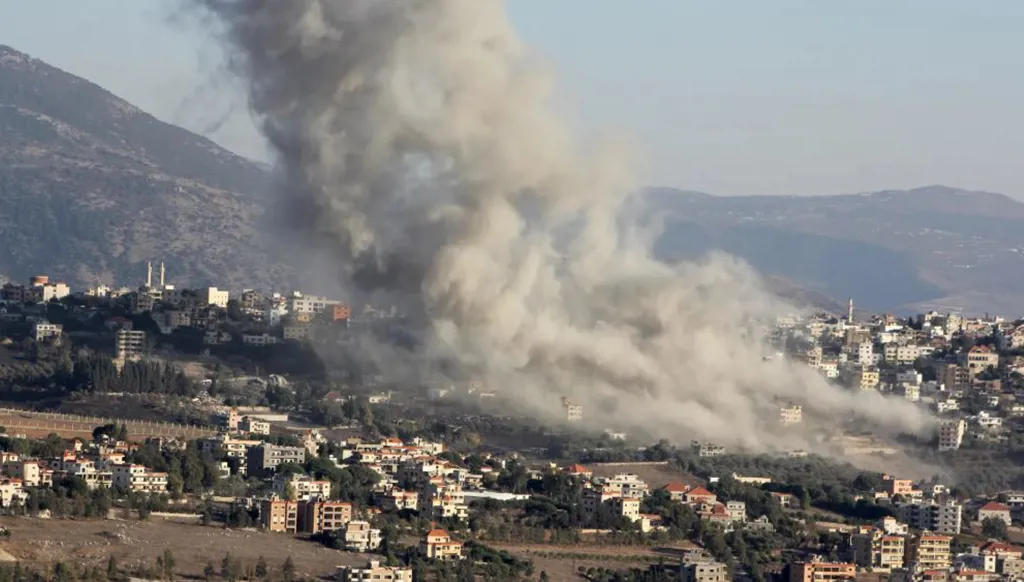
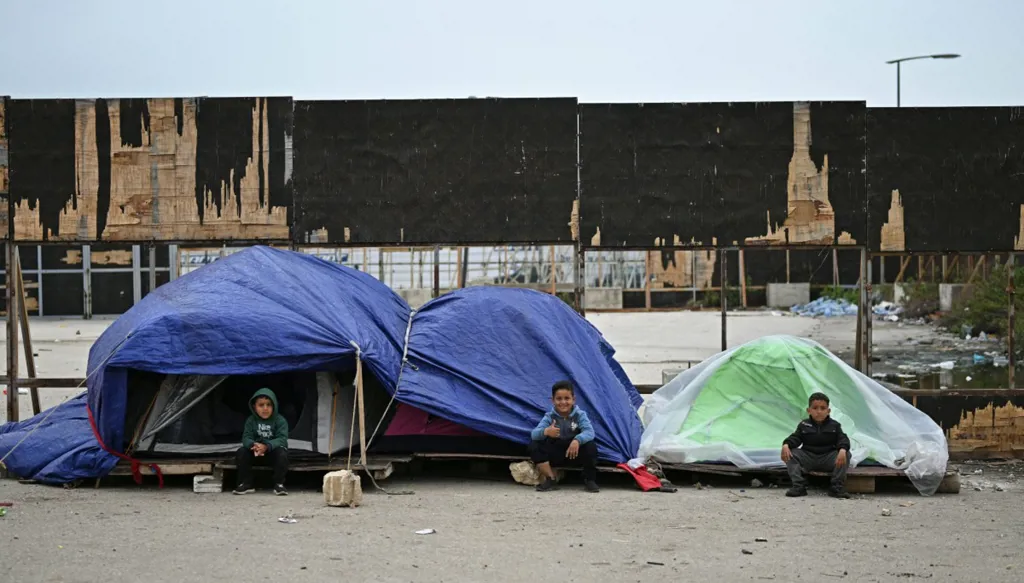
The economy of war: How money drives global conflicts


شارك على
 مسنجر
مسنجر
 واتساب
 ثريدز
ثريدز
 بريد إلكتروني
 الطباعة
شارك على


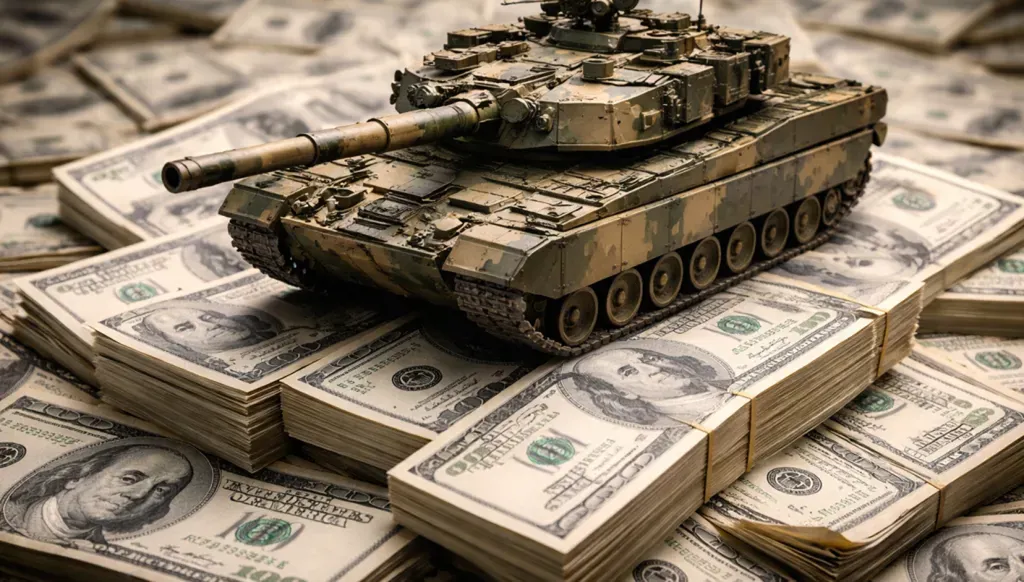


Since last year, interest in trade wars and the control of minerals and sea routes has surpassed concerns about the military conflicts affecting the world.
The economic consequence of these wars was an unprecedented rise in gold and silver prices, as they were seen as safe havens during times of political uncertainty, impacting global economies.
This highlights the "intimate relationship" between the economy and decisions of war and peace. Throughout history, wars—regardless of their scale—have often been driven by economic motives.
Following the logic of the "chicken or the egg" dilemma, does the economy shape the course of wars, or do wars dictate the rhythm of the economy?
In response to this question, economic and military experts speaking with Annahar offered a range of answers: some argued that wars have "very constructive economic effects on arms producers," and that war budgets "are based on previous years,' while others insisted that wars are 'a burden that can force generals to retreat."
The compass of the economy
There is a 'suspicious and complicated relationship' between global inflation and wars. At times, wars are seen as a driver of rising inflation, due to their high costs and the way they shift the economy from a path of natural growth to one focused on financing conflict. Additionally, inflation may be exacerbated by the destruction of factories and trade networks, depletion of resources, and the plunge of large segments of the population into material poverty, alongside other consequences of armed conflicts.
In this context, Dr. Mustafa Youssef, Executive Director of the International Center for Development Studies, told Annahar that "the relationship between the loaf of bread and the bullet is an organic one, never separate." He explained that the economy is, in essence, "the compass and the true driver of any military decision."
Accordingly, a university professor of political economy observes that any military plan is, at its core, "a massive bill." As long as there are monetary reserves and an industrial base, "the decision-maker’s patience remains long." But once the economy falters—through inflation, currency collapse, or deficits—"war becomes a burden that threatens the home front, and generals are forced to seek diplomatic exits because the domestic situation can no longer endure."
However, generals offer a different perspective. In his conversation with Annahar, General Mark Kimmitt, former Deputy Assistant Secretary of State for Political-Military Affairs under President George Bush, stated: "Based on my experience, economic factors are rarely given a prominent role in the stages leading up to military operations. Most essential resources—such as equipment, fuel, and ammunition—are drawn from existing stocks that were paid for in previous years."
General Kimmitt, who previously served as Deputy Secretary of Defense for Middle East Affairs, added: "Even the additional costs of unforeseen supplies—such as the need for extra missiles beyond what was predicted and stored—are only a secondary consideration in comprehensive operational planning."

Inflation and war
Inflation can also be a driving factor behind wars, as countries may seek new resources—sometimes by force—to support their economies. In the case of major powers, they often respond by ramping up military production to stimulate growth, sparking an arms race that can, in turn, heighten the risk of military confrontation.
When wars break out, the side with an economy strong enough to withstand the consequences holds the advantage. Here, power becomes a tool to control the resources of weaker nations, fueling the military machine and prolonging the conflict as long as possible.
Returning to Dr. Youssef, who resides in Michigan, USA, he notes that "war is not merely about advanced weapons; it is about who has the capacity to endure." He explains, "If supply chains are disrupted or a country fails to secure energy and raw materials, even the most modern arsenals become little more than iron and scrap." As a result, military plans can suddenly shift from offensive operations to protecting economic resources to ensure survival.
He continues, asserting that most conflicts have economic roots, and "sometimes plans are completely altered to control a gas field or waterway." In such cases, the economy becomes "the prize that justifies the war," or 'the loss that forces a halt to combat if the cost of destruction outweighs any expected gain."
He concludes, "The economy decides when the cannons fire, and it alone holds the final word to silence them when the cost of continuing outweighs the price of victory."
العلامات الدالة
الأكثر قراءة