What can Palestinians do? Rethinking the National Movement


شارك على
 مسنجر
مسنجر
 واتساب
 ثريدز
ثريدز
 بريد إلكتروني
 الطباعة
شارك على




The question "What is to be done?" is one of the most frequently asked and urgent questions the Palestinian national movement has posed to itself, in light of the turning points, risks, and challenges it has faced throughout its journey, as well as the imbalance of power and the Palestinians' lack of Arab and international sympathetic grounds that could enable them to leverage their suffering, sacrifices, and heroism.
However, this question has also been raised to understand the reasons behind the internal setbacks within the Palestinian national movement and its inability to develop itself, including its shortcomings in formulating a suitable, feasible, and sustainable political and struggle strategy that can be effectively implemented.
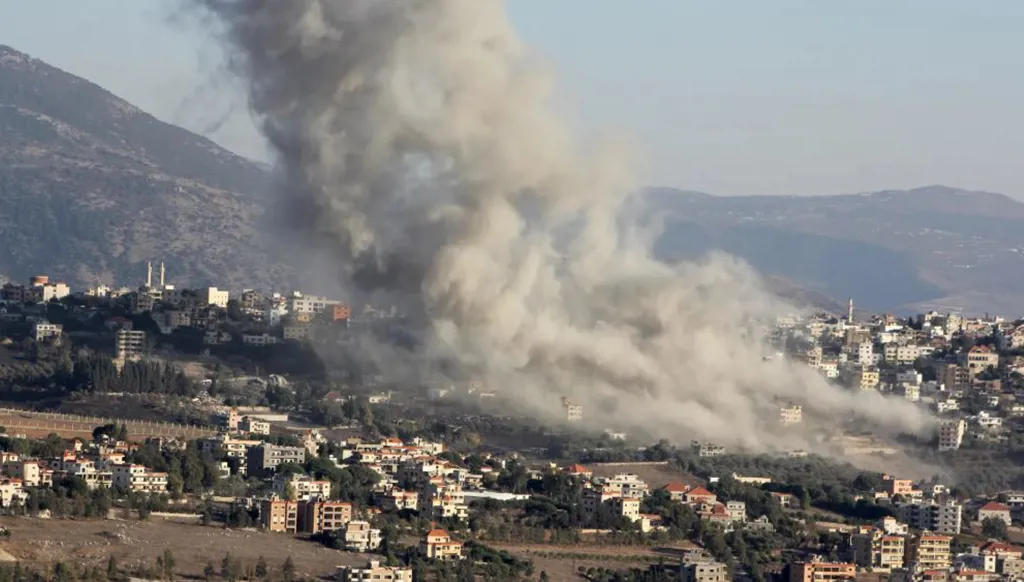
The problem is that attempts to answer this question—most frequently asked today against the backdrop of the repercussions of the genocidal war Israel launched against the Palestinians in Gaza, its consolidation of control over the West Bank, over Palestinians from the river to the sea, and even over the entire Arab East, along with the deterioration of conditions within the Palestinian national movement—often fall short, lacking precision or practicality, though appreciation is due to those who try, for several reasons, the most important of which are:
- Most of these answers, although important, are traditional, presented as pre-prepared and conventional “recipes” that have been proposed at previous stages, such as national unity, strengthening resilience, continuing resistance, activating or rebuilding the Palestine Liberation Organization, reassessing the recognition of Israel, stopping security coordination with it, dissolving the authority, defining its functions, or moving towards consensus, elections, or renewing legitimacy, etc.
- Most answers focus on describing and analyzing the Palestinian-Israeli conflict and the surrounding conditions without proposing new or practical ideas, at least at the level of self-reconstruction.
- Some answers include practical ideas but are marked by wishfulness and voluntarism, as they fail to take into account the possibilities and the external or objective conditions that determine or constrain the Palestinian struggle.
- Most who tackle this question forget that the crisis of Palestinian national action did not begin today, nor with Israel’s war in Gaza, the division, or the Oslo Accords, but rather much earlier—possibly since the mid-1970s—after reaching its possible ceiling, or the Arab and internationally permissible limit. This means that answering this question should have been addressed fifty, thirty, twenty, or at least ten years ago. This situation recurs for several reasons, the most important of which are:
Firstly, there was no thorough scrutiny of the Palestinian experience regarding the failures of previous phases in Jordan, Lebanon, the West Bank, and Gaza, whether in building the organization or the authority, or in defining options for armed resistance, negotiation, intifada, or the choice between liberation and settlement. This is despite full appreciation for the sacrifices made and achievements realized, as this experience was never subjected to examination, review, or criticism.
Secondly, Palestinians’ lack of decision-making centers and legislative representative frameworks, combined with their dispersion across different countries under varying political systems, limits their ability to reach consensus, generate new alternatives, or exert pressure on their leadership.
Thirdly, there are about 24 political entities representing the Palestinian people, both inside and outside (approximately 13 million Palestinians in total). Most of these entities, however, no longer maintain a distinctive political or ideological identity, nor do they exist meaningfully in terms of representation within Palestinian communities or in the struggle against Israel. In light of this, any consideration of change or Palestinian political choice must also take into account four obstacles or layers:
- Firstly, the Palestinian national movement has been transformed into an authority under occupation, governing only part of the people on part of the land, with only some of their rights. This authority has become increasingly constrained in the West Bank, while Gaza remains under international custodianship, which attempts to sever it from the broader Palestinian body, with threats of imposing a similar custodianship model on the West Bank as well.
- Secondly, there is confusion among Palestinians in viewing themselves as a single people, marked by the shift from the Nakba narrative (1948) to the narrative that the conflict began with the occupation (1967). This has led to differing priorities and needs for each Palestinian community, further exacerbated by the lack of a guiding reference in the Palestine Liberation Organization and the absence of a national consensus goal that assumes the unity of the people, the land, and the cause.
- Thirdly, the Palestinian national movement’s historical reliance on external financial support, as well as Arab and international backing, has become increasingly difficult or limited under the current circumstances.
- Fourthly, the ossification of Palestinian factions, which have little left to offer, highlights the need to develop new methods of action and political discourse. This must take into account the achievements of past phases while avoiding their shortcomings, and also consider the complexities and interactions of the Arab and international context.
This situation does not allow Palestinians to provide definitive answers to the question: "What is to be done?" Rather, it compels them to interrogate or deconstruct the question itself: What can the Palestinian leadership do, and is capable of doing, to protect its people, cause, and national movement from the present dangers and challenges? And, what can Palestinians as a people do, and are able to do, given their circumstances and capabilities?
From all this, it can be concluded, as we often reiterate, that the Palestinian dilemma does not lie in whether armed resistance continues or not, nor in the continuation or cessation of negotiations, nor in the type of discourse or slogans—but rather lies elsewhere.
This means that Palestinians, especially at this stage, need a new political vision that unites them as a people and redefines their national movement, breaking away from previous methods and political equations that no longer yield results. It requires restoring alignment between the Palestinian people, the Palestinian cause, and the Palestinian land as the foundation for a unified national vision—beginning with strengthening Palestinians’ resilience on their land and rebuilding the Palestinian home on new foundations informed by the lessons of past experiences.
Disclaimer: The opinions expressed by the writers are their own and do not necessarily represent the views of Annahar.
العلامات الدالة
الأكثر قراءة