Cairo mediates as tensions rise between Washington and Tehran


شارك على
 مسنجر
مسنجر
 واتساب
 ثريدز
ثريدز
 بريد إلكتروني
 الطباعة
شارك على




The Egyptian Ministry of Foreign Affairs announced yesterday morning that communications and efforts had begun to calm the escalation, after indications emerged that the United States was preparing to launch a military strike against Iran, which could push the Middle East into a cycle of conflict and chaos that would be difficult to control later.
The ministry stated in an official statement that the communications were carried out on Wednesday under the directives of Egyptian President Abdel Fattah al-Sisi, and were conducted by Foreign Minister Badr Abdelatty with his French counterpart Jean-Noël Barrot, Omani counterpart Badr bin Hamad al-Busaidi, Iranian counterpart Abbas Araghchi, as well as the US Special Envoy for the Middle East Stephen Witkoff.
According to the statement, the discussions addressed the "rapid developments in the region and stressed the need to work on reducing escalation and tensions, achieving calm to prevent the region from sliding into instability and chaos, while emphasizing the importance of creating a suitable climate for prioritizing diplomatic solutions and reaching political settlements that support regional security and stability."
Defusing tensions
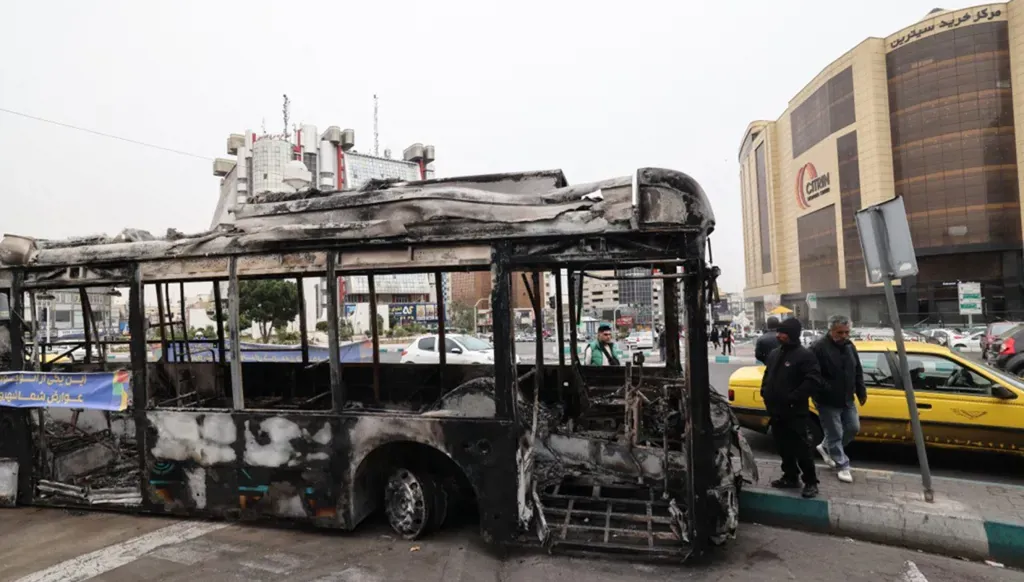
The current escalation came after large demonstrations broke out across Iran on December 28, and reports emerged that Tehran had used violence against its own citizens, leading to thousands of dead and wounded.
In return, US President Donald Trump threatened to intervene if the killing of demonstrators continued or if executions were carried out against detained Iranians.
With negotiations between Washington and Tehran reaching a dead end, Cairo began making contacts with the parties to contain the situation and prevent an explosion, raising questions about the chances of success for these efforts, especially on the Iranian side, which observers say has the ability to defuse the crisis.
What reinforced that belief was Trump’s announcement on Wednesday evening that he had received information that the "killing had stopped" and that "executions had been halted" in Iran, which increased expectations that Washington would postpone its possible military operation against Tehran.
Accepting Mediation
Researcher on Iranian affairs and editor-in-chief of the Telegram channel "Tawilat Iran" Ahmad Farouk believes that the Egyptian mediation is "well received in Tehran for several reasons." He tells Annahar: "The recent rapprochement between Egypt and Iran came because both agreed that there is a threat represented by Israel’s ambitions and its desire to become the dominant power in the region, and that there is an interest in cooperating together to curb this threat."
Untangling Complexities
For his part, Director of the Arab Center for Studies Dr. Hani Suleiman says that "after the recent Gaza war, and the role Cairo played as a mediator to stop that war, Egypt managed to play important roles in other issues as well."
Suleiman believes that "Egypt has built a highly effective foreign policy in recent years, which enabled it to untangle many interconnected complexities and to achieve mediations to end conflicts." He points to the mediation role Cairo played between Tehran and the International Atomic Energy Agency (IAEA), saying: "Egypt succeeded in reaching an agreement between the Agency and Iran, and if it were not for some developments that occurred later, the agreement would have had an impact on making progress regarding the Iranian nuclear file."
Balanced Relations
In recent years, there has been a rapprochement between Cairo and Tehran, which came after nearly four decades of political tensions. The pace of rapprochement increased after the Gaza war broke out on October 7, 2023.
Some analysts considered that the Egypt–Iran rapprochement came as a result of the necessities imposed by regional circumstances that could explode at any moment, due to the policies of Israeli Prime Minister Benjamin Netanyahu’s government, which includes extremist religious parties.
Despite the Egyptian–Iranian rapprochement, Cairo remained keen on its long-term strategic relations with Washington, and also strengthened its ties with European Union states, in addition to the fraternal relations linking Egypt to the Gulf states. This currently helps Cairo in its efforts to stop the escalation and prevent the crisis from reaching an explosive stage.
العلامات الدالة
الأكثر قراءة