Taliban leadership and Afghanistan’s state crisis


شارك على
 مسنجر
مسنجر
 واتساب
 ثريدز
ثريدز
 بريد إلكتروني
 الطباعة
شارك على


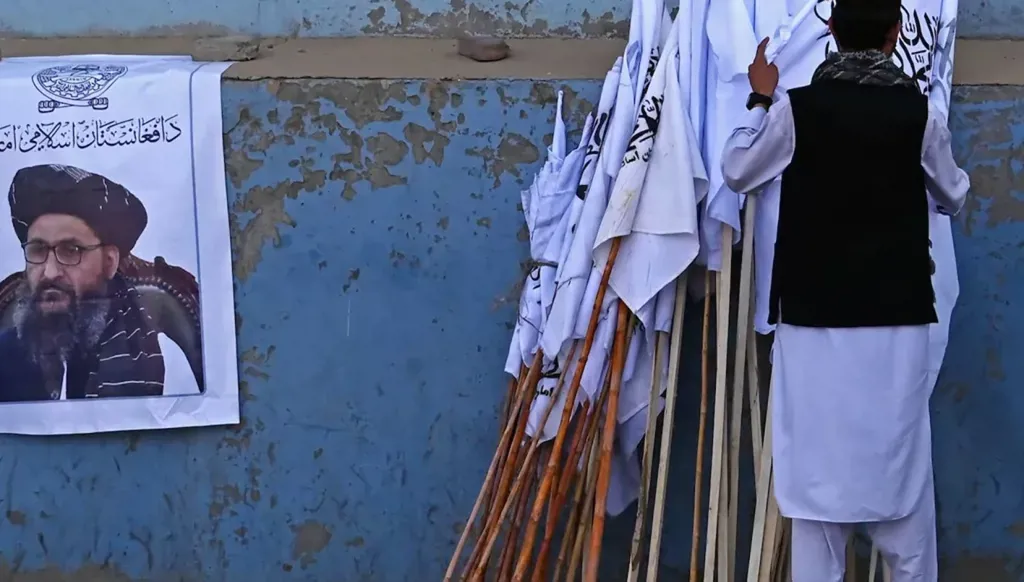


Within the context of the “decapitation policy” adopted by the United States in most of its foreign interventions (meaning targeting leadership figures rather than broad military campaigns), recent signals from the Afghan opposition have pointed to Mullah Hibatullah Akhundzada, the leader of the Islamic Emirate of Afghanistan, as the real decision-maker at the core of the Taliban movement.
And although Hibatullah Akhundzada has not adopted explicitly hostile rhetoric toward the United States, Afghanistan is expected to return to the circle of US attention if the Trump administration takes its competition with China seriously.
Trump has not hidden his criticism of the way the US withdrew from Afghanistan and has repeatedly stressed the need to recover American weapons that fell into Taliban hands, along with the importance of returning to Bagram Air Base, which is strategically significant for Washington since it allows monitoring of Chinese military and nuclear facilities.
Pashtun Taliban
The Taliban leader residing in Kandahar is subject to strict security measures, amid reports of US drone surveillance. This comes at a time of growing public discontent with the policies of the Taliban government, which reshuffled the same group of figures into government positions, reinforcing a closed form of authority belonging to one specific ethnic group (the Pashtuns), and fueling a widespread sense of marginalization among other components of Afghan society.
Decisions made by the Kabul government reveal the nature of a closed tribal authority. The Taliban leader imposed restrictions on criticizing the movement or accusing its members, at a time when Afghans, four years after the Taliban’s return to power, feel they are under the dominance of an armed group.
The situation of women has deteriorated systematically, after their exclusion from public life and education, in parallel with widespread despair among youth and rising suicide rates caused by poverty, repression, and the absence of any prospects for change.
Since 2021, Taliban focused on expanding religious and militant (jihadi) schools, which have become the movement’s main ideological incubator, in parallel with imposing a Sunni Pashtun national identity as part of a policy aimed at isolating Afghanistan from its wider cultural surroundings. The movement’s rapprochement with India at the expense of its relationship with Pakistan has also added a new element of tension to foreign policy, reducing the likelihood of any opportunity for stability.
Under conditions of economic isolation and a militia-style economy, Taliban have tightened their grip on the mining sector, which contains resources valued in the trillions of dollars, including gold, copper, and lithium. Instead of serving as a potential engine for development, these resources have become a source of funding for the Taliban regime and a tool of repression, through a parallel economy built on smuggling and liquidity.
Mining and mineral revenues are not limited to the Taliban, but contribute to supporting a wider armed ecosystem. Al-Qaeda, whose leadership still finds a safe haven in Afghanistan, benefits from shared funding channels and protection arrangements. The same is evident with the "Pakistani Taliban" movement, which is responsible for the rise in attacks inside Pakistan and draws strength from Taliban-controlled territory and financial networks. This is not an accidental result of economic desperation, but a deliberate strategy, as the Taliban understand that controlling resources means controlling power, society, and cross-border militant groups that rely on safe havens in Afghanistan. The movement uses mining revenues to finance arms purchases, recruitment salaries, and law enforcement bodies that keep the population under control.
Ultimately, despite the absence of any direct internal threat to Taliban rule in the near term, the movement’s future will remain tied to its ability to transition from the logic of a tribal-ideological movement to that of a state and to engage realistically with the international community. Otherwise, its rule will remain politically and economically fragile, no matter how stable it appears in security terms.
Disclaimer: The opinions expressed by the writers are their own and do not necessarily represent the views of Annahar
العلامات الدالة
الأكثر قراءة