Lebanon’s prime minister confronts stark realities on bank deposits and state authority


شارك على
 مسنجر
مسنجر
 واتساب
 ثريدز
ثريدز
 بريد إلكتروني
 الطباعة
شارك على


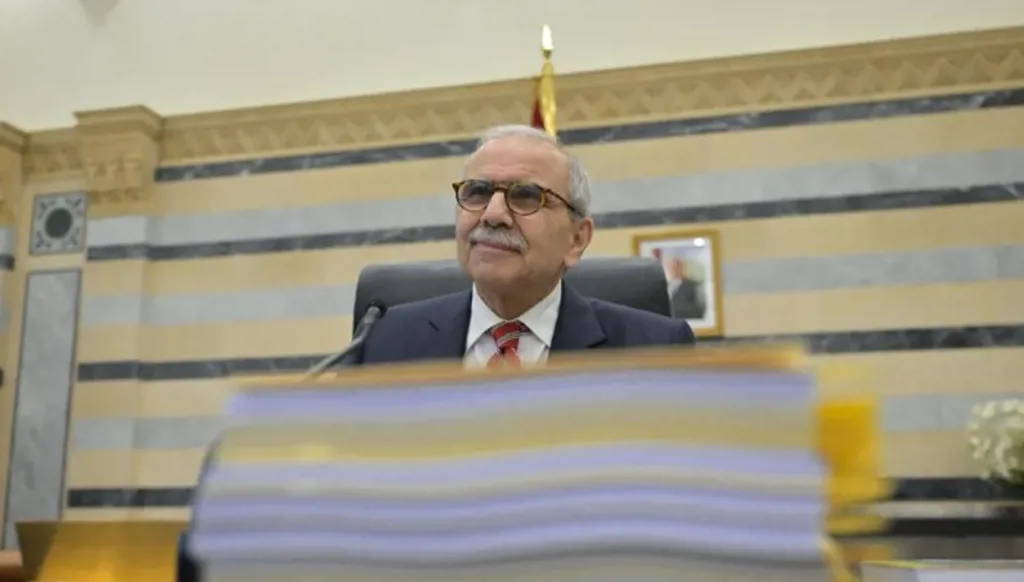


Despite the passage of six years since Lebanon’s historic and cascading financial collapse began in 2019, a collapse that forced Lebanese citizens, through shock and coercion, to endure one of the world’s harshest banking and deposit crises, as well will face another shocking moment when the government announces today or tomorrow the approval of the Financial Regularization and Deposit Recovery Law.
Such a move would effectively settle the final choice regarding the scale and timeline for returning only a small fraction of bank deposits and life savings devastated by the collapse, leading to an unprecedented disaster. No longer are there surprises hidden in this catastrophic file, and intense crossfire from various sources and parties on the law awaiting approval might ensue, which is the least expected and perhaps justified in many viewpoints, especially those from depositors regarding the responsible parties and beneficiaries who allowed the life savings of individuals to go to waste in one of the worst failed states governed by corrupt political, banking, and financial authorities and classes, driving it to a dire fate.
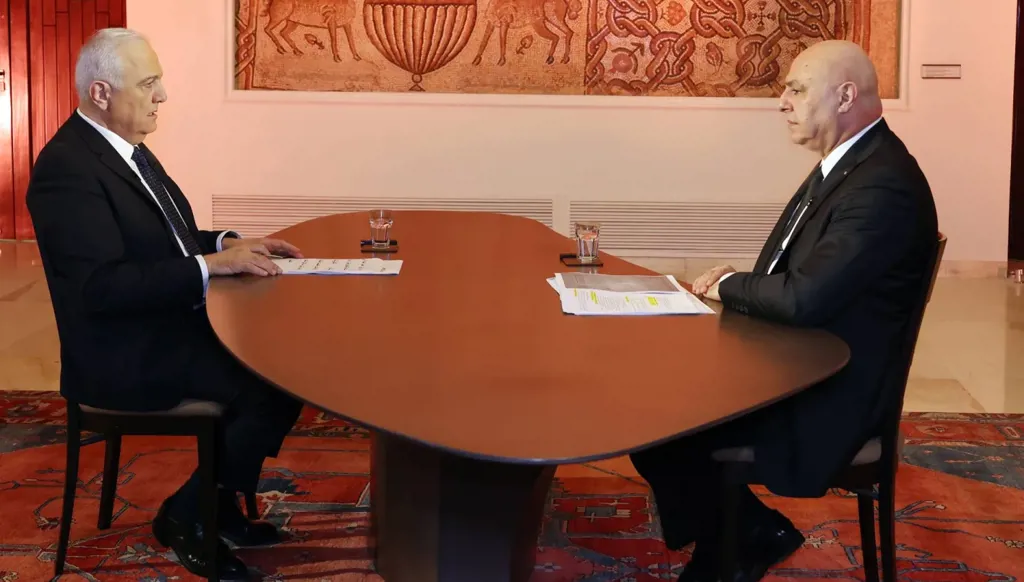
Still, one core fact cannot be ignored. What Prime Minister Nawaf Salam announced two days ago regarding the completion of the long-awaited law to initiate the recovery of deposits and distribute responsibilities among the involved parties to fill the financial gap was neither an easy nor a routine step. It resembled a painful but unavoidable surgery, confronting citizens with a bitter truth and assuming responsibility for ending years of ambiguity and mutual denial, akin to lying to a patient instead of telling them the truth.
The Prime Minister is credited for adopting an approach of transparency by acknowledging that what has been achieved represents the best possible outcome under the circumstances, even if many disagree. He did not embellish this possibility with exaggeration, respecting the minds of depositors, in particular, ending the path of turmoil in a struggle that has lasted six years.
And if justice was killed and assassinated the moment people's deposits vanished in the abyss of a collapse for which no responsible party, accomplice, negligent, or thief has been prosecuted yet, justice, as marketed by President Nawaf Salam, in distributing the shares of losses and recovering the predetermined percentages of deposits according to the law to be issued as it is or amended, we understand that it has become the option with which there will be no alternative, which Lebanese must adapt to.
At the very least, the prime minister spoke plainly: This is the peak of what is possible, and no one should be misled otherwise.
The issue is not whether the prime minister’s approach pleases one group or another. Rather, it is a test of how officials confront a crisis of this magnitude amid the near-total inability to deliver even minimal justice in restoring rights. Lebanese citizens have heard enough daily falsehoods from politicians and leaders claiming that all deposits will be returned.
Another aspect of the Prime Minister's approach that merits recognition is his announcement, made hours ago, reaffirming the government’s commitment to extending the plan to restrict weapons to areas north of the Litani River, following progress toward disarmament south of the Litani.
At a moment fraught with the danger of escalating Israeli aggression, and with Hezbollah continuing what the article describes as a reckless pattern of offering pretexts for a war that may leave nothing behind, it will be nothing less than the insistence of what is called the Lebanese state to honor its commitments and obligations in confronting Israel and the countries sponsoring Lebanon's situation. At the very least, if the government and the state are to deserve their name.
Disclaimer: The opinions expressed by the writers are their own and do not necessarily represent the views of Annahar
العلامات الدالة
الأكثر قراءة