Lebanon’s weak negotiating position and the conditions of direct talks with Israel

Opinion 14-04-2026 | 15:57

Lebanon’s weak negotiating position and the conditions of direct talks with Israel

As direct negotiations are being prepared under American sponsorship, Lebanon faces mounting questions over sovereignty, internal control, and its ability to enforce decisions on the ground amid competing regional pressures.
Lebanon’s weak negotiating position and the conditions of direct talks with Israel
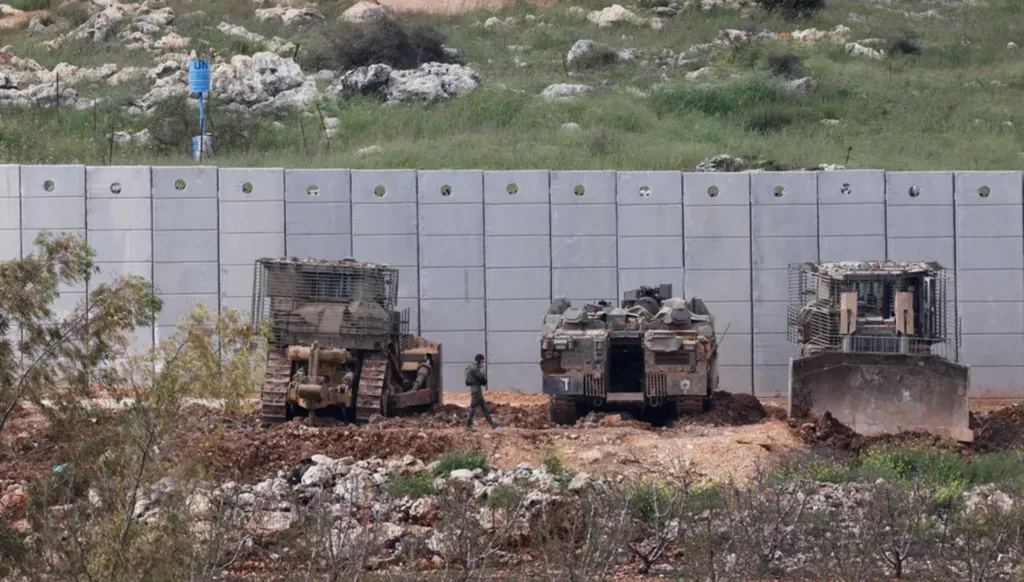
Israeli military vehicles on the border with Lebanon (AFP)
Smaller Bigger


The Lebanese authority is unable to sit at the negotiating table with the Israeli government under American sponsorship. It is afraid of the outbreak of internal strife here, of a coup happening there, and of the renewal of civil war.


It is not able to do so because it would lose everything at the negotiation table from the very first moment, on the basis that whoever does not control the land, the decision making, and the authority cannot provide guarantees of peace in exchange for obtaining the rights it is demanding.


A leadership that is afraid of a faction within its own state is not taken seriously by anyone, especially when it is facing an enemy that does not trust it, nor its intentions, nor its capabilities.


Indeed, only a few hours after the announcement by the Israeli Prime Minister Benjamin Netanyahu, the spokesperson unit of the Israeli army published an informational statement about the seizure of weapons depots south of the Litani River, and it attached comments that undermined the mission carried out by the army in that region.


This renewed emphasis on evidence that allows Israel to distrust the Lebanese army was not isolated, but rather part of material that will be handed over to the Israeli ambassador in Washington, Yechiel Leiter, who is meeting today, Tuesday, at the United States Department of State with his Lebanese counterpart Nada Hamadeh Mouawad, in order to set an agenda on the basis of which direct negotiations between Lebanese and Israeli delegations would be launched.


Instructions from the President of the Republic General Joseph Aoun to the ambassador in Washington require that the first preliminary point be that Israel stops firing in all of Lebanon.


In contrast, instructions from the Israeli Prime Minister Benjamin Netanyahu to the Israeli ambassador require agreement on two main topics for discussion. The first is the disarmament of Hezbollah, and the second is reaching a peace agreement between the two countries.


Israel’s portrayal of the Lebanese state as incapable of actually disarming Hezbollah in the area south of the Litani River means a lack of trust in its ability to carry out this task across all of Lebanon. Therefore, launching negotiations requires that the Lebanese authority prove it will take sufficient measures to implement this mission, which places the authority before the option of cooperating with Israel.


This means that Lebanon’s negotiating position can only be strengthened if the authority decides to deal with itself and with Lebanon’s various components as if it truly holds control, and that anyone who may stand in its way is dealt with firmly and decisively.


The statement issued by the army command against the movements that supporters of Hezbollah had begun around the Grand Serail can also be understood in this context.


But the fundamental question that Israel will raise in response to Lebanon’s demand for a ceasefire across the country, and which the Lebanese authority is expected to answer convincingly, is this: assuming a ceasefire is put in place, and the ceasefire agreement with Iran collapses for any reason, do you have guarantees that Hezbollah will remain militarily neutral? And if it becomes involved in the war again, what field measures would you take against it, its positions, and its weapons?


In this case, the Lebanese authority cannot rely on traditional justifications that it often uses, perhaps at times rightly, such as saying that this could lead to internal strife and that wisdom is required.


Lebanon is heading into direct negotiations with Israel amid Hezbollah’s rejection, and naturally that of the Islamic Republic of Iran as well. Therefore, the Lebanese authority does not have a mandate from the true decision maker regarding war.


This reality is not the only weakness of the Lebanese state. It does not possess a balance of power with Israel, nor the ability to respond to any aggression that may target it, while its land remains under occupation. It also lacks any real international backing to restore its sovereignty if it is not capable of monopolizing arms and holding the decision of war and peace, and if it continues to be unable to implement its own decisions, exactly as has happened with every decision it has taken since 5 August last year, starting with the disarmament of Hezbollah before the end of 2025, and extending to its inability to implement the decision to expel the Iranian ambassador from Lebanon.


Without American pressure aimed at removing Lebanon as a bargaining chip from the hands of the Iranian negotiator, Israel would not have agreed to open direct negotiations with Lebanon, because whoever does not hold the decision cannot negotiate it.


Disclaimer: The opinions expressed by the writers are their own and do not necessarily represent the views of Annahar.