Syria and Lebanon: From shared history to strategic choices


شارك على
 مسنجر
مسنجر
 واتساب
 ثريدز
ثريدز
 بريد إلكتروني
 الطباعة
شارك على




The Syrian Lebanese relationship is one of the most complex in the Arab Levant, where geography intertwines with history, economics with politics, and functional ties with sovereignty. Since the dissolution of the customs union between the two countries in the 1950s, through the divergence of their political and economic systems, and up to the major geopolitical shifts that reshaped regional spheres of influence, this relationship has remained governed by an unstable duality. It has oscillated between an imposed integration driven by realities on the ground and a deferred clash that has repeatedly erupted at every sharp regional turning point.
In this context, the article approaches the relationship from the perspective of the vital sphere, not as a pretext for domination, but as an analytical tool to understand the roots of imbalance and the conditions for moving toward a historic settlement between two independent states. Such a settlement would be based on voluntary integration, grounded in transparency and lasting reconciliation, ensuring a stable and long term horizon for relations between them.
A Numerical Comparison Between Syria and Lebanon
- Area: Syria approximately 190,000 km², Lebanon 10,452 km².
- Population (2026): Syria around 26.1–26.5 million, Lebanon about 6 million.
- Age Structure: Syria has a relatively young population (median age 23.8 years), while Lebanon’s population is relatively older.
- Demographic Composition: Syria: Arabs, Kurds, and multiple religious groups; Lebanon: multiple religious groups.
- Geographic Location: Syria is a central regional land hub connected to Turkey, Iraq, Jordan, Lebanon, and Palestine, with borders totaling 2,253 km. Lebanon is a Mediterranean coastal state with limited land depth, a long border with Syria, and a short border with Palestine.
- Key Resources: Syria: oil, gas, extensive agriculture (with rural areas playing a major role), water, and limited coastline. Lebanon: water, rich coastlines, and limited natural resources.
- Structural Challenge: Syria: rebuilding the state and economy and organizing its vital sphere on sovereign foundations. Lebanon: loss of regional function and erosion of the state and rentier economy.
(Source: United Nations estimates and Worldometer, early 2026)
From Economic Integration to Structural Divergence and Imbalanced Power
During the French Mandate between the two World Wars, the two countries experienced a form of economic integration through a customs union, when the “Supreme Council of Common Interests” was established in Beirut. It managed customs, currency, and economic concessions within a single economic framework.
However, this experiment collapsed in 1950 with the decision to separate due to differing economic choices. Lebanon opted for a free-market, service-oriented model, while Syria moved toward a centrally planned economy. This divergence did not develop as a complementary diversity but turned into a confrontational path, with the economy later used as a tool of pressure rather than mutual partnership in bilateral relations.
The divergence of political systems further complicated the relationship. The centralized Syrian state approached fragile, pluralistic Lebanon from a position of power rather than partnership, turning the vital sphere from a framework for developmental integration into a tool for control, intervention, and domination over political decision-making. This accumulated crises of trust and emptied the concept of integration of its substance.
Iranian Domination and Its Collapse: Revisiting the Syrian-Lebanese Question
This trajectory peaked with Iranian influence over Syrian decision-making, when Syria shifted from a central state in the Arab system to an open arena within a cross-border regional project. This transformation produced a compounded imbalance for Lebanon, as the relationship was no longer managed between two states but under the logic of an axis imposing its rhythm and using the territory to consolidate its balances.
With the relative decline of this project due to political and field developments and the defeat of the Iranian project in Syria, the Syrian-Lebanese relationship was reopened. However, the context is far more complex, as the question is no longer only about ending previous influence but about how to rebuild the relationship amid an unresolved regional struggle.
Lebanon and the Crisis of Role: A Vital Sphere Without a Function
At the same time, Lebanon faced a deep structural problem represented by the loss of its historical role within its Arab and regional environment. The state, created as a platform for services, finance, tourism, education, and healthcare, and as a political and cultural bridge to the West, lost this role with the outbreak of the civil war in 1975 and later with major geopolitical shifts.
Since the comprehensive collapse beginning in 2019, Lebanon has found itself without a clear alternative function. Its vital sphere has become burdened with crises, receiving repercussions rather than participating in managing them. This has made its relationship with Syria structurally unequal and increased its fragility in the face of any regional imbalance.
The Israeli Factor and Border Demarcation: From Ambiguity to Regulation
The Israeli factor remains a structural variable that cannot be ignored, historically acting as a source of pressure that pushed Syria to seek a security depth and often turned Lebanon into a proxy arena for confrontation or deterrence.
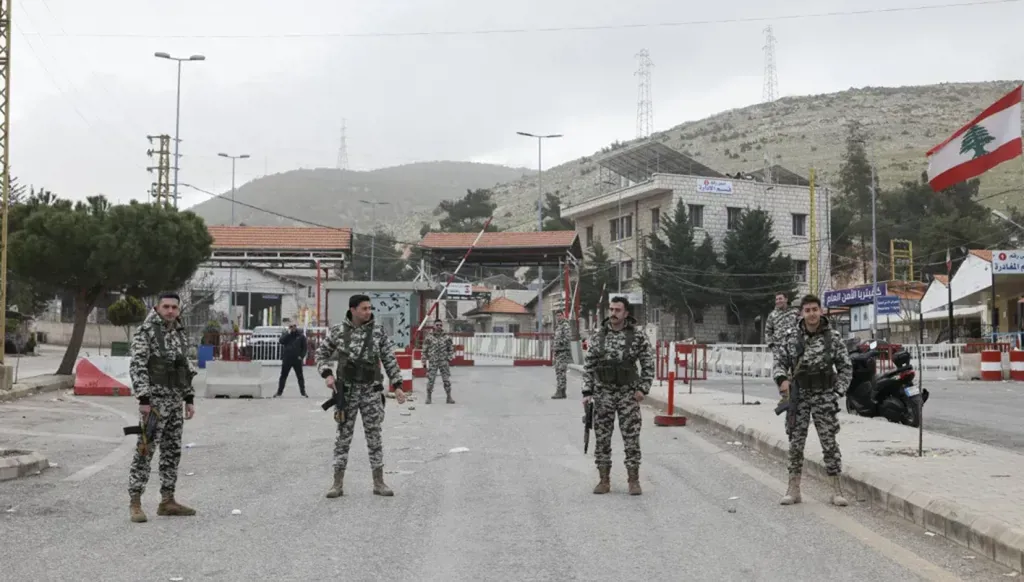
Here, the formal demarcation of land and maritime borders between Syria and Lebanon is crucial as a foundational condition for any historical settlement. The absence of demarcation has never been a mere technical detail; it has been a constant source of sovereign ambiguity, a pretext for intervention, and a vacuum exploited by non-state actors. The Shebaa Farms is the clearest example of this ambiguity, where a legal issue became an open conflict file.
Resolving this issue through an official and documented demarcation would not weaken either state but would strengthen their legal position. It would end the political and security exploitation of border ambiguity, open the way to regulating maritime borders given the importance of energy resources in the Eastern Mediterranean, and remove the justifications used for the existence of illegal arms.
Regional War and the Exposure of the Vital Sphere
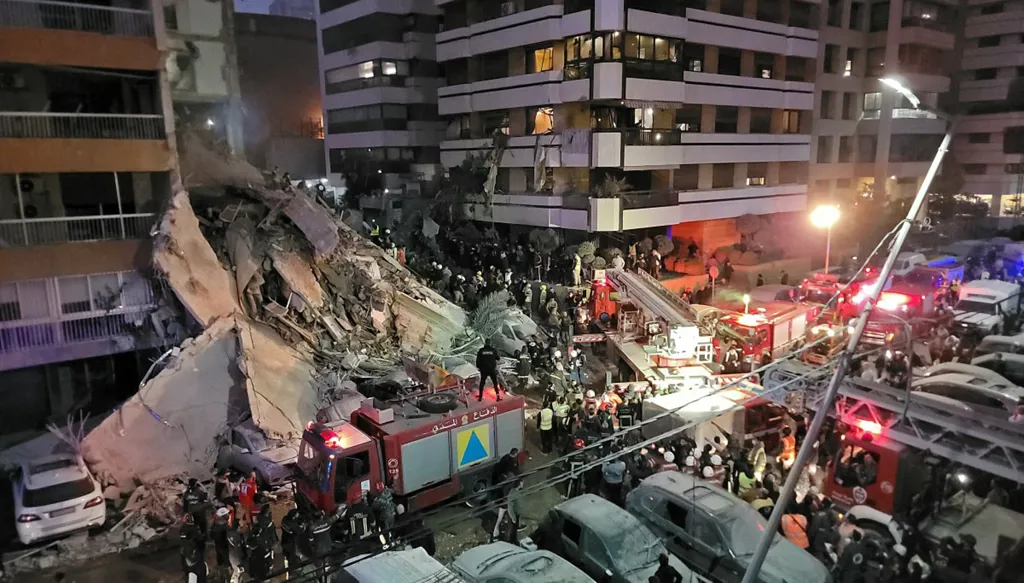
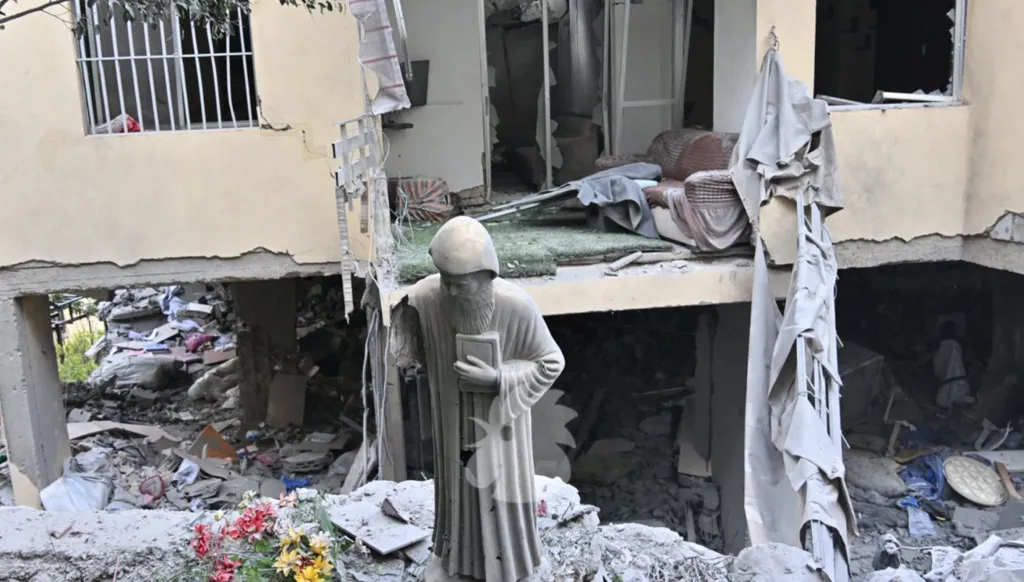
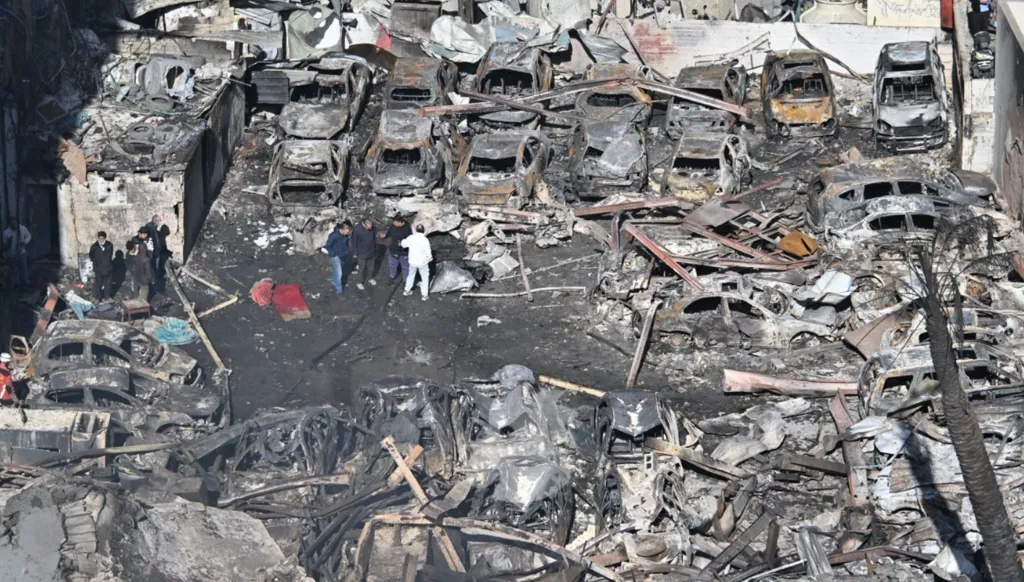
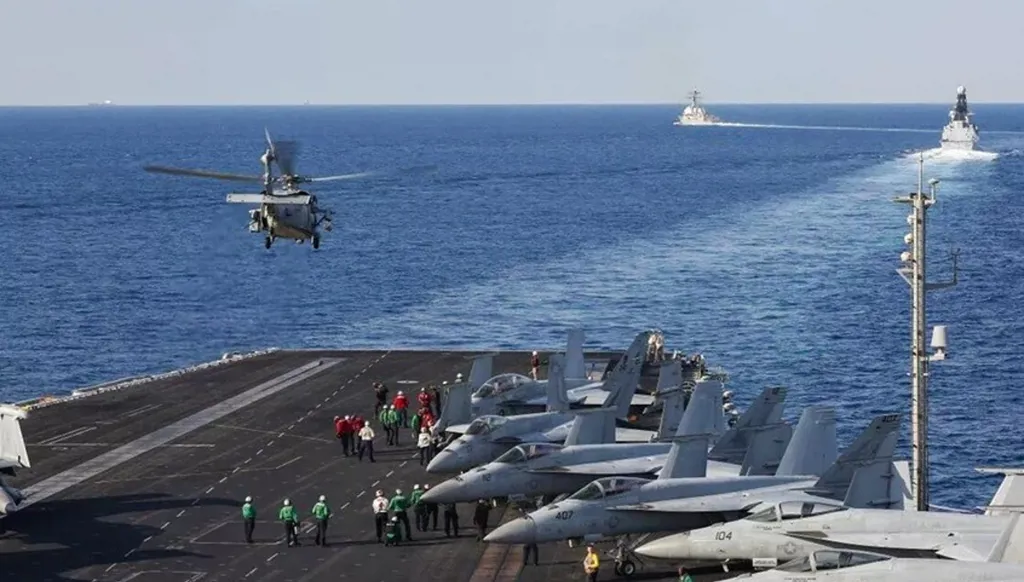
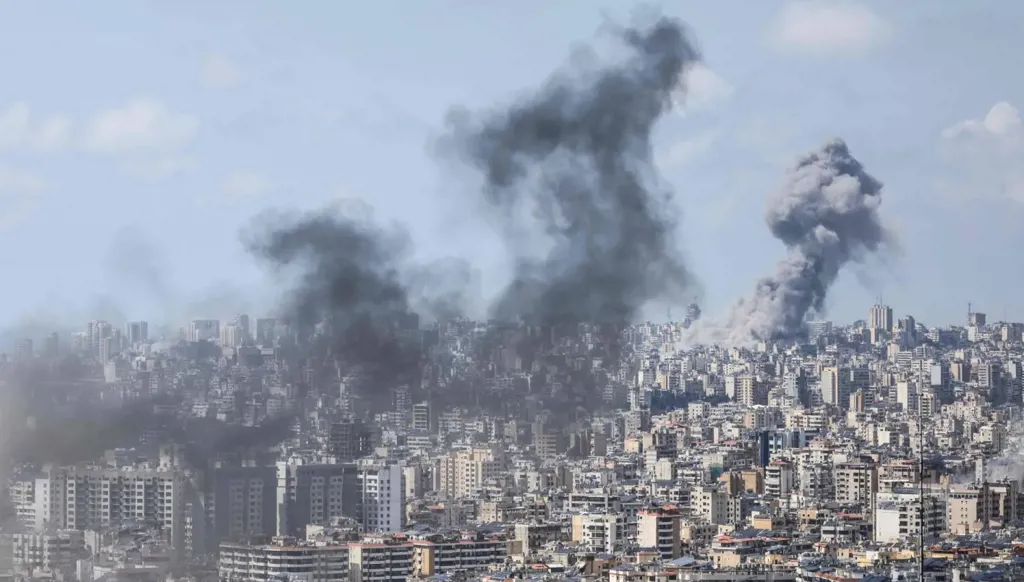
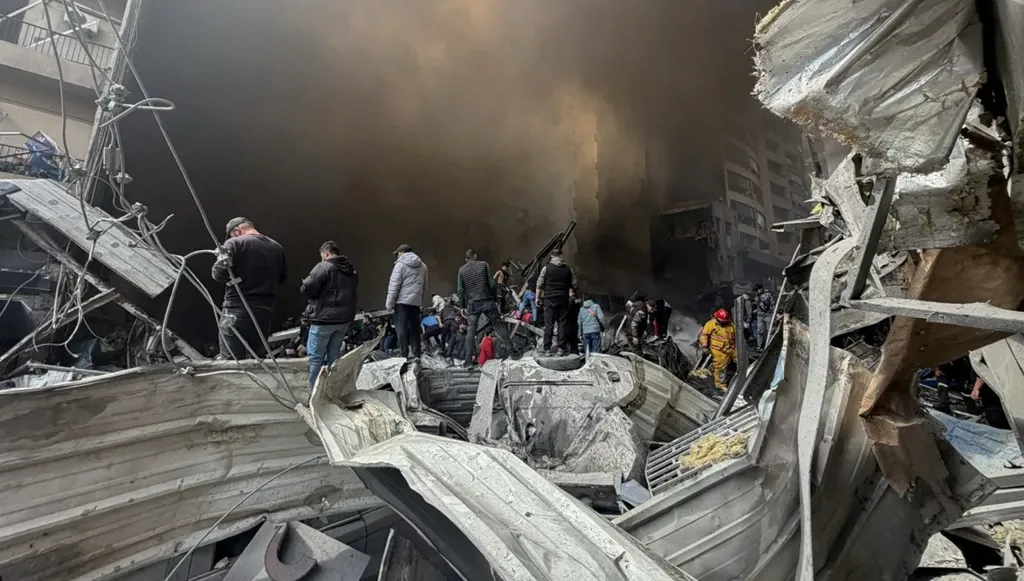
Rapid regional developments require a reexamination of the Syrian-Lebanese relationship beyond traditional frameworks, particularly with Hezbollah’s involvement in an open military confrontation with Israel, which has gone beyond previous rules of engagement to become an integral part of a broader regional conflict.
Lebanon is no longer merely a border arena, nor Syria a traditional geographic depth; rather, the vital spheres of both countries are interconnected within a single conflict structure, where geography, infrastructure, and supply routes are active elements in the balance of power.
From this perspective, two main scenarios can be envisaged:
- Scenario One: A decisive decline in Hezbollah’s role, opening the way for rebuilding the Lebanese state and requiring a redefinition of the relationship with Syria on a clear sovereign basis.
- Scenario Two: The continuation of Hezbollah’s military dominance, which would cement Lebanon as an arena within regional balances and keep its relationship with Syria governed by managing contradictions rather than resolving them.
Conclusion: A Moment of Decisive Action That Cannot Be Postponed
The Syrian-Lebanese relationship can no longer tolerate ambiguity or delayed resolution, as current developments go beyond a transient round of conflict and touch the deep structure of the vital sphere across the Levant. Either this relationship is redefined within a clear sovereign framework, or it will be forcibly reshaped by regional power dynamics.
The most alarming revelation of the current war is not only the fragility of balances but also geography’s potential to shift from a natural link to an open arena of conflict. In this context, the question is no longer whether Syria and Lebanon will be affected, but how their relationship will be redrawn: as a partnership between two states or as an extension of others’ conflicts.
This is a pivotal moment that requires both countries to move from crisis management to settlement building—a settlement beginning with explicit and mutual recognition of sovereignty, proceeding through final border demarcation, and culminating in redefining the vital sphere as a space of integration, not a tool of influence.
Without this, the future will only reproduce costly cycles of confrontation in an increasingly fragile environment, with more intense conflicts and events that are less controllable.
Disclaimer: The opinions expressed by the writers are their own and do not necessarily represent the views of Annahar.
العلامات الدالة
الأكثر قراءة