

Europe and America at odds: NATO’s cohesion tested by Iran
The outcomes of the war with Iran have revealed deep fractures and growing tensions within NATO. The conflict may be winding down soon… but what does this mean for the future of the alliance?


 Messenger
 Whatsapp
 Threads
 Email
Email
 Print
Print
 X
X
 Facebook
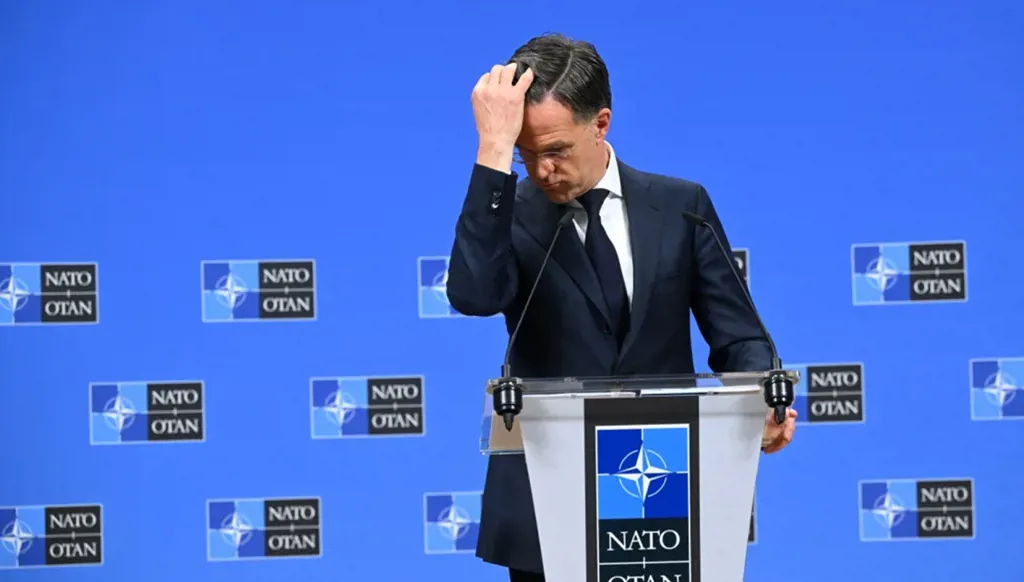


The results of the war on Iran have revealed the extent of the fractures and imbalances within the North Atlantic Treaty Organization. The war may end soon, after US President Donald Trump indicated that the hardest part is over following the complete destruction of Iran’s core capabilities. But what is the fate of NATO?
This alliance, officially established on April 4, 1949, dominated the global military scene after the fall of the Berlin Wall and the collapse of the Soviet Union. However, in recent years it has appeared unstable amid widespread belief that it will eventually meet the same fate as its former rival, the Warsaw Pact, albeit with differences.
Signs of Fracture
The signs of NATO’s fracture are not new. They increased with Trump’s return to the White House for a second term, and the war on Iran has clearly exposed a rift between the United States and the major European powers in the alliance, especially France, Britain, and Spain, particularly regarding the sharing of war burdens and the setting of strategic priorities.
While the US-European disagreement over NATO dates back to the 1960s, it was limited and manageable. After the Cold War, it evolved into a deep structural dispute, reaching its peak when Trump assumed the presidency in 2017.
Fight for Yourselves
Although the war in Ukraine has restored some cohesion within the alliance, disagreements remain on many issues.
Trump openly stated in a harsh and strict message to his European allies: “Learn to fight for yourselves, because America will no longer be there to help you.” This marked a radical shift in his doctrine, linking the security umbrella to the actual contributions of allies to military operations and their direct financing.
In this context, Trump recently complained about the lack of French cooperation with the United States in the war on Iran, asserting that Paris had not been supportive. He also accused London of failing to secure fuel for its planes due to the closure of the Strait of Hormuz, mocked its refusal to participate in striking the Iranian regime’s leadership, ridiculed its attempt to purchase fuel from the United States, and demanded that it summon the courage to take oil from the strait by force.
While London has not announced plans to send ships to the Strait of Hormuz, it confirmed that it is currently studying and discussing a range of options with its allies and partners to ensure maritime security in the region. The British hesitation did not please Trump at all, leading him to criticize and mock it, labeling it as betrayal.
Amid all this, Washington is preparing intensively for ground military operations in Iran, while Tehran is convinced that negotiations were unproductive and merely a cover for strategic deception in preparation for a land invasion, according to Iranian Parliament Speaker Mohammad Bagher Qalibaf.
There is no doubt that NATO is currently going through a delicate phase characterized by declining internal cohesion, rather than being on the verge of immediate collapse.
Trump’s recent statements have revealed a US tendency to reduce its traditional commitment to Europe’s security and to link support to the level of allies’ contributions to the war on Iran. This undermines the principle of collective defense on which the alliance was founded. Trump went even further when he told the British Daily Telegraph: “I am seriously considering withdrawing from NATO after its failure to join our war on Iran,” describing the alliance as a “paper tiger.”
On the other hand, Europeans appear hesitant to engage in foreign military adventures and prefer more cautious approaches, which further widens the rift within NATO.
However, NATO is not the Warsaw Pact, and it is unlikely to meet the same dramatic fate. It will inevitably enter a phase of reshaping itself, involving a redistribution of roles and an increasing European tendency toward defense autonomy.
In short, NATO will not disappear, but it will inevitably change. Its ability to adapt to geopolitical shifts will determine its future. If Trump carries out what he has hinted at, Europe will be forced to take greater responsibility for its own security than ever before.
Disclaimer: The opinions expressed by the writers are their own and do not necessarily represent the views of Annahar.