





 واتساب
 يوتيوب
 انستغرام
 نبض
نبض
 ثريدز
ثريدز
"How to rebuild Lebanon?"


شارك على
 مسنجر
مسنجر
 بريد إلكتروني
 الطباعة
شارك على




Najat Aoun Saliba*
Polluted air, water, soil and food are violations of our basic human rights
Only if anyone can live without air for more than one minute, only if anyone can survive without drinking water for more than one day, and only if anyone can eat poisoned food and get out alive, can I assume that caring for the environment we live in is a secondary option. A clean environment is then a necessity that ensures the continuity of life on earth. For that, protecting the environment and the ecosystem should be considered a top priority.
While in most High Income countries (HIC) these facts have been established and incorporated into people’s lives and public and governmental policies, in Lebanon, ignorance and short-sighted public officials and warlord rulers have put the environment at the bottom of the list of priorities and made the Ministry of Environment (MoE) a secondary office assigned as a bonus to the parties who have not completed their quotas in the cabinet. For the past 20+ years, not one minister has had a background related to any environmental discipline. This leaves the environment as the weakest point that continues to be exploited at the expense of rapid gains and quick media scoops following small interventions that last as long as the media announcement does. This leaves the country with a void in long-term strategies to mitigate the catastrophic problems with air, water, and soil that we have been living under since we were born.
Yes, clean air, water, and soil are basic human rights that we, the inhabitants of this country, are entitled to. And to do so, the work should not only be limited to mitigating pollution, which in and of itself is a huge undertaking, but should also include protecting biodiversity, adapting to climate change, adopting green and sustainable practices, and developing and advising on a circular economy. But turning to urgent matters first, mitigating pollution to save the lives of the many who are under threat is of utmost importance; hence, in the following, I will address only this issue.
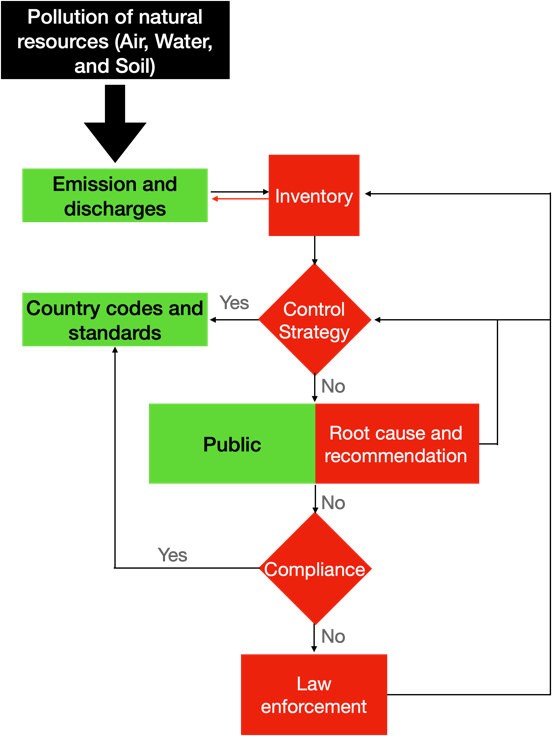
Any control strategy related to air, water, or soil quality includes a set of specific techniques and measures identified and implemented to achieve reductions in air, water, and soil pollution to attain quality standards or set goals. The highest considerations should include reducing and eliminating emissions and discharges at source and examining pollutant chemical and physical characteristics, as well as economic factors, such as capital and operating costs, equipment maintenance, equipment lifetimes, and administrative, legal, and enforcement costs.
The goal of all control strategies is to achieve real and measurable emission reductions. The basis of a control strategy is then to:
- Determine a list of priority pollutants. Pollutants in a specific location are determined based on the severity of the air, water, and soil quality problems in that area and the extent to which their presence in nature and their quantity is associated with adverse health effects or environmental degradation.
- Establish a database that includes all local sources of pollution and their emissions and discharges.
- Define and share national standards of emissions and discharges and identify measures and recommendations to control sources of pollution that owners or operators of pollution sources will have to follow to reduce or eliminate pollution at source that is contributing to air, water, or soil quality problems.
- Involve the general public when developing the control strategy plan so that grassroots and collective efforts will instill ownership of the solutions among local residents and stakeholders.
- Include a data-transparent system, compliance, and accountability. These are vital and will help the public and the owners and operators of pollution sources understand the requirements and consequences of non-compliance.
- Introduce an enforcement program that details the actions that environmental authorities and the public will take if the sources do not comply.
In the immediate and short terms, mitigation efforts should focus mainly on obvious sources of pollution and the quickest means of controlling emissions. In the medium and long terms, more sophisticated and comprehensive strategies will need to be developed.
Below, I list two examples of control strategies for air quality and solid waste management to illustrate the proposed plan.
Air Pollution: managing air pollution will require a comprehensive current baseline coupled with continuous spatially distributed monitoring and a periodically updated inventory of emission sources, as shown in the figure below.
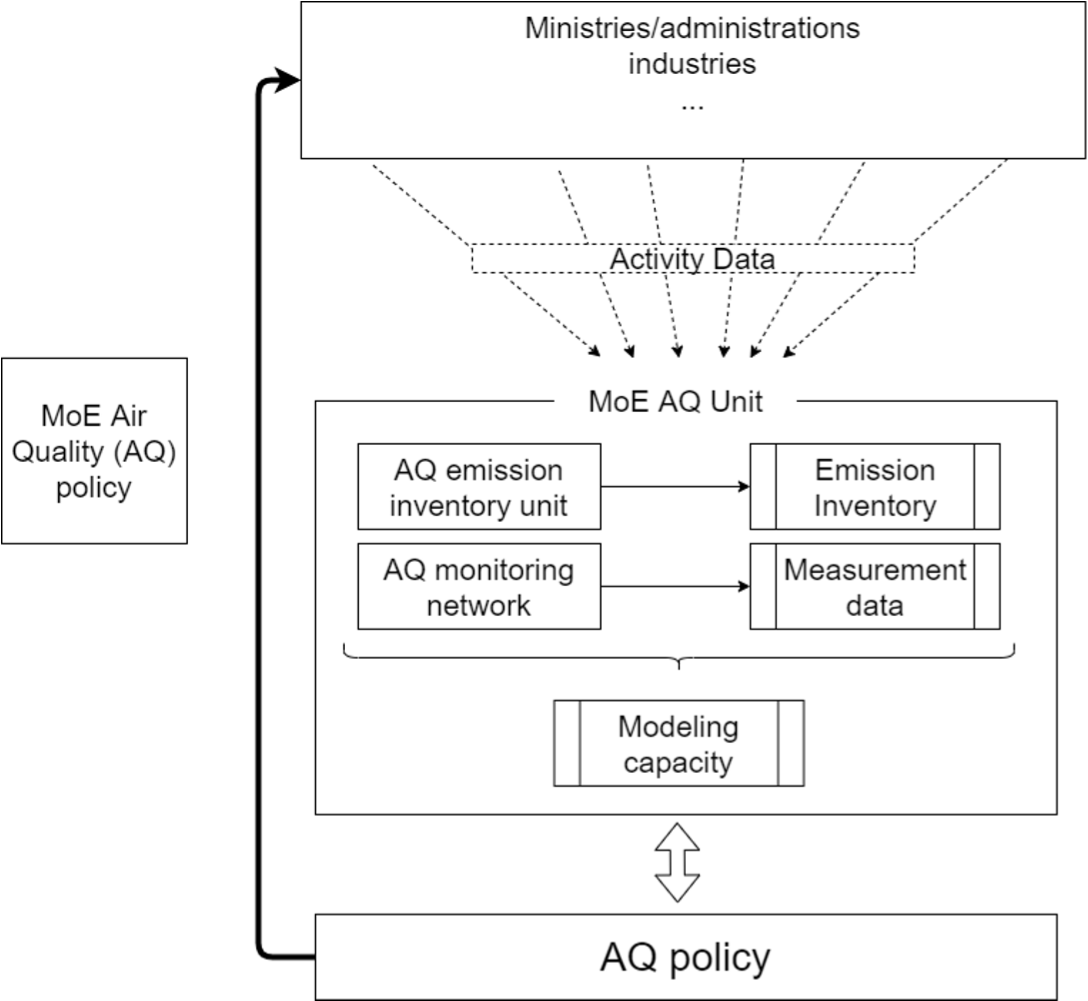
MoE = Ministry of the Environment
With the national Air Quality Monitoring Network shut down due to budget cuts, the air quality data available remain very segmented and non-homogeneous and are driven mostly by the research agendas of the many academic institutions that collect the data. This renders the data difficult to use as a monitoring tool for the success of various efforts to reduce air pollution. It is therefore imperative to reinstate the Air Quality Monitoring Network, possibly through low-cost sensors or a hybrid system to reduce costs, to collect a standardized baseline of criteria pollutants. The general population should be able to access monitoring data online. Additionally, it is recommended that the production and maintenance of an updated air pollution emission inventory become routine practices that are integrated into the air pollution reduction process.
Waste management and waste burning: Lebanon has a recurring issue in achieving evidence-informed strategic planning in solid waste management (SWM). The schematic below summarizes the country’s main decisions and policies for SWM and positions Lebanon in a seemingly perpetual state of crisis in SWM.
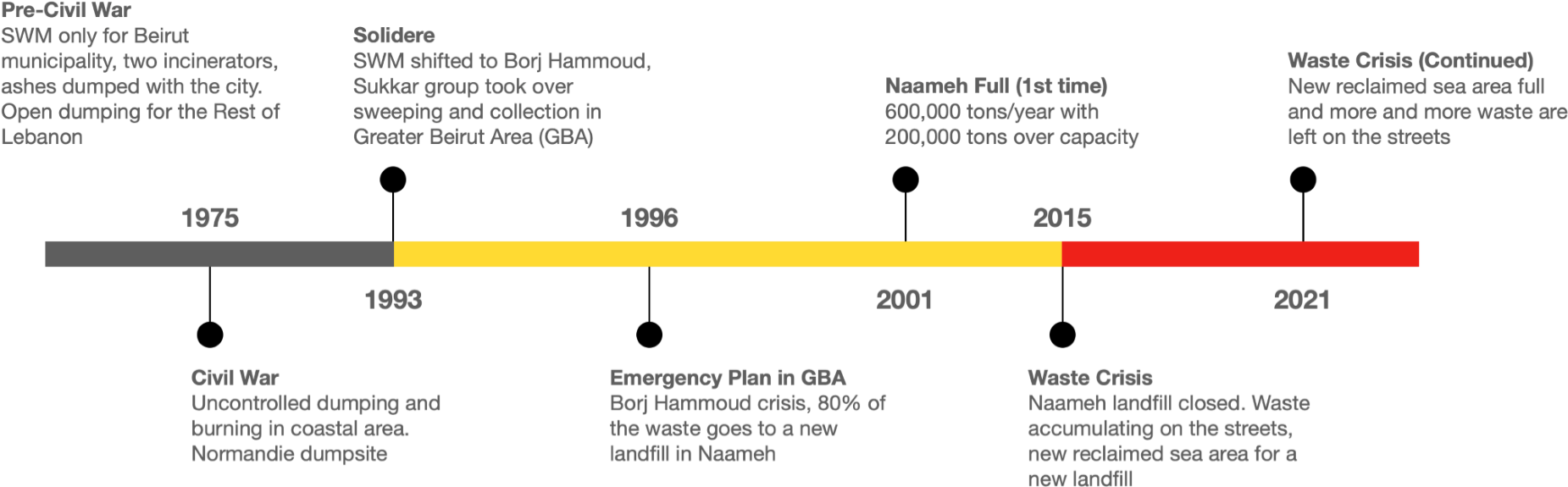
Like HICs, it is suggested that improved decision-making in SWM be based on a range of digital assessment tools and methods. Adapting such methods will require the academic community to adapt these tools and contextualize the data to be most suited to the local situation in Lebanon. These decision-making tools will produce sound data that can be used to propose an adequate national SWM strategy. Only then can we initiate the work for a long-term strategy that will ensure proper management of resources, waste reduction, and elimination of major sources of pollution.
In a nutshell, data and long-term strategic plans are the basis for all mitigation approaches. All ad-hoc urgent solutions will remain temporary and come at a high cost. The environmental disasters that we are witnessing from bad air quality, completely poisoned rivers, and contaminated food and soil are not unique to Lebanon. Many countries other than Lebanon have experienced similar and sometimes worse situations, but they were able to emerge from their misery and have become among the leading countries in the best environmental practices in the world. Where there is a will, there is a way. And until then, we will continue working on grassroots initiatives to empower the community, so that one day, the majority becomes ready to demand change.
Director of the Environment Academy
Professor
Chemistry Department
Faculty of Arts and Sciences
American University of Beirut


العلامات الدالة
الأكثر قراءة