The Strait of Hormuz: Iran’s high cost strategy in the war


شارك على
 مسنجر
مسنجر
 واتساب
 ثريدز
ثريدز
 بريد إلكتروني
 الطباعة
شارك على


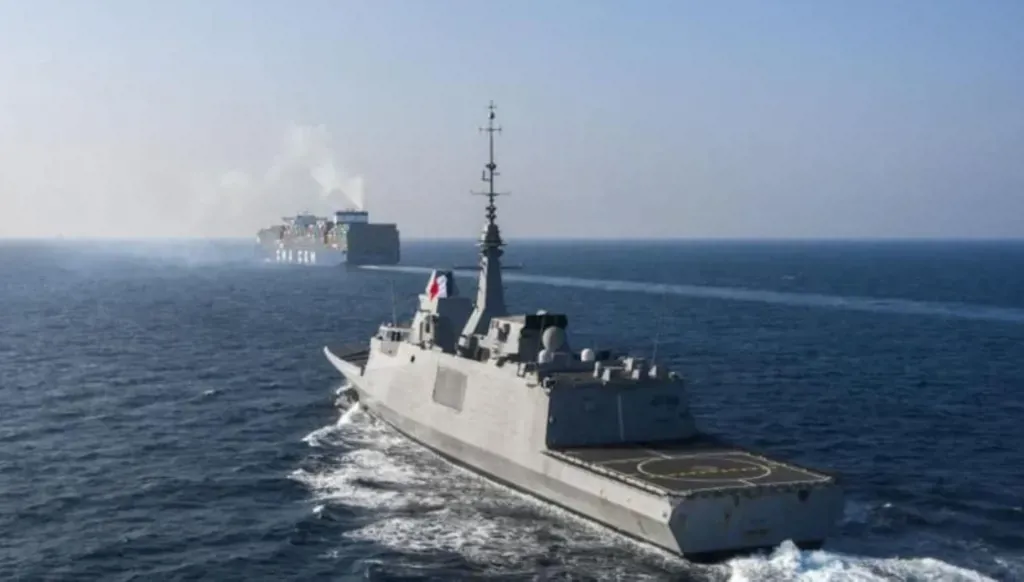


The Strait of Hormuz has returned to the forefront with the outbreak of the US Iranian war in late February 2026, even though it has never disappeared from Iranian strategic thinking as a geopolitical pressure tool for more than four decades. Iran has long considered it a balancing card against Western military superiority. However, the current war, in which the administration of US President Donald Trump has set the goal of overthrowing the Iranian regime, has pushed Tehran to reactivate this option after the first ten days of fighting. This came especially in light of its military setbacks and the loss of most of its top leadership, starting with Iran’s Supreme Leader Ali Khamenei and other senior security leaders in the army and the Islamic Revolutionary Guard Corps, as well as the initial hesitation of several Western countries regarding the US campaign against Iran, which later shifted toward indirect support and backing for the military operations.
As the confrontation intensified among the three parties to the war, Washington, Tel Aviv, and Tehran, Iran concluded that focusing on closing the strait could deliver unconventional gains and a symbolic victory. By doing so, it could demonstrate its operational control despite reports that its naval power had been destroyed. Around 21 million barrels of oil pass through the strait daily, accounting for about 20 percent of global daily oil consumption and roughly 25 percent of the world’s seaborne oil trade. This makes it a central pressure tool capable of producing effects that go far beyond the direct military sphere, extending to global energy markets and international supply chains. Such a move could trigger a major shock in global energy markets and sharp price increases. This has already begun to appear as oil prices rose to levels exceeding 110 dollars per barrel, with expectations that they could reach between 150 and 200 dollars if the escalation continues. For this reason, the Islamic Revolutionary Guard Corps, which specializes in asymmetric warfare in the maritime environment, has maintained the option of closing the strait, at a time of growing concern among Western and Asian countries about potential shortages in energy supplies.
Iran believes that closing the strait is a geopolitical military tactic that would cost it less in the course of the current war, by relying on tactics that are low in cost and high in ambiguity. Instead of a full closure of the strait, which could trigger a comprehensive war, Tehran relies on a mix of tools that make navigation through the strait highly risky. These tools include naval mines, fast suicide boats that it previously used to target ships in Iraqi territorial waters near the ports of Basra, suicide drones, and anti ship missiles. In addition, Iran has demanded that commercial vessels refrain from supporting the United States and Israel as a condition for safe passage, and it has threatened that not a single barrel of oil will pass even for American allies. Through this approach, Iran is attempting to impose a new strategic equation based on the principle of control without closure. This means keeping the strait partially open while maintaining the constant ability to threaten or disrupt it whenever necessary. Leaders of the Islamic Revolutionary Guard Corps have expressed this equation clearly by declaring that ships must obtain Iranian permission to cross the strait, or risk being targeted.
Iran’s belief, tactics, and objectives regarding the Strait of Hormuz will not necessarily produce a decisive advantage or victory. The move toward closing the strait has already prompted the US military to launch attacks against Iranian naval capabilities stationed in the area. According to Donald Trump, these strikes succeeded in eliminating Iran’s navy, which signals one of the first major losses in Iran’s maritime defensive structure as a result of its insistence on the strategy of control and closure.
At the same time, the closure has turned into a moment of confrontation between Iran and Arab, regional, and Western actors, at a time when Tehran appears to be in greater need of a diplomatic path to end the war. This development increases the cost of the conflict for Iran, which will no longer remain limited to the United States and Iran but has quickly evolved into an international crisis.
Countries of the European Union, as well as China, Japan, and South Korea, are unlikely to allow prolonged disruption to global supply chains. This raises the possibility that the internationalization of the management of the Strait of Hormuz after the war could become a key issue in negotiations with Iran. If Iran accepts such an arrangement and provides guarantees that it will not repeat what it has done in the energy market, this would represent a second major loss, although it might also open the door for Tehran to rebuild its international relations. Otherwise, Iran would have to prepare for the possibility of a global war that may not take long to emerge, since major powers will not accept remaining at the mercy of Iran.
Disclaimer: The opinions expressed by the writers are their own and do not necessarily represent the views of Annahar

العلامات الدالة
الأكثر قراءة