Iran’s Supreme Leader: The Shia authority shaping a new Middle East


شارك على
 مسنجر
مسنجر
 واتساب
 ثريدز
ثريدز
 بريد إلكتروني
 الطباعة
شارك على


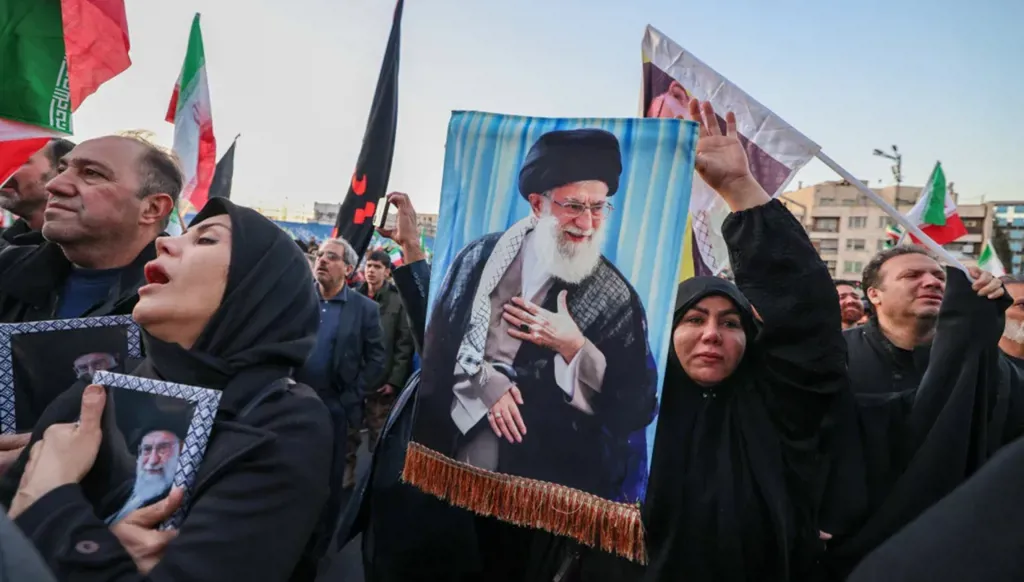


The Supreme Leader of what is called the "Islamic Revolution in Iran" is not just a president of presidents ruling by the power of religion and controlling the intricacies of life in the Islamic Republic of Iran. According to the theory of "Wilayat al-Faqih," revived by the founder of the Islamic Revolution, Imam Khomeini, in 1979, he entered the core of the political system. He became not just a religious reference, nor just a political reference, but a combination of both religious doctrinal and political influence, turning into one of the most important religious-political leadership roles in the world, and particularly in the Islamic world.
The Supreme Leader is the highest authority in the state, the ultimate reference in major policies, and holds the decisive word in strategic issues, in addition to his religious authority, which competed with other Shia references and limited their influence—especially the Iraqi references in Najaf, notably Seyyed Ali Sistani, who is originally of Iranian descent. However, the competition revolved around the place of reference: Najaf or Tehran, with the latter achieving significant progress due to the political, military, and financial capabilities that governed, or rather controlled, the Shia world.
Tehran—the Islamic Revolution—was able to heavily compete with Najaf for several reasons, most notably Iran's support of political and military Shia movements in Lebanon, Syria, Iraq, and Yemen. This is in addition to its cross-border discourse, which stands with the deprived and protects the oppressed, associating the Shia identity with confronting Western and Israeli hegemony.
The influence of the Supreme Leader expanded, or was expanded, in cross-border politics along with the expansion of the "Revolutionary Guards'" role inside and outside the country, making Iran a heavyweight in defining regional policies, drawing negotiation lines on nuclear and international issues, and global energy security, after sponsoring "liberation movements," supporting "terrorist movements," and intervening in the affairs of countries, even reaching Latin America.
Thus, the importance of the Supreme Leader’s position lies in its combination of three rarely unified powers in one persona: religious legitimacy, political leadership, and regional influence, which has made him a key player in Middle East equations, thus capturing attention.
Assassinating the Supreme Leader is a complex operation, not technically speaking, but in its religious outcomes more than political, because the system, whether it continues in one form or another or collapses completely, brings a change in Iran, where the future will certainly be different from the past ruled since Khomeini's return in 1979. Change is inevitable in other regions and countries, and it doesn’t necessarily mean for the better, but it is indeed unavoidable.
The assassination of the Leader, representing such a significant entity, is the first of its kind directly targeting someone this significant, representing a large portion of Shia Muslims worldwide. Typically, references are targeted in covert ways, through poisoning or assassinations where the perpetrator remains anonymous.
According to the fifth article of the Iranian Islamic Republic constitution, “In the absence of Imam Mahdi (may Allah hasten his reappearance), the governance and leadership in the Islamic Republic of Iran are vested in the fair, pious, contemporary, courageous, competent, and prudent jurist,” as stipulated in article one hundred seven (107) of this constitution.
The ongoing and current happenings are blatant crimes that increase Shia animosity towards the United States and Israel, and deepen estrangement with the Western and Arab worlds, especially following the Iranian reactions to the Gulf states. Assassination carries political consequences and repercussions that will further isolate and encircle an entire sect, altering political and security dynamics, and impacting various issues and situations in the region and globally.
A major transformation emerges if the war continues and prolongs after the leader's fall, initiating changes in maps and systems involving several countries in the region, towards a new Middle East. It's an old yet renewing project, which perhaps the United States and Israel find the time is ripe to achieve following the collapse and toppling of regimes.
Disclaimer: The opinions expressed by the writers are their own and do not necessarily represent the views of Annahar.
العلامات الدالة
الأكثر قراءة