Trump faces three options in dealing with Iran’s growing threat
Iran’s reliance on the Strait of Hormuz for its own trade likely means the regime would only consider blocking the waterway in the most extreme circumstances.


شارك على
 مسنجر
مسنجر
 واتساب
 ثريدز
ثريدز
 بريد إلكتروني
 الطباعة
شارك على


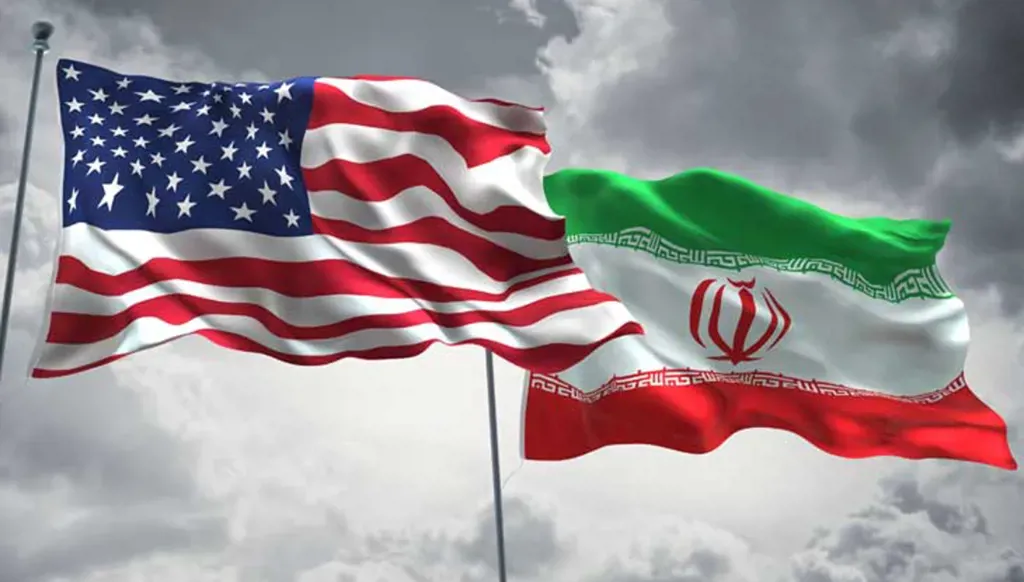


U.S. President Donald Trump has publicly threatened to use force to stop the repression of protesters in Iran. He now faces a dilemma. If the United States does not act, or if it acts ineffectively, American credibility will suffer. This could lead to a more aggressive Iran and undermine deterrence toward China and Russia. Tehran has abandoned the traditional domestic repression playbook, which relied heavily on non-lethal force and prolonged suppression rather than intensification to exhaust and frustrate opposition. This time, the regime has resorted to massive, concentrated violence.
This raises questions about whether Iran might also abandon its traditional external “resistance” strategy, which relied on calculated use of force to achieve major effects while avoiding war with the United States. Much will depend on whether Tehran believes it faces an imminent threat to its survival.
What options does the United States have to confront the dangerous situation in Iran? According to a serious researcher at a major U.S. think tank, there are three.
The first option consists of several military choices. One example is a Venezuela-style approach to managing the regime through coercive diplomacy. This does not aim to change the regime but could involve decapitating the leadership by targeting Supreme Leader Ali Khamenei or pressuring the Islamic Revolutionary Guard Corps (IRGC) leadership to force surrender. This would be followed by a series of agreements regarding the nuclear program, oil exports, and human rights. However, such an approach seems unlikely due to the IRGC’s loyalty to the regime. If it were attempted, it would require sustained American pressure to prevent backsliding.
The second option is regime collapse through airstrikes and cyber operations designed to disrupt the repression apparatus. This could include bombing security headquarters, disrupting the country’s surveillance system, and interfering with the logistical effort required to support repression. However, most deployed security forces would not be easy targets from the air, as they are widely dispersed throughout urban areas and intermixed with civilians. The sheer number of these forces is also a major challenge. A possible disintegration of security forces, with some joining protesters—a common feature of most successful revolutions—would likely occur only if they believed the tipping point had been reached and the regime was faltering. Yet, the absence of an organized opposition remains a major obstacle to a successful transition. This is an area where the Iranian diaspora could play a greater role.
The third option is to carry out symbolic, performative strikes designed to demonstrate American resolve without fundamentally changing conditions on the ground. Such actions could satisfy domestic political pressure to “do something” while avoiding deeper military entanglement. However, these measures risk failing to alter the regime’s behavior or the course of events in Iran, which could render U.S. threats hollow and weaken American deterrence.
If Iran believes it faces an existential threat, the regime may respond with all available means, including attacks on U.S. bases, strikes against U.S. allies, and disruptions to shipping in the Gulf. If it does not believe its survival is at risk, it is likely to respond more proportionally to attacks, aiming to inflict enough pain to deter the United States from striking again. Iran’s reliance on the Strait of Hormuz for its own trade would likely prevent any effort by the regime to block the waterway except under the most extreme circumstances. Instead, Tehran is likely to continue its current “smart control” strategy, which involves redirecting tankers in response to adversary actions.
Comparisons with Venezuela are of limited use in this crisis. Iran retains substantial retaliatory capabilities against regional energy infrastructure and major U.S. interests, and seizing Iranian oil shipments risks provoking asymmetric escalation that could draw the United States into a broader conflict. Interception remains an option but would likely require sustained military engagement.
Another prominent researcher at the same U.S. think tank notes that the current set of maximum-pressure sanctions has already exhausted much of the economic leverage available against Iran. While sanctions impose significant pressure, they also limit additional punitive options and do not prevent the regime from using extreme violence. Related measures, such as tariffs, are unlikely to have meaningful short-term political impact, particularly as they do not penalize companies doing business with Iran. Remaining options include stepping up enforcement against Chinese financial institutions facilitating Iranian oil sales and expanding targeted sanctions on those involved in repression—potentially including travel bans extending to their family members. Broader annual sanctions could cover most non-humanitarian economic activity. These measures require strong enforcement and intelligence support but are unlikely to produce decisive economic shocks that could change regime behavior. Sanctions are most effective when paired with credible compliance-for-relief pathways—but in the context of ongoing mass killings, it is unclear what concessions could justify easing pressure. Maintaining sanctions without leverage risks prolonging the suffering of ordinary Iranians without affecting elite decision-making.
Meanwhile, the regime’s nuclear program continues to pose an existential threat to the United States and the Middle East and will need to be addressed at some stage. Restarting negotiations, which have begun, may be a mistake, as new talks could result in broad sanction waivers. Additionally, accurately assessing Iran’s nuclear capabilities is now more difficult after U.S. and Israeli strikes on the program last June. Engaging in discussions amid mass repression could also create the impression that Washington is legitimizing a regime whose political legitimacy has been irreparably damaged. Returning to pre-crisis governance models is unrealistic, and the regime has taken no meaningful steps to address the grievances that sparked protests. Cycles of protest and repression are therefore likely to continue.
Disclaimer: The opinions expressed by the writers are their own and do not necessarily represent the views of Annahar

العلامات الدالة
الأكثر قراءة