Tensions and talks: U.S. and Iran prepare for Geneva nuclear negotiations amid rising pressures
As Trump ramps up military and economic pressure, Tehran signals cautious flexibility on nuclear talks, while the specter of regime change and regional tensions looms over diplomacy.
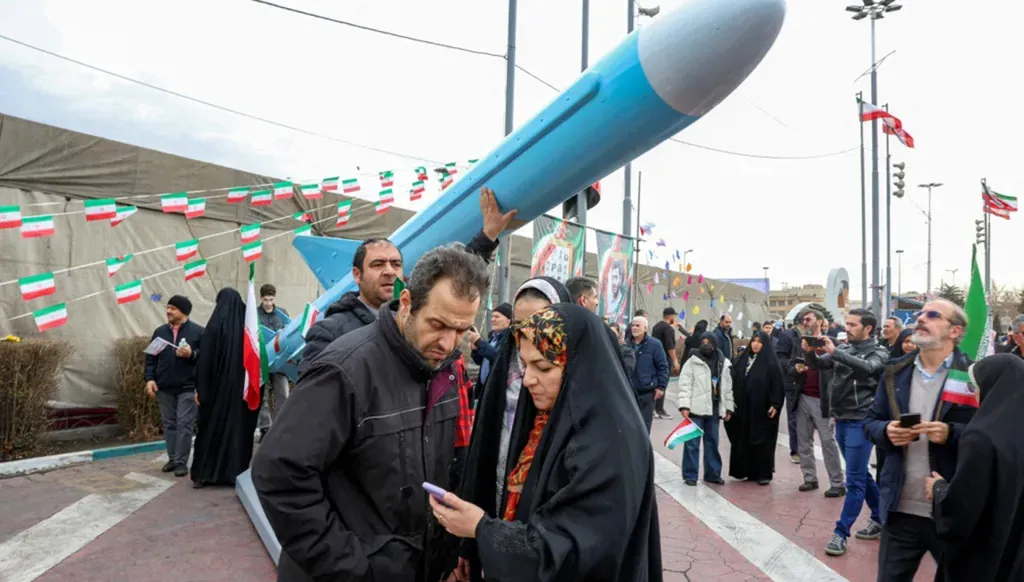
Model of a cruise missile during the 47th anniversary of the Islamic Revolution parade in Tehran, February 11, 2026. (AFP)
The escalation of political, economic, and military American pressures did not prevent the scheduling of a new round of indirect negotiations with Iran in Geneva tomorrow, with Omani Foreign Minister Badr Albusaidi continuing as the intermediary between Iranian Foreign Minister Abbas Araghchi and the American envoys Steve Witkoff and Jared Kushner.
It is clear that as negotiations move from one round to the next, both sides address the core issues on the table. So far, the nuclear program has emerged as the primary—and perhaps the only—focus, taking precedence over the other two issues concerning Iran's missile capabilities and its relations with regional allies.
Before the Geneva round, following the Muscat one, U.S. President Donald Trump increased the pressure by ordering the redeployment of the American aircraft carrier Gerald Ford from the Caribbean to the Middle East to join the carrier Abraham Lincoln. The American military buildup, expected to be completed within a month, aligns with the White House’s assumed deadline for reaching an agreement. Moreover, the military assets moving toward the region have fueled speculation that the U.S. might be preparing for military strikes that could last weeks if Trump opts for war.
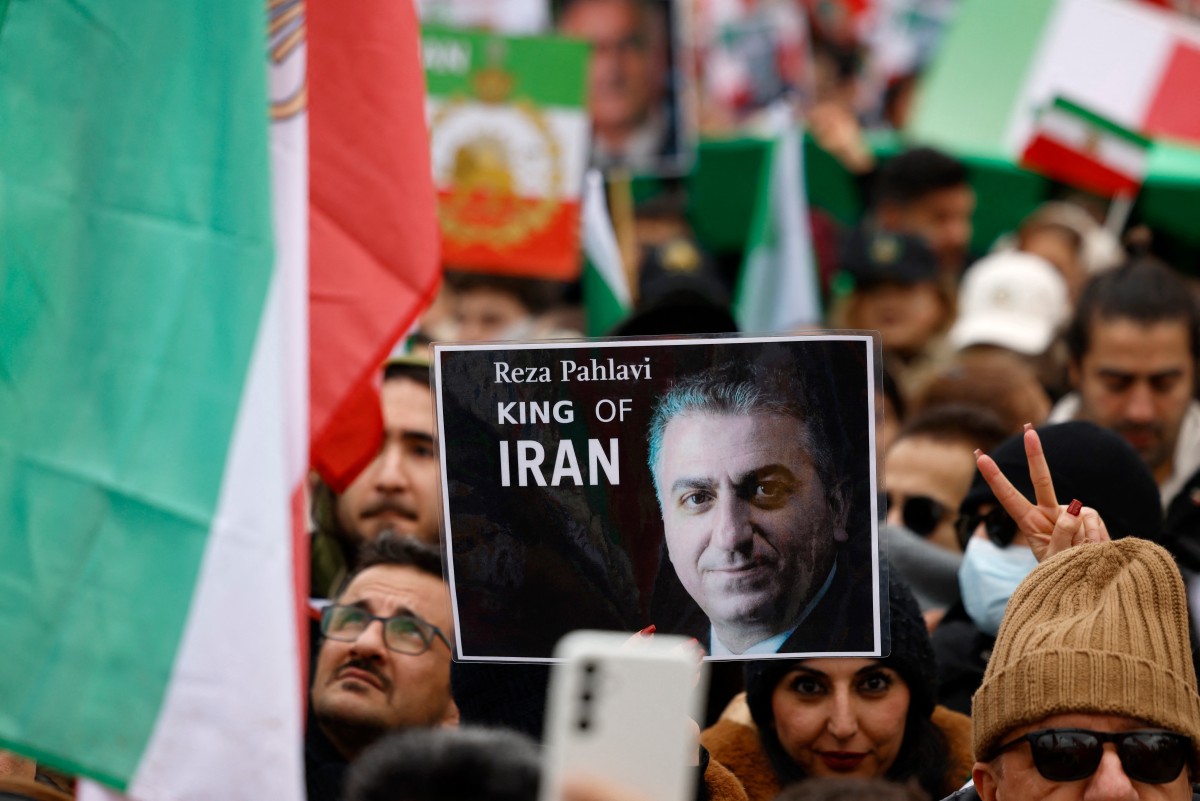
Once again, Trump alluded to the “best solution in Iran might be regime change,” coinciding with Reza Pahlavi, son of the former Shah Mohammad Reza Pahlavi, announcing at a gathering of his supporters in Munich on the sidelines of the Munich Security Conference his readiness to lead a “transitional phase” in Iran.
Supporters of Reza Pahlavi hold up his image during a rally on the sidelines of the Munich Security Conference in Germany. (AFP)
This comes as U.S. Secretary of State Marco Rubio expressed skepticism about reaching an agreement with Iran, putting forward a demanding proposal that Tehran agree to a meeting between Trump and the Supreme Leader of the Islamic Republic, Ayatollah Ali Khamenei.
Within the framework of pressure, the American news site Axios revealed that Trump and Israeli Prime Minister Benjamin Netanyahu, during their meeting last week at the White House, agreed on the necessity for Washington to work on reducing Iranian oil exports to China. Trump has previously threatened to impose a 25% increase on countries importing Iranian oil, a move that could trigger a crisis with Beijing ahead of the U.S. President’s planned visit to the Chinese capital in April. It is reported that Iran exports 80% of its oil to China.
If the goal of the American military and economic measures is to keep Iran under pressure to make concessions in negotiations, Tehran appears willing to show flexibility regarding its nuclear program. According to Iran’s Deputy Foreign Minister Majid Takht Ravanchi, the country is prepared to consider this issue if Washington demonstrates a willingness to discuss lifting sanctions. However, he firmly rejected the proposal to eliminate uranium enrichment on Iranian territory.
This aligns with what the head of the Atomic Energy Organization of Iran, Mohammad Islami, stated last week: Tehran might accept reducing the uranium enrichment level by 60% in exchange for the lifting of financial sanctions. Iranian officials unanimously reject linking the nuclear program to the country’s missile capabilities or regional influence.
The apparent divergence between the American and Iranian positions confirms that the negotiations remain far from producing an agreement capable of dispelling the specter of war. Undoubtedly, the Geneva round—preceded by Witkoff’s delivery of American proposals to the Omani side and Iranian National Security Council Chairman Ali Larijani’s responses—could further clarify whether Washington and Tehran genuinely seek a formula that offers both sides a win-win outcome, or if diplomacy is headed for a dead end.
Disclaimer: The opinions expressed by the writers are their own and do not necessarily represent the views of Annahar.



 مسنجر
مسنجر
 واتساب
 ثريدز
ثريدز
 بريد إلكتروني
 الطباعة