Beyond the myths: The real life of hyenas in Lebanon
From forests to villages, Lebanon’s striped hyenas face survival challenges amid urban sprawl—discover their real story beyond myths, fears, and viral photos.
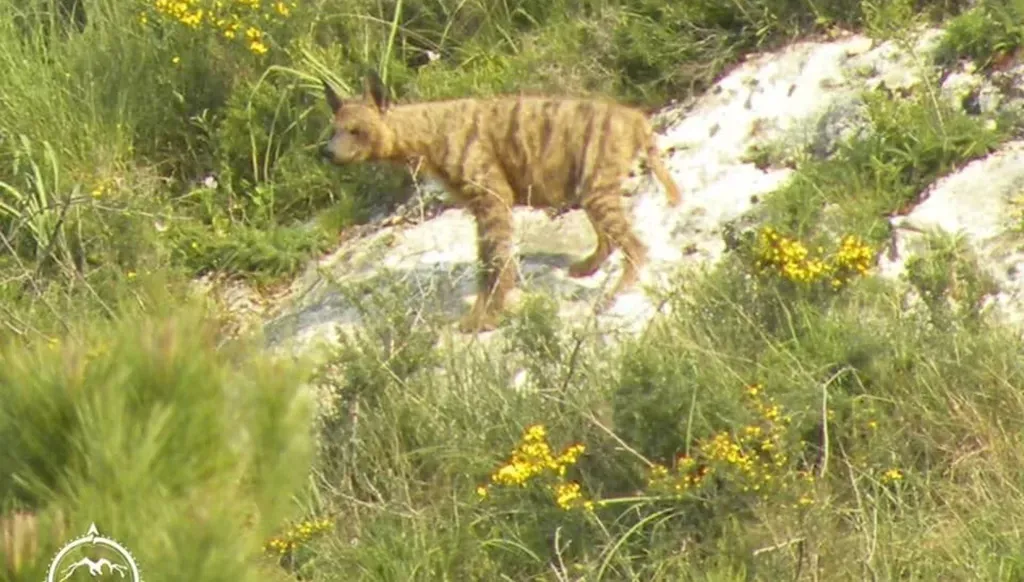
A hyena spotted in a northern Lebanese village. (Khaled Taleb)
When photographs of hyenas in northern regions of Lebanon began circulating, they were not merely passing images; they quickly became a catalyst for collective panic and a serious alarm threatening the survival of these creatures, whose name has long been tied to myths and legends far removed from reality.
It was as if the image arrived as the “awaited proof” used to justify hostile behavior, prompting some citizens to attack and kill hyenas under the pretext of protecting their homes from the creature’s alleged “treachery.”
Yet field evidence reveals the exact opposite: hyenas do not naturally approach residential areas. Rather, uncontrolled urban sprawl, shrinking green spaces, and dwindling forests have forced them closer—either out of necessity or as an emergency alternative to their natural habitat, which is being eroded day by day.
Wildlife conservation is a precise process grounded in maintaining a delicate balance, and understanding wildlife populations is a fundamental pillar in developing effective protection strategies. When it comes to hyenas—classified as carnivorous animals and often misunderstood in African and Asian environments—accurately determining their numbers remains a complex yet essential task.
According to current estimates, the global hyena population ranges between 32,000 and 55,000 individuals—a figure that encompasses the various hyena species, which differ in population size as well as in their conservation and protection status.
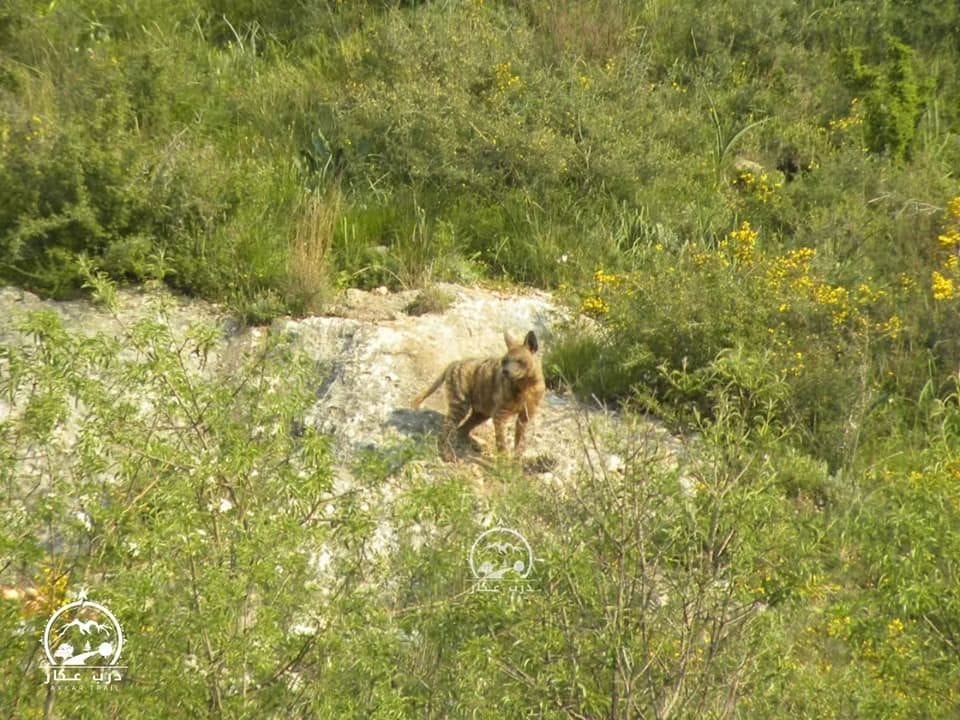
The hyena appeared in the open after a fire broke out at the site where it had been hiding. (Darb Akkar Association)
The Day a hyena was seen in Aayoun el-Ghizlane
Khalid Taleb, an expert in forest management, recalls a photograph of a hyena taken seven years ago in the Aayoun el-Ghizlane area by Yara Meraabi, a member of the Dareb Akkar association.
He explains that the area is originally a natural habitat for hyenas, before urban expansion encroached upon it, noting that the animal’s appearance in the open at the time followed a fire at the site where it had been hiding—reinforcing the fundamental truth that humans encroach on these creatures’ habitats, not the other way around.
Taleb directly links the random hunting of hyenas to a range of popular beliefs and inherited misconceptions—some claiming the use of hyena skin in illegal practices, others associating the animal with spirits and magic. He affirms that these widespread narratives, “unfortunately, are unrelated to the truth and have no scientific basis.”
Despite awareness campaigns launched in recent years to highlight the importance of hyenas in maintaining ecological balance—and their vital role in clearing carcasses and limiting the spread of diseases and epidemics—these creatures continue to pay the price of myth and misunderstanding, locked in an unequal battle with humans.
Based on their importance to wildlife and the environment, Taleb outlines the different types of hyenas, elaborating on the striped hyena: “Hyenas are classified as nature’s cleaners because they feed mostly on carrion, though they may also hunt small mammals. Larger species, such as the African spotted hyena, are known for their ability to hunt large prey—animals that are not found in Lebanon. Therefore, the striped hyena is not the monster it is often portrayed to be, but rather an essential pillar in the life cycle and the food chain, at whose top it stands.”
He emphasizes that hyenas “do not chase herds or humans, as is commonly believed, but only seek food and a safe place to live.” Yet their numbers have declined compared to previous years, and they are sometimes seen venturing out during severe storms in search of sustenance.
Although the hyena is officially listed as endangered, the CITES General Assembly in November 2025 upgraded the striped hyena’s classification from Appendix III to Appendix II.
No figures on the actual numbers of hyenas
In Lebanon, the striped hyena is fully protected under existing laws, according to Dr. Elias Ibrahim, director of animal resources at the Lebanese Ministry of Agriculture. He notes that, through local and international efforts and an official initiative at the end of 2025, the species was also included in the appendices of the international CITES Convention, granting it legal protection worldwide and prohibiting its trade or hunting.
It is important to distinguish between the striped hyena found in Lebanon and African hyenas, especially given the circulation on social media of images depicting species that do not inhabit Lebanon but are found exclusively on the African continent.
Ibrahim emphasizes that “the presence of the striped hyena in Lebanon is not a new matter. What is new is documenting its presence and raising public awareness on how to coexist with it, rather than hunt it as was done in the past.” He notes that photographing or filming hyenas does not necessarily indicate an increase in their numbers, since the same individuals often move across multiple areas. This underscores the importance of tracking their movements to understand their true population in Lebanon and to monitor their reproduction rates.
Despite these efforts, Ibrahim acknowledges that accurate figures on Lebanon’s hyena population are still unavailable, as monitoring them requires a specialized and costly project to track their movements and avoid counting the same individuals multiple times. He adds, “We are working in cooperation with the Ministry of Environment to prepare a comprehensive study on wildlife in Lebanon, which includes hyenas and other species.”
Additionally, the Rural Development Directorate at the Ministry of Agriculture works to protect hyenas and other wildlife, both by enforcing local laws and by including them in international agreements to prevent illegal trade and indiscriminate killing. Under the hunting law and the legislation of the Ministry of Environment—which safeguard Lebanon’s native wildlife—and alongside the efforts of experts and environmental activists, there has been a noticeable shift in how these creatures are treated, reflected in increasing numbers of some species, thanks to awareness campaigns highlighting their vital environmental role.
Regarding hyena distribution, Ibrahim notes that there are no fixed or designated areas for their presence. They are often found in mountainous regions, with occasional sightings along the coast during winter, as they move in search of food.
The new factor is not the hyena but the camera
To explore the world of hyenas further, it was essential to consult Dr. Mounir Abi Said, a prominent researcher and authority on wildlife in the mountains of Lebanon. He has devoted his long academic career to studying the natural behaviors of wild animals in their habitats, striving to dismantle the unjust stereotypical image that has shadowed hyenas for decades.
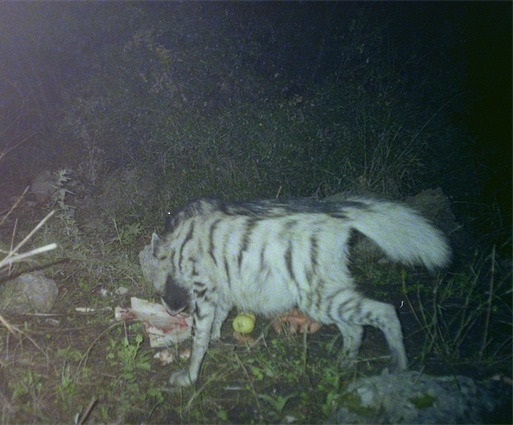
The most widespread spotted hyena in Lebanon (photo by Dr. Mounir Abou Saeed)
Choosing Abi Said was no coincidence, as he is the first researcher in Lebanon to complete a specialized doctoral thesis on hyenas in the country. Drawing on his extensive field and academic experience, he explains in his conversation with Annahar that the presence of hyenas in certain Lebanese regions is not a recent phenomenon, but dates back many years. What has changed today is the increased documentation of these sightings, driven by the widespread use of social media platforms.
Abi Said notes that hyenas move closer to homes during the winter in search of food, not out of aggression or intent to cause harm, as is often claimed. He emphasizes that their presence is “completely natural,” and their behavior poses no cause for concern. The real novelty, he adds, is not the hyena itself but the camera—referring to smartphones that now capture what was difficult to document in the past.
The Middle East and Asia have historically been home to hyenas, with Lebanon among the countries that have long hosted a significant presence, making it an integral part of their natural range. The wildlife specialist explains that hyenas are scientifically divided into four main types: the spotted hyena, the brown hyena, the striped hyena, and the aardwolf, noting that the striped hyena is the only species found in Lebanon and most Arab countries.
According to field studies conducted by Dr. Abi Said, the striped hyena is primarily found in areas rich in oak forests. However, its range is not confined to the mountains, as it has also been observed in coastal regions such as Jounieh and Sahel Alma, demonstrating its ability to adapt to a variety of natural environments.
Hyena sizes vary by species, with the spotted hyena being the largest, followed by the brown hyena, the striped hyena, and finally the aardwolf. Unlike the brown hyena—common in Africa—which often lives in groups, feeds mainly on carrion, and rarely hunts, the striped hyena displays a more solitary behavior pattern.
Between the common image and biological truth
Despite rapid urban expansion and shrinking natural habitats, hyenas strive to adapt to these changes, as long as they are not subjected to aggression or killing—engaged in an open struggle for survival between wildlife and human encroachment.
Abi Said goes on to describe hyena behavior, highlighting the stark contrast between its popular image and biological reality. He explains, “This creature is naturally timid, contrary to what popular imagination suggests; it flees at the sight of humans and lacks the speed necessary to chase or attack. When it feels threatened—by humans or other animals—it raises the hair on its back to appear larger, a defensive gesture intended to intimidate, not to show aggression.”
Abi Said asserts that hyenas do not attack humans, though, like all wild animals, they may defend themselves if they perceive a direct threat. He also notes that their approach to residential areas is often triggered by human behavior—particularly the disposal of food waste near homes—which attracts them in search of sustenance, especially during periods of hunger or scarcity of natural resources.
Regarding the decline in hyena numbers and their concerning status, Abou Saeed notes that the International Union for Conservation of Nature (IUCN) has classified the hyena as a species at risk of global extinction, ranking it fifth in terms of environmental importance. He emphasizes that this classification underscores the urgent need to protect the hyena, following the tightening of regulations related to its updated status.
Today, there is an urgent need to raise environmental awareness and halt the ongoing encroachments on nature and its creatures, alongside the strict enforcement of existing laws. Protecting wildlife cannot be achieved without fostering an environmental culture that recognizes the role of every living being in maintaining a balanced ecosystem, free from myths and unfounded fears.
أثار الروائي الجزائري حامد ياسين تعاطفاً واسعاً بعد انتشار فيديو لبكائه خلال حفل توقيع روايته "الصحراء عاصمة الضباب"، في مشهد أعاد النقاش حول أزمة القراءة والترويج للكتب.
أسدل الستار على فعاليات ختام مهرجان الجونة السينمائي 2026 وسط أجواء مفعمة بالبهجة ورقص النجوم، إلى جانب تتويج أبرز الأفلام وتألق النجمات بإطلالات ساحرة.
أوضح كريملوف أن بطولة العالم تمثل البطولة الأهم على أجندة الاتحاد، مشيراً إلى أن قيمة جوائز النسخة السابقة التي أقيمت في دبي بلغت 8 ملايين دولار، فيما سترتفع إلى 20 مليون دولار في النسخة المقبلة.
يطلق الاتحاد اللبناني الرياضي للجامعات موسم بطولاته الجديد بخمس رياضات ويضيف منافسات جديدة لتعزيز الرياضة الجامعية في لبنان، ليرتفع عددها إلى 42 رياضة.





 مسنجر
مسنجر
 واتساب
 ثريدز
ثريدز
 بريد إلكتروني
 الطباعة