The resurgence of ISIS: How the Khorasan branch threatens South Asia
From Afghanistan’s borderlands to global jihad propaganda, ISIS-Khorasan is redefining militant networks with decentralized operations and transnational ambitions.


شارك على
 مسنجر
مسنجر
 واتساب
 ثريدز
ثريدز
 بريد إلكتروني
 الطباعة
شارك على


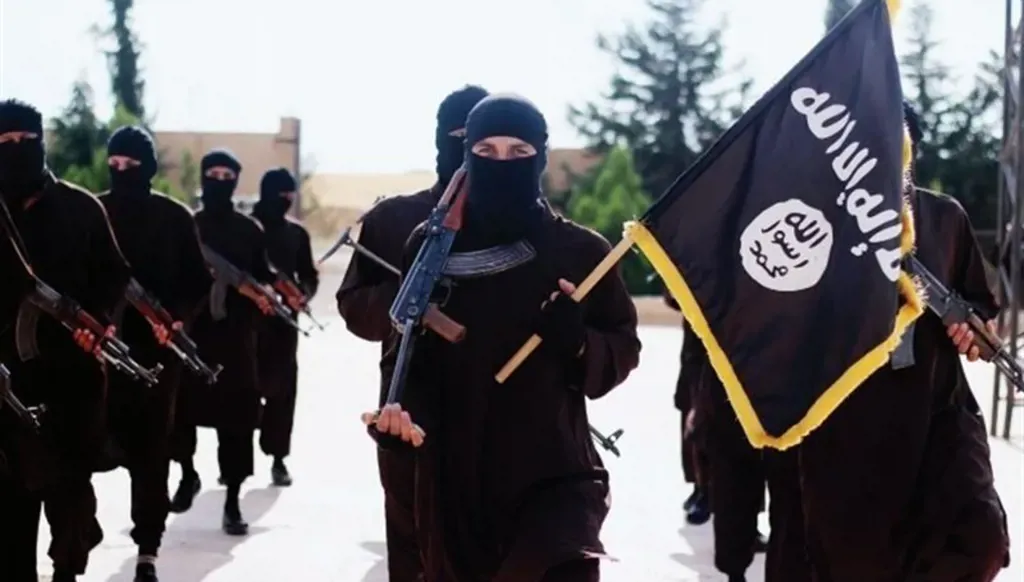


The name "ISIS" has not disappeared from the international scene, as the organization continues to expand its presence in West Africa and the Sahel region, with ongoing attacks in Syria and Iraq, and increasing influence in South Asia. Today, the organization relies on modern tools to ensure its survival, such as virtual assets, cryptocurrencies, artificial intelligence, and digital platforms.
However, the most significant development is ISIS's reliance, in its new phase, on local elements with precise knowledge of the geography and ideological ties to external groups, as seen in the case of ISIS-Khorasan, which uses the border areas between Afghanistan and Pakistan as a main base for its operations. Its emergence there is reminiscent of the Kharijites' revolt against Imam Ali for accepting reconciliation, as they turned against the "Taliban," which had accepted reconciliation with the United States.
The UN Security Council has discussed the activities of this organization, while the "Taliban" movement continues to deny its presence on Afghan soil, claiming it is based within Pakistani territory. However, this stance reflects the Taliban's desire to distance itself from accusations of harboring the organization and to leverage the issue of combating cross-border groups to open channels of communication with international powers, thereby alleviating its isolation.
The Taliban government understands the conditions of ISIS-Khorasan's emergence and how it can be used as leverage against Islamabad, despite the group also posing a direct threat to its legitimacy. Nevertheless, its presence on the Pakistani border serves the Taliban's interests. The organization was formed in 2014 from defectors of the Pakistani Taliban, Afghan Taliban, Al-Qaeda, Lashkar-e-Taiba, and the Haqqani Network, giving it diverse combat experience that has enabled it to carry out operations extending from Afghanistan to India and Central Asia. This has made it one of the most resilient ISIS branches, drawing the attention of the international community.
With the weakening of the central organization in Syria and Iraq, ISIS's structure has become decentralized, and multiple centers of power have emerged, including the Khorasan branch, which has gained greater independence in its activities. This branch has benefited from its extensive media capabilities, relying on local languages and translating publications such as the Al-Naba newspaper and Dabiq magazine, in addition to operating radios like Radio Voice of the Caliphate, thereby enhancing its recruitment ability within its social environment.
The organization does not operate under a strict hierarchical structure but functions through local leaders heading small, highly flexible groups, especially after losing several of its leaders to assassinations and bombings. It is currently led by Sanaullah Ghafari, known as "Shahab al-Muhajir," who has sought to expand the recruitment circle to include educated individuals and non-Salafis, reflecting an ideological direction aimed at broadening the organization. The fundamental ideological frameworks of the Khorasan branch trace back to efforts by two Afghan Salafi brothers, Jalaluddin and Abu Saad Mohammad Khorasani, who played a significant role in propagating the organization's rhetoric, particularly inciting against Shiites and fueling sectarian conflicts. Their call attracted numerous young Salafis in the Pashtun areas of Afghanistan and Pakistan.
The danger of ISIS-Khorasan lies in its granting of religious legitimacy to its operations, classifying the Taliban as an "apostate" group for accepting negotiations with the United States, considering political systems as "infidel," and deeming the killing of Shiites a duty, as they are regarded as "Iran’s soldiers." Through this rhetoric, the organization presents itself as an alternative to the Taliban and regional governments within the framework of the idea of "global jihad." Its proximity to the borders of Central Asia, China, Russia, and Iran is also a concern for these countries, especially as some of its fighters have returned from battlefields in Syria and Iraq, bringing experiences that could be employed in new operations threatening the security of the entire region.
Disclaimer: The opinions expressed by the writers are their own and do not necessarily represent the views of Annahar.

العلامات الدالة
الأكثر قراءة