Lebanon’s south in focus: The prime minister's historic tour and the fight for state authority



شارك على
 مسنجر
مسنجر
 واتساب
 ثريدز
ثريدز
 بريد إلكتروني
 الطباعة
شارك على




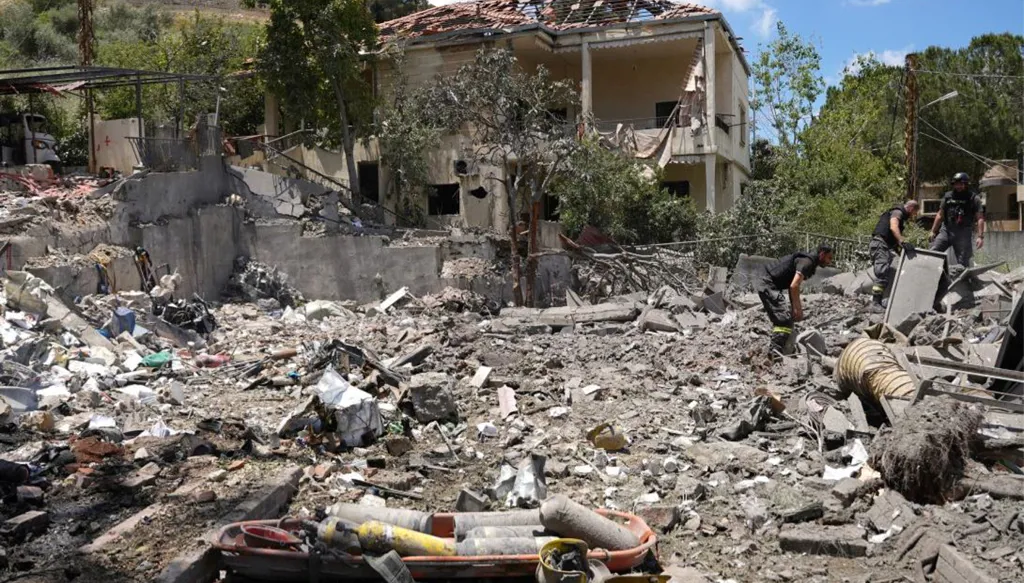
If it were not for the devastation inflicted on the southern border area, which has been groaning under a pattern of pre‑planned military operations since Israel openly launched its war against Hezbollah on the ground after the latter ignited its support war for Hamas, and for the re‑creation of an occupation reality in the forward border strip, most regions of Lebanon in the Bekaa, the North, and Mount Lebanon would have long suffered a chronic absence of anything resembling a truly historic tour carried out by Prime Minister Nawaf Salam to this stricken area.
Let us say that the timing of the visit, on its first anniversary, which constitutionally and realistically should not reach a second anniversary due to the promised parliamentary elections in May, was more than a clever political decision. It was also, in some sense, an emotional decision. The proof is that the people of the border South repaired what had been ruined in the first tour Salam conducted after the formation of the government, when, under incitement by Hezbollah at the time, slogans and chants were raised that ran counter to every notion of national logic that had surrounded the previous tour.
Yesterday, through direct observation, we saw the true scale of southern suffering in front of the “representative of the state”, even in the presence of the party’s MPs and its security and field eyes, whose existence we do not believe has been removed by the implementation of the first phase of restricting weapons south of the Litani River, even if they have disappeared from sight.
It is said in colloquial Arabic that people’s conditions have “settled”, meaning they have been worn down by hardship, and those southerners have been exhausted by endless cycles of death and displacement, between cause and effect, pretext and aggression, tied to Iranian projects and to the historical victimhood imposed by Lebanon’s geography and destiny, placing it at the forefront of the Arab confrontation with Israel.
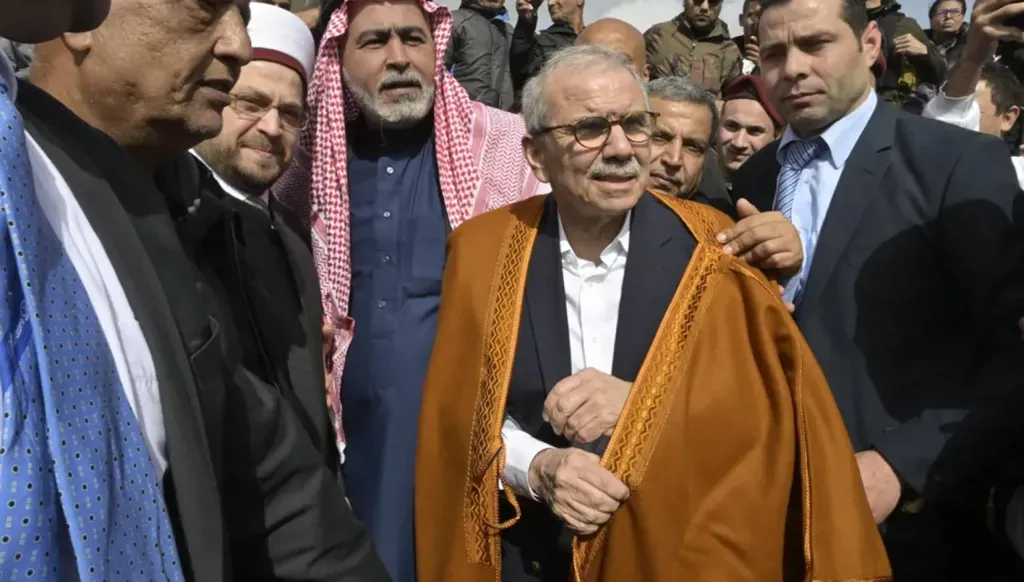
Hence the immense importance of the warmth with which southerners received the prime minister, whose tour turned into a cluster of symbols, whether he intended it or whether it arose spontaneously. In its background, the tour resembled the very plan to restrict weapons that the Lebanese Army is implementing amid complex field, strategic, and political challenges.
Between the towns and villages included in the wide tour across the southern districts, the image of a minefield still gripping all of Lebanon, not just the South, comes into view.
What happened with General Rodolphe Haykal in Washington, in the five‑minute meeting with Senator Lindsey Graham, who deliberately held his carefully staged meeting wearing sports attire, closely resembles the difficulty of prying the entire South from Israel’s grip and from the reality of its subordination to weapons tied to Iran. The return of state legitimacy to embrace the South also presupposes a strong, decisive legitimacy across the entire North as well, from the farthest border with Syria to Naqoura, a Lebanese border town with Israel.
Nevertheless, symbols are no less consequential than facts. That is, Prime Minister Nawaf Salam’s southern tour, the Army Commander’s visit to Washington, and the growing controversy over Hezbollah’s obstinate and futile stance against restricting weapons, all reflect that the project of restoring the state’s exclusive legitimacy has reached its decisive phase.
Nothing will save Lebanon from the evils of a new war erupting except pushing this project to its ultimate conclusion, in favor of the state alone, with no partners anymore. The features of slow progress in restricting weapons run in parallel with rising dangers of a renewed war that cannot be excluded from calculations at any moment.
The presence of the state in the South, despite the importance of the tour conducted by the prime minister, whom Hezbollah confronts with futile hostility, must go beyond the false generalization entrenched by the Shiite duo, meaning Hezbollah and Amal, through their forced reduction of the South, and of the Shiite community, to a single identity. It is a South belonging to all of Lebanon’s sects, regions, and mountains. Therefore, the time has come for its final liberation and for confining its comprehensive Lebanese identity.
Disclaimer: The opinions expressed by the writers are their own and do not necessarily represent the views of Annahar

العلامات الدالة
الأكثر قراءة