Israeli chemicals devastate 540 hectares of Lebanon’s border lands
From banned herbicides to lasting environmental damage, Lebanon faces a new front in a long-standing conflict.



شارك على
 مسنجر
مسنجر
 واتساب
 ثريدز
ثريدز
 بريد إلكتروني
 الطباعة
شارك على


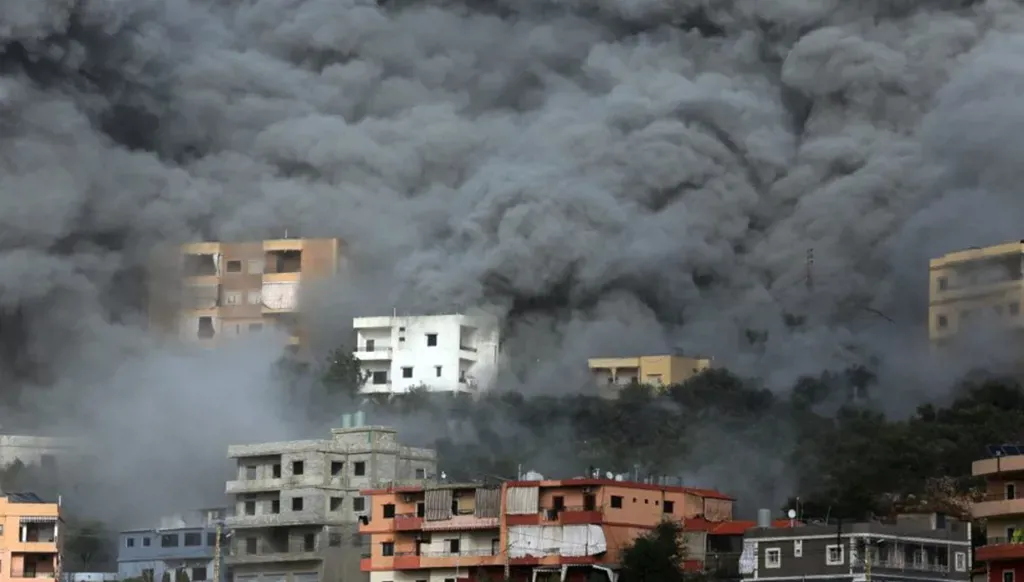


The Lebanese were not surprised when Israel sprayed border-adjacent lands and villages with internationally banned chemicals. Even with their pretext, the destruction of weeds and plants which hinder the field surveillance of Israeli drones, the action triggered a strong statement from UNIFIL.
The chemical pesticides used by the Israelis are internationally banned in forested and agricultural areas due to their danger to wildlife, and their residues contaminate soil, air, plants, and groundwater.
There are also many health risks for residents in the sprayed areas or nearby. This new escalation adds to the record of Israeli environmental attacks and reopens a serious issue that goes beyond direct military concerns, affecting the safety of the land and natural resources over an area of 5.5 million square meters, most of it agricultural.
The Israeli action are not isolated. Damascus announced that Israeli planes sprayed chemicals three consecutive times in the Quneitra area in southwestern Syria near the Israeli-occupied Golan Heights, before the same practices were carried out in the south, prompting Lebanese authorities to move quickly to identify the substances used, assess their damage, and mitigate potential consequences.
Agriculture Minister Dr. Nizar Hani told Annahar that the ministry has so far received one sample, with three more expected, which will be immediately sent to Beirut laboratories. He noted that measures will be based on the analyses and pointed out that “there are several possibilities regarding the type of substances used, most notably that they are herbicides intended to completely destroy vegetation for military purposes, making border areas barren and devoid of any natural elements.” He clarified that “the attack affected 540 hectares.”
The Ministry of Environment announced that it had received reports from the town of Ayta ash-Shaab and its surroundings of Israeli planes spraying substances suspected to be pesticides. In response, Environment Minister Dr. Tamara el Zein contacted Army Commander General Rodolphe Haykal, requesting samples from the sprayed sites for analysis and to follow up on the issue scientifically and officially.
According to preliminary data from the relevant authorities, Hani estimates that the substance used is likely "glyphosate," a hazardous herbicide used to destroy grasses, trees, and all types of vegetation. This herbicide is banned in Lebanon and EU countries, and is only allowed under very limited conditions in the United States.
The collected samples included soil, trees, and grasses, and laboratory extraction and analysis have already begun, with final results expected this afternoon.
Sources indicate that this method has been previously documented in reports related to Israel and Gaza, where the same planes and procedures were used as part of a policy aimed at creating buffer zones devoid of any vegetation or signs of life—an approach that poses serious environmental risks to soil, groundwater, wildlife, and crops.
When asked about the possibility of suing Israel internationally, Hani replied: "In principle, the Ministry of Agriculture informs the Ministry of Foreign Affairs of all these details. The previous report we prepared on the overall war damages, based on a World Bank report, was also referred to the Ministry of Foreign Affairs. The Ministry of Foreign Affairs may not file an official complaint every time, but at least it prepares reports that are submitted to the United Nations to document these ongoing violations."
These developments become even more serious when viewed in the context of cumulative agricultural damages. The Food and Agriculture Organization of the United Nations (FAO), in collaboration with the Ministry of Agriculture and the National Council for Scientific Research, prepared a report on the damages resulting from the Israeli aggression from October 2023 to November 2024. It concluded that Lebanon’s agricultural sector suffered direct damages estimated at around $118 million, in addition to indirect economic losses of approximately $586 million. The damages were concentrated in southern Lebanon and the Bekaa Valley, affecting crops, livestock, forests, fisheries, and aquaculture.
According to the report, rebuilding and rehabilitating the agricultural sector requires funding of about $263 million, with priority given to the 2025–2026 period. This period will cost approximately $95 million as Lebanese authorities attempt to halt losses and restore a minimum level of production capacity in the affected areas.

العلامات الدالة
الأكثر قراءة