A history of the Rafah crossing as Israel permits reopening
The opening of the crossing reveals the extent of Hamas's political and military failure.


شارك على
 مسنجر
مسنجر
 واتساب
 ثريدز
ثريدز
 بريد إلكتروني
 الطباعة
شارك على


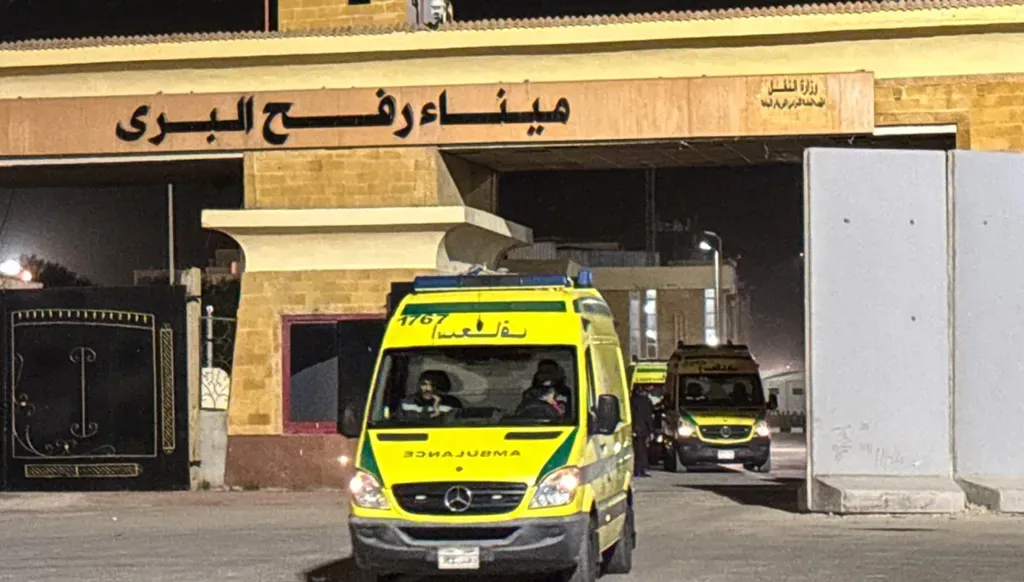


The reopening of the Rafah crossing between the Gaza Strip and Egypt is long overdue. But, Hamas must shoulder its responsibilities and acknowledge the catastrophe it has inflicted on the Palestinian people and their cause. Its political movement has failed, and its weapons, which some members still clings to, have become an Israeli pretext for the enduring war on the Strip.
Hamas emerged in 1987, followed in short over by first Palestinian Intifada. The years of fighting caused Israel to acknowledge that there was no alternative to a political settlement with the Palestinian people, and no credible alternative to the Palestine Liberation Organization. By 2005, the organization controlled the Gaza Strip, and the crossing between Rafah and Egyptian territory was operational, functioning under the supervision of monitors from the European Union.
The Palestinian National Authority, with Yasser Arafat at the helm, managed to secure an operating formula for the Rafah crossing in 2000 as the Second Intifada was intensifying. The led to the destruction of Gaza Airport, which had been inaugurated in the presence of President Bill Clinton in November 1998.
From their very first day in 1987, Hamas gave Israel the pretext to make a peaceful settlement impossible. The Israeli right, which formally opposed the Oslo Accords in 1993, bet on Hamas and was ultimately proven right.
There are more than a few indications of collusion between Hamas and the Israeli right, typified by Benjamin Netanyahu’s leadership of the most extreme government in the history of the state. One may begin with the series of suicide operations carried out by the movement aimed at sabotaging Oslo. But, there remain three pivotal moments that merit closer attention.
In August 2005, Hamas categorically failed to take advantage of the Israeli withdrawal from the Gaza Strip. Hamas was not solely responsible for the failure, as the Palestinian National Authority's President Mahmoud Abbas refused to go personally to oversee the post-withdrawal phase. The withdrawal from Gaza was an opportunity for Palestinians to demonstrate that they were capable of laying the foundations of a peaceful state..
Hamas viewed the Israeli withdrawal from the Strip as an occasion to begin launching rockets toward Israeli territory. All this achieved was to serve Ariel Sharon, who maintained that “there is no Palestinian partner with whom one can negotiate.”
At the second juncture, Hamas eliminated Fatah in Gaza. This took place in mid-2007. It established an Islamic emirate in the Strip. The aim was not only to eliminate Fatah, but also to sever Gaza from the West Bank, a separation that entrenched Palestinian-Palestinian rupture at a time when the primary concern of the Israeli right, then as now, was to destroy any hope of the establishment of an independent Palestinian state.
With the “Al-Aqsa Flood,” the third juncture emerged, marking a turning point at both the Palestinian and regional levels. “Al-Aqsa Flood,” whether we like it or not, closed the door to the two-state option, at least for the foreseeable future. Hamas as a whole bears responsibility for the decision, and the attack hardened Israeli opinion and empowered the level of brutality we have witnessed over the last two years.
Hamas changed the region. The Gaza war exposed Iran and dismantled its main arm, Hezbollah in Lebanon and the Alawite regime in Syria. What did not change is Hamas itself, which refuses to acknowledge failure and refuses to give up its weapons. The movement considers the survival of its weapons and control in parts of Gaza to be a political achievement. But what about the Rafah Crossing and the farce that accompanied its reopening under Israeli conditions? In the recent past, Gaza had a real airport and its people had hope for a better life, far from the siege and the machinations of the Israeli right.
Disclaimer: The opinions expressed by the writers are their own and do not necessarily represent the views of Annahar.

العلامات الدالة
الأكثر قراءة

تشهد ألمانيا ارتفاعاً غير مسبوق في إفلاس الشركات بسبب الركود وارتفاع كلفة الطاقة، مع تأثيرات واسعة على الاقتصاد الأوروبي والعلاقات مع العالم العربي.