Three words in Cairo: A personal narrative on journalism
From Tripoli to Cairo, and from police stations to front pages, a personal journey into journalism.


شارك على
 مسنجر
مسنجر
 واتساب
 ثريدز
ثريدز
 بريد إلكتروني
 الطباعة
شارك على


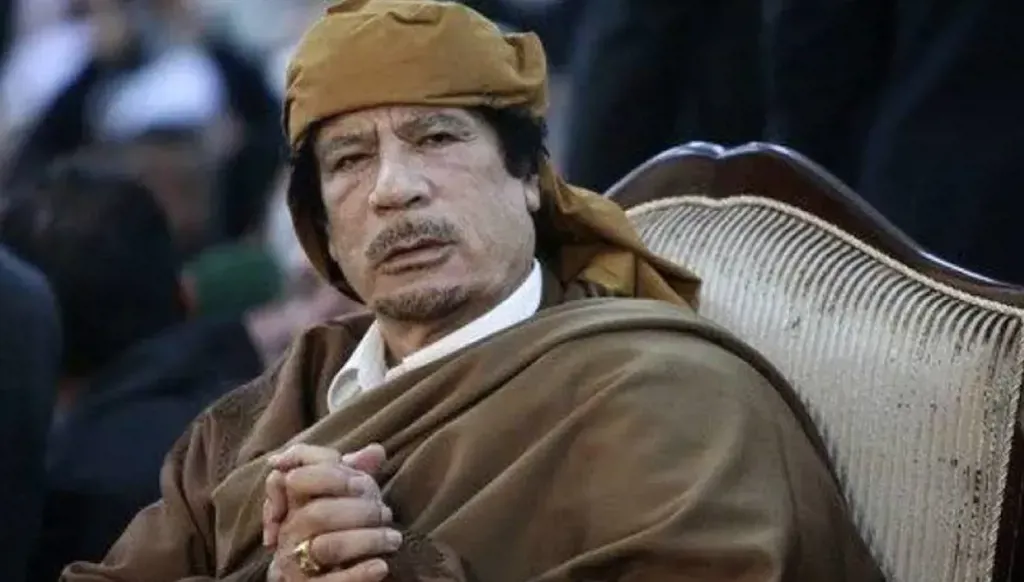


I returned from my first trip to Tripoli in 1991, having failed to interview the hero of the 1969 Al-Fateh Libyan Revolution, champion of people, Colonel Muammar Gaddafi. Empty handed, I contented myself with what I had gathered of scenes from the Libyan street, promising myself I would get a bigger story next time. In the profession of journalism, surprises are in no short supply. Eight years later, what had proved impossible in Tripoli I found in Cairo.
At midday on April 3, 2000, I was face to face with the colonel at the venue of the first Arab-European Summit. Despite the tight security arrangements, I loitered close to an open meeting hall where talks were taking place between the Moroccan monarch King Mohammed VI and Gaddafi. I was happy to witness this historic meeting, normally an area off limits to journalists.
But after the meeting ended and King Mohammed VI left the hall, I headed toward Colonel Gaddafi, full of hope that I might obtain a statement from him. I asked him about the reports circulating at the time on the existence of Libyan-Israeli contacts. But before I could finish my question, Ahmed Gaddaf al-Dam, the colonel’s cousin and coordinator of Libyan-Egyptian relations, violently pushed me away. Luckily, Colonel Gaddafi softened and asked his cousin to let me finish my question. His answer was brief. Raising his head upward, he simply said, “This is an April Fool’s joke.”
I was overcome with great joy at having secured a statement from the colonel, even though, in Arabic, it did not exceed three words. That statement made the front page of Asharq Al-Awsat the following day.
At the beginning of the 1980s, during one of the sessions of the Asilah International Cultural Season, I became acquainted with the Tunisian journalist Safi Saïd, who at the time was the Rabat correspondent for the Paris-based magazine Koul Al-Arab. I was an avid reader of it, along with other Arab magazines published abroad, such as Al-Watan Al-Arabi, Al-Majalla, and Al-Mustaqbal.
Safi’s journalistic coverage and interviews greatly appealed to me, as did his remarkable book on the Supreme Combatant Habib Bourguiba, titled "Bourguiba: A Semi-Forbidden Biography."
A few months after we met, Safi decided to travel to the Rock of Gibraltar to produce an investigative report and interview its then Chief Minister, Peter Caruana, and the opposition leader, Joe Bossano. He wrote an excellent piece with a striking title: “Gibraltar: Everyone Is Fighting Over It, and the Arabs Are Left With Nothing but the Name!”
On his way from Rabat to Tangier, Safi stopped by Asilah and kindly invited me to join him for an evening there. We stayed at the Al-Mowhdeen Hotel. The next day, Safi boarded a speedboat heading to Gibraltar, while I returned to Asilah. About two weeks after that meeting, my father came to me one morning to tell me that a police officer had arrived early asking about me. As I was still asleep, he asked him to come to the police station once I woke up.
There, I was received politely and courteously by an intelligence officer, who began asking me about my relationship with Safi, how I had met him, whether he had spoken to me about domestic political matters, and whether he had given me any books or magazines. I answered briefly, saying that Safi was a friend I had met in Asilah, that he was an accredited journalist in Morocco, that our conversation had touched on ordinary matters, and that he had not given me any books or magazines.
My last answer was not entirely truthful, because Safi had given me a copy of The Green Book. This was Muammar Gaddafi’s ideological manifesto outlining his political ideas. That came up during our discussion about Libya and Gaddafi, especially since Safi had conducted a journalistic interview with the colonel a few months earlier and told me how the magazine’s editorial board had censored a large part of the interview. He said of The Green Book: “I won’t tell you whether the book is good or bad. Read it before you judge it.”
I did not want to inform the intelligence officer about The Green Book, believing that this might drag me into serious trouble.
My stay at the police station lasted less than fifteen minutes. That same evening, I called Safi and told him what had happened. He said to me, “If you want to become a journalist, you have to get used to going to police stations.” To me, it has become a point of pride, and a marker which I believe distinguishes good journalism from the rest. The occupational hazards are not just a part of the trade, they are a sign that what you write is worth the risk.

العلامات الدالة
الأكثر قراءة