The end of an era? Iran’s historic crisis and its regional impact


شارك على
 مسنجر
مسنجر
 واتساب
 ثريدز
ثريدز
 بريد إلكتروني
 الطباعة
شارك على




The question is no longer if a war will break out between the United States and Israel on one side and Iran on the other, but when. The massive American aerial and naval military buildup in the Middle East, tightening the noose around Iran, has continued unabated since President Donald Trump called off the strike about a week ago.
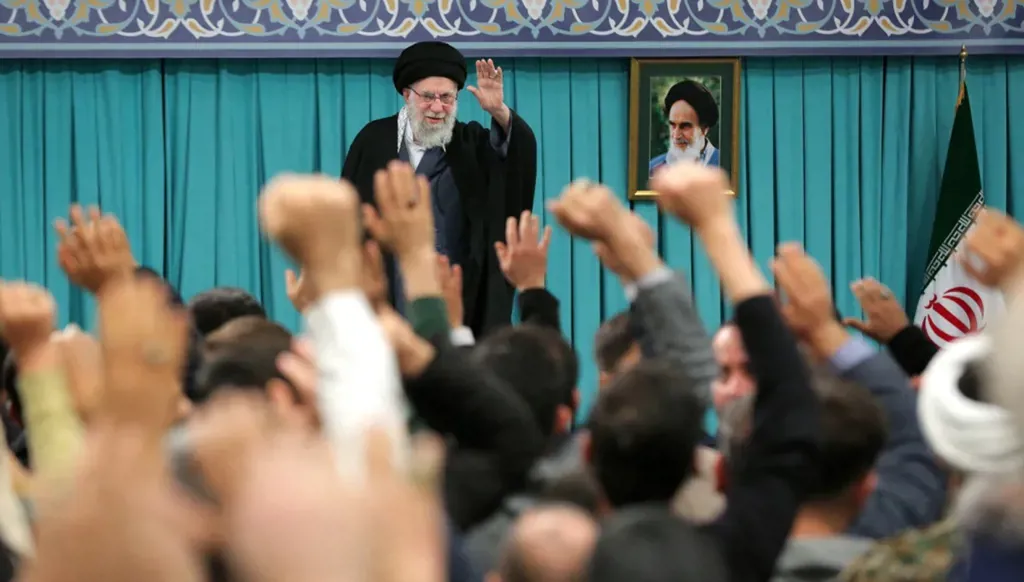
Consequently, the operational buildup on the ground suggests that Washington is preparing for a major military strike—or at the very least, intensifying its military pressure—accompanied by significant economic, political, and psychological measures aimed at Iran’s leadership, including its highest authority, Supreme Leader Ali Khamenei, who has reportedly been deliberately portrayed as a potential target. In other words, an American attack could put Khamenei’s life at risk.
This psychological pressure on Iran’s leadership is unprecedented in four decades, coming at a historically weak moment for the regime, which—as noted earlier—has been on a downward trajectory toward total collapse. Two weeks ago, we suggested that the regime has effectively “died,” even if it has not yet fully fallen. All indicators continue to reinforce this assessment, particularly in light of the recent massacre in the first half of the month, which did not go unnoticed. Unlike previous waves of protests, this latest crackdown marked a clear departure, reflecting a level of violence and repression that stands out in the regime’s history.
This regime, having lost its political, moral, social, and religious vitality, now relies almost entirely on violence to prolong its survival—though, as we see today, this effort is largely ineffective. Its influence across the region has significantly diminished, and its regional proxies in Iraq and Lebanon are in continual retreat. In Iraq, the U.S. military has withdrawn from most areas, except the Kurdistan region, repositioning around territories controlled by Iran-linked forces, while Israel is actively preparing for the next confrontation, operating on the premise that meaningful change in Iran may only come through a major military operation aligned with the country’s revolutionary and popular unrest.
Although the regime still retains a support base—primarily driven by vested interests—this base may number several million, a small fraction of Iran’s population of over 90 million. According to numerous neutral reports, the regime has reached a critical dead end: the vast majority of Iranians have lost hope in its ability to reform or renew itself. Consequently, expectations are mounting for profound change, including the potential removal of the Supreme Leader without a clear succession.
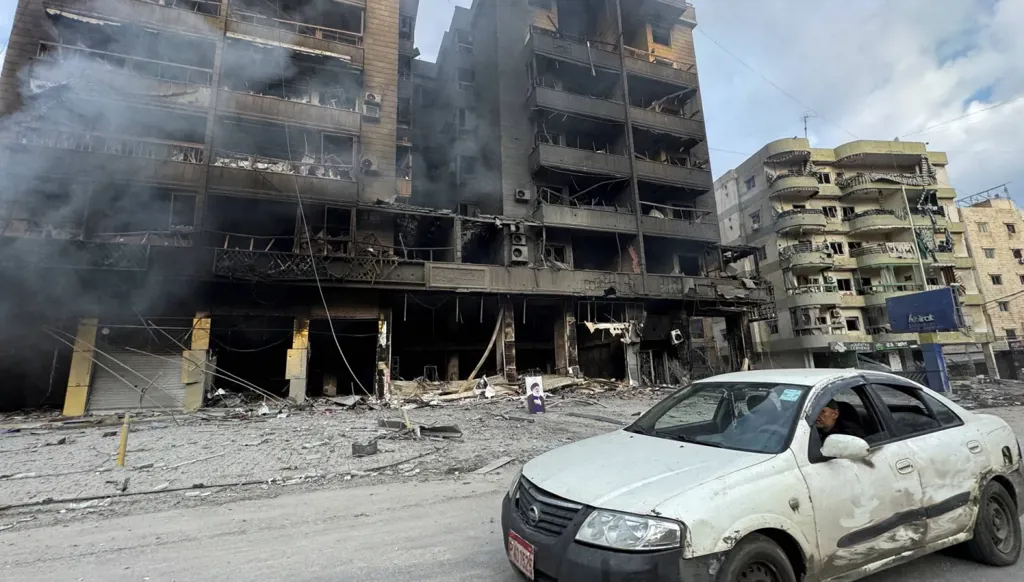
With Syrian government forces reaching the shared borders with Iraq, factions within the “Popular Mobilization” framework are facing significant concern as control shifts over borders that until recently were open under the so-called “Iranian corridor.” These borders had served as a crucial geopolitical lifeline for Iran, linking Tehran, Baghdad, and Beirut via Damascus. Now, the ties of the “Iranian corridor” are unraveling, marking the fragmentation of the vital crescent that King Abdullah II of Jordan warned about more than two decades ago. The convergence of these negative factors has struck Iran’s power centers from Lebanon to Syria to Yemen, further weakening its regional geopolitical structure—once proudly described during its rise as an empire controlling four Arab capitals simultaneously.
Today, both Iran’s external and internal structures are collapsing, revealing deep cracks that signal the possible end of this historical period, which has lasted roughly 47 years.
The fear is that the regime’s end could be extremely difficult and painful, potentially marked by domestic bloodshed and regional turmoil. However, there are signs that internal fractures within the deep security apparatus could accelerate the collapse, potentially shortening the period of dangerous upheaval and limiting its negative impact on the surrounding region.
At this point, we must pause at the fear—and in some cases, panic—felt by certain regional countries, apprehensive of a massive military strike that could split the Iranian regime and bring it down. This anxiety stems from concerns about the post-regime phase and the fate of a unified Iran, which could face existential challenges. Some fear that fragmentation might trigger civil wars, turning the country into a zone hostile to regional stability. Yet it is important to remember that Iran, under its current regime, has itself been a major source of instability in the region for at least 47 years. Observers of the region’s turbulent history will see that the Iranian regime has long been one of its primary destabilizing forces.
In conclusion, if the Islamic Republic’s chapter in Iran comes to an end, it could become one of the defining events of this decade… and would take the region onto an entirely new trajectory.
Disclaimer: The opinions expressed by the writers are their own and do not necessarily represent the views of Annahar.
العلامات الدالة
الأكثر قراءة