Trump, Venezuela and the fate of Lebanon in a world without rules


شارك على
 مسنجر
مسنجر
 واتساب
 ثريدز
ثريدز
 بريد إلكتروني
 الطباعة
شارك على


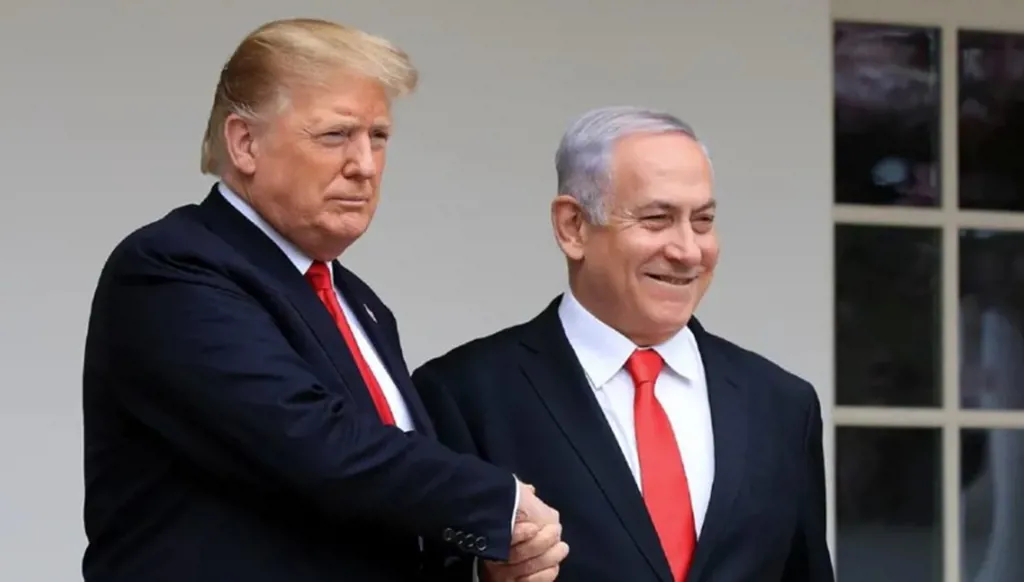


History, and particularly the history of the United States, will record that no one like Donald Trump has ever ascended to the presidency in the world’s foremost democracy, behaving as if he were the ruler of the world without anyone, inside or outside America, able to stop, prevent, or confront him.
This has never happened before in any free democratic country. It has occurred with leaders such as Joseph Stalin in the communist Soviet Union and Adolf Hitler in Nazi Germany. But for a single individual to decide the fate of his country and the world within the free world is unprecedented.
Figures such as Charles de Gaulle, Winston Churchill, and Franklin Roosevelt commanded immense respect as historical leaders in their countries and globally, but none monopolized decision-making outside institutions and international law. For this reason, the situation in Venezuela will continue to unfold, and its consequences are potentially unlimited.
The Venezuelan regime was a disaster for one of the world’s richest countries in natural resources, yet among the poorest in terms of its people’s welfare, due to the nature of its governance and the corruption of its rulers. Would Trump have embarked on this unprecedented venture if such a regime had existed outside the American continent?
It has always been and remains difficult for Washington to accept the presence of leftist or hardline regimes within the American continent. There are many examples, the most notable being the events of 1961 during John F. Kennedy’s presidency with Cuba and Fidel Castro, and the Cuban Missile Crisis.
However, the measures taken - striking the capital Caracas and kidnapping Venezuelan President Nicolás Maduro - went beyond any previous precedent. Assassination attempts, encouragement of opposition movements, and confrontations have occurred and continue to occur. But to kidnap the president of a sovereign and independent state - only Trump, the ruler of America and the world, has done this. Anyone who remembers the summit meetings in Sharm el-Sheikh last October will recall how he treated kings and presidents as if they were his employees, summoning them one by one and handing out certificates of good conduct according to his mood.
Donald Trump is a phenomenon. How will his story end? No one knows yet. He has entered his eighties and behaves - at the simplest description - more like a giant than a sage. The outcome belongs to the coming days and to history, as this administration originates solely from Trump’s mind, which, as his eldest son said a few days ago, is difficult to predict. It cannot continue at the same pace.
Yet this strange episode in international relations and international law has not overshadowed the Iranian situation or the possibility of war with Tehran and its repercussions for Lebanon.
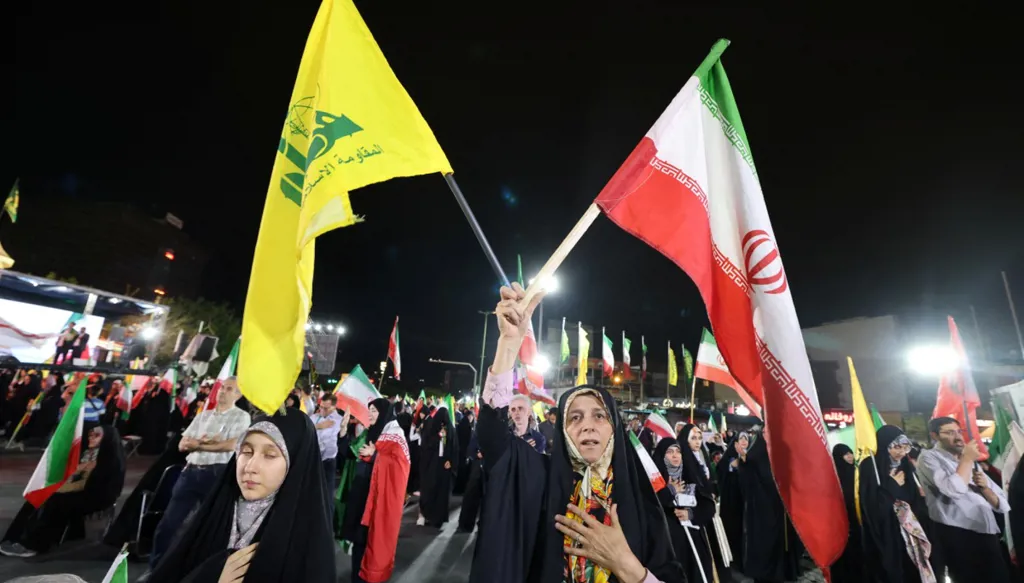
In this context, as the Middle East is being reshaped according to the wishes of Trump and his ally Benjamin Netanyahu through various schemes, where does Lebanon stand in the thinking of this president - especially given his family ties to Lebanon, having appointed his father-in-law, Massad Boulos, as his adviser and sending an ambassador of clear Lebanese descent to Beirut? Does our country hold a special place for him? On the other hand, can a president with such characteristics even consider listening to the Vatican and Pope Leo, who made his first overseas visit to Lebanon? Does Trump listen to him as an American citizen? Does Lebanon mean to him a nation with a message, as proclaimed by the Vatican since the time of Saint Pope John Paul II, or does he see it solely as the country of Hezbollah, with a government unable to control a faction designated as a terrorist organization in the United States and Europe?
This question opens the file of Lebanese-American relations, filled with events and milestones from the years of independence until today - a subject too vast for these limited pages.
In fact, questions have multiplied. If Trump received Syrian President Ahmad al-Sharaa, even without the same warmth extended to Saudi Crown Prince Mohammed bin Salman, does this mean that Trump’s policy has deviated from Washington’s traditional approach to Lebanon since independence, when Lebanon represented a vital American interest and a cornerstone of its foreign-policy decision-making?
The landing of U.S. Marines at Ouzai in 1958 at President Camille Chamoun’s request did not halt the sixteen-year wars, despite their capacity to do so - and neither France nor the Vatican succeeded either, until conditions allowed for the Taif Conference in the fall of 1989. However, the reader may not know, or may not remember, that in 1983 the United States participated in direct negotiations between Lebanon and Israel with a full delegation for six months following the 1982 invasion.
Those negotiations were tripartite: Lebanese-Israeli-American. They culminated in what became known as the May 17 Agreement, which, despite being approved by the Lebanese Parliament as a prelude to implementation, was never executed and was later abolished by Lebanon.
Where do we stand today? President Joseph Aoun has reassured the Lebanese that there is no atmosphere of war. Is this reassurance final or temporary? No one knows after the Venezuelan precedent, the significant harm inflicted on Iran by its ally Venezuela, Trump’s administration’s grip on the oil market, and the resulting implications for the international order, particularly in the Middle East.
The answer does not lie with John F. Kennedy, who quoted Khalil Gibran in his historic speech - “Ask not what your country can do for you; ask what you can do for your country” - nor with Dwight Eisenhower, nor even with Ronald Reagan. The world today lies in the hands of Donald Trump’s mind, and in how Lebanese officials deal with that mind, alongside Tom Barrack - also of Lebanese descent - who threatened Lebanon with alignment with Syria, and Senator Lindsey Graham, Israel’s strongest ally and Hezbollah’s fiercest adversary.
Lebanon has endured many crises. After Venezuela, a new ordeal may be the most dangerous yet - one that approaches the question of destiny itself.
The opinions expressed by the writers are their own and do not necessarily represent the views of Annahar

العلامات الدالة
الأكثر قراءة