How Israel defined Lebanon’s 2025 and exposed Hezbollah’s limits


شارك على
 مسنجر
مسنجر
 واتساب
 ثريدز
ثريدز
 بريد إلكتروني
 الطباعة
شارك على


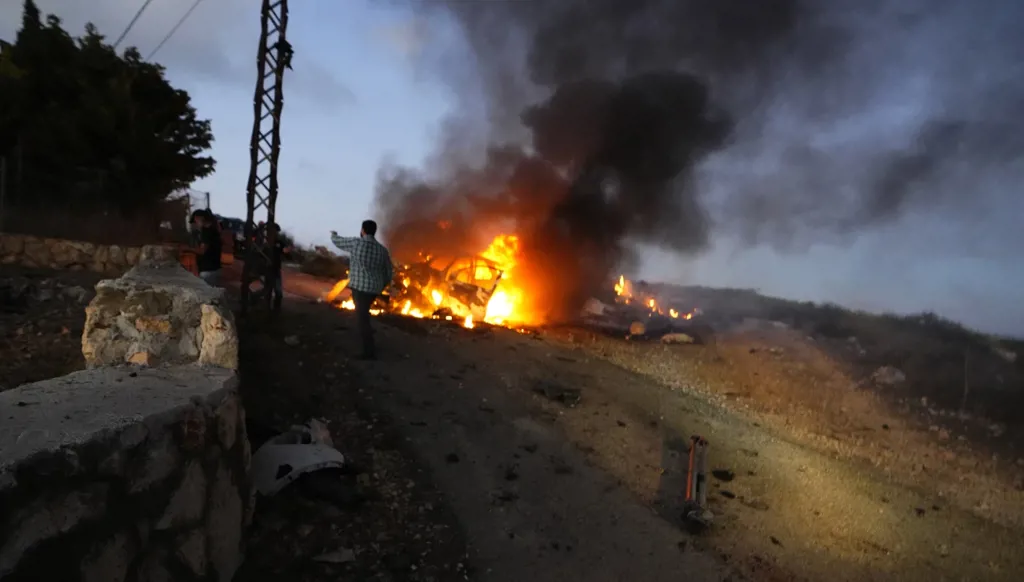


For Lebanon, 2025 was, unmistakably, an Israeli-made year. Every major development revolved around what Israel was doing, demanding, or threatening.
Hezbollah, the Iran-backed Shiite armed group based in Lebanon, was not an active player, even though the issue of its weapons remained at the forefront of concern. Instead, it amounted to little more than a verbal reaction, after it became clear that it had been struck by deep paralysis. The heavy blows it sustained between mid-September and late November 2024 stripped it of what had long been described as its deterrence capability.
By 2025, the group was left with only two negative tools to counter the strategic damage looming over it: the threat of civil war, and acquiescence to the daily killings that, throughout the year, targeted its leaders, fighters, members, and collaborators.
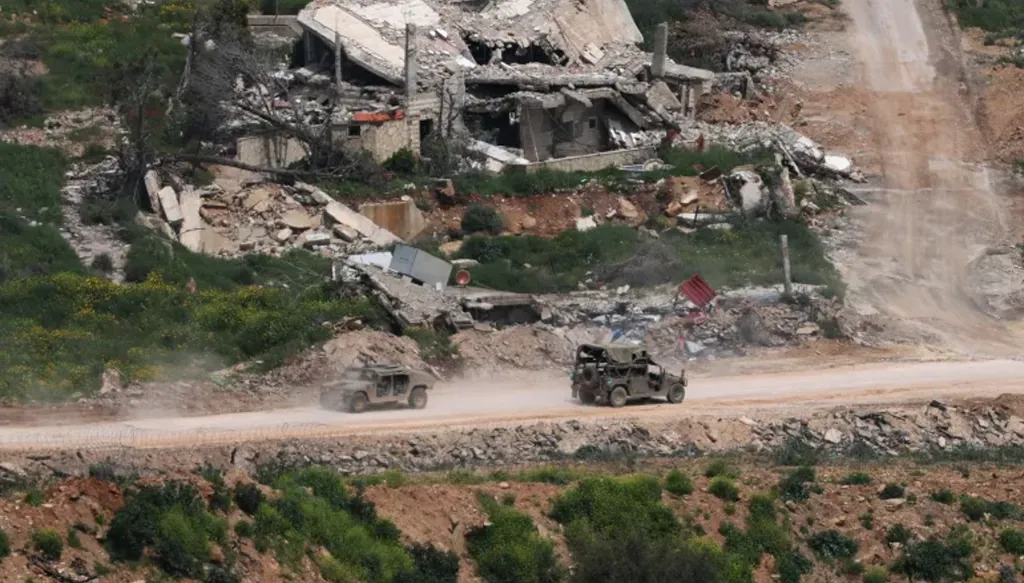
In 2025, Hezbollah failed to construct a narrative of victory, as Israel, under the ceasefire understandings, continued to strike its positions, kill its members, and prevent some 90,000 residents of southern Lebanon from returning to their villages in what is known as the “forward buffer zone.” Israeli fighter jets also flew overhead during the funerals of the group’s late secretaries-general, Hassan Nasrallah and Hashem Safieddine. As a result, Hezbollah shifted to a more modest narrative, one based on the acceptance of death, on waging a Karbala-style battle (a concept rooted in Shiite martyrdom culture and considered suicidal in conventional military terms), and on waiting for a vaguely defined victory “at a later time,” left entirely to God's will.
Thus, everything that happened in Lebanon in 2025 bore an Israeli imprint. The election of Army Commander Joseph Aoun as president, despite Hezbollah’s approval in the final minutes, would not have been possible without a confidential clause in the U.S.-brokered mediation that led to the ceasefire. That clause required the completion of the presidential election, the formation of a new government, and the facilitation of the Lebanese army’s deployment to dismantle weapons, beginning south of the Litani River.
Similarly, the state’s attempt to monopolize weapons across Lebanon, under the August 5, 2025 decision, the first in a series of government measures aimed at preventing Israel from returning to the threatened war. The United States stipulated that the Lebanese state must demonstrate it functions as a genuine state before it would block a new Israeli war plan.
Driven by the overriding concern of preventing such a war, Lebanon raised the level of its representation in mechanism meetings, assigning former Ambassador Simon Karam the task of leading the Lebanese delegation, after Lebanon repeatedly opposed and thus drew on its officials the label "dinosaurs" from the US envoy Tom Barrack, who warned against dragging Lebanon back into the old Levantine order, where national borders and state sovereignty were weak.
To prevent the Lebanese army, accused by Israel of “collusion” with Hezbollah, from paying the price and to avert the threatened war, the military agreed, after initial refusal, to search “suspect” houses in southern villages, under camera supervision and in the presence of UN peacekeepers.
In this way, the Lebanese authorities have sought to spare Lebanon in general, and Hezbollah in particular, from sliding into a new war, one in which Israel’s military, intelligence, and technological superiority is widely acknowledged. Yet Hezbollah, fully aware of its own proven military, intelligence, and technical limitations, of the Lebanese army’s modest combat capabilities, and of the state’s deep financial and economic collapse, chose not to support the authorities. Instead, it worked to undermine them politically and morally, with scarcely a day passing without accusations of betrayal against officials and the governing majority, displaying them as powerless!
Hezbollah does not want the Lebanese state to declare war on Israel, nor does it want matters to deteriorate to the level of open conflict. Rather, on one hand, it seeks to benefit from the state’s diplomatic approach, which requires tangible political and on-the-ground evidence. On the other, it attempts to project a “heroic” image to its core constituency one that, if left without an internal enemy, would turn to questioning the party about the fate to which it has led them, after they lost almost everything: their youth, their houses, their sense of security, and Syria!
To date, the authorities have continued to accommodate Hezbollah’s sensitivities, allowing, under the pretext of resolving matters “by the better way”, the state’s reputation to suffer and all of the above to fall under suspicion. This mirrors what occurred in the government’s handling of the first draft law since the autumn of 2019 that could have placed the issues of the financial gap and frozen bank deposits on a path toward resolution.
Disclaimer: The opinions expressed by the writers are their own and do not necessarily represent the views of Annahar

العلامات الدالة
الأكثر قراءة