Southern transitional council has multiple options to fill political void


شارك على
 مسنجر
مسنجر
 واتساب
 ثريدز
ثريدز
 بريد إلكتروني
 الطباعة
شارك على


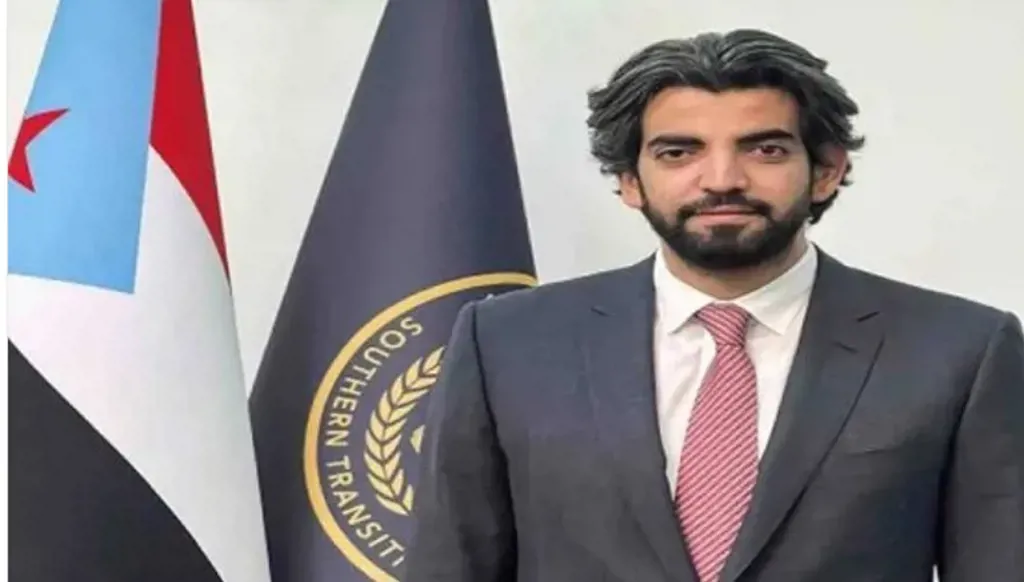


Amr al-Beidh, the special representative of the president of Yemen’s Southern Transitional Council (STC), outlined developments over the past two weeks in southern regions, following the end of the “Promising Future” operation in eastern Yemen, particularly in the provinces of Hadramout and Al-Mahra. He said the STC has multiple options to fill the political void in the south.
The political landscape in Southern Yemen has intensified in recent hours after several ministers and officials affiliated with the STC within Yemen’s internationally recognized government announced what they described as the full readiness of their government institutions to support any decision taken by the council’s leadership, including a possible declaration of a “State of South Arabia.” In successive statements, they stressed that state institutions would continue to provide public services and that administrative work would not be disrupted.
In his statements to Annahar, Al-Beidh recalled the developments after ending the rebellion and the security void "previously filled by terrorist organizations and some affiliates of the Houthis in the eastern regions," stating: "Southern Yemenis mobilized in all cities, and demonstrations took place in European cities, calling for the Transitional Council President to declare the State of South Arabia. Against this backdrop, some ministers announced their support for popular aspirations and called on the Transitional Council President to express the people's aspirations by taking the appropriate step forward."
Al-Beidh rejected characterizations of the situation as a split or secession, arguing instead that the developments amount to a mandate for the STC president to take the appropriate decision, similar to the authorization granted during the military operation that cleared Hadramout and Al-Mahra.
Although the development of events is not yet clear, the talk of a State of the Arab South has increased recently.
According to Al-Beidh, when 'Promising Future' operation began, it was purely a military and security operation by the southern armed forces to unify the operational theater in the south under one leadership and control. "We never spoke of political changes, but what happened afterward was that the Prime Minister and the chairman of Yemen’s Presidential Leadership Council took steps to create a political void in the south to withdraw legitimacy from our southern regions," he added, "We are currently filling this political void."
Filling the political void
Regarding the next steps, Al-Beidh said: "There are several options for filling the political void within our southern regions. We have a solid military and security bloc in the southern areas. We need to have a political cover for it."
Ten days ago, a Saudi-Emirati military team visited the temporary Yemen’s interim capital, Aden, in a move reflecting military and political coordination between Riyadh and Abu Dhabi aimed at supporting stability in southern Yemen and containing rising tensions in Hadramout. Asked whether mediation efforts had failed, al-Beidh said the delegation’s discussions were limited to military matters and resulted in understandings confined to security and military issues, while “a systematic process to create a political void in the south is being pursued by the other side.”
Asked whether he expects confrontations, He responded, "We do not want confrontations because they will lead to instability, and instability will benefit the Houthis, which is an insane option... Weapons should be directed against the Houthis, not against the southern forces that liberated the south.”

العلامات الدالة
الأكثر قراءة