Lifestyle
12-12-2025 | 12:59
The global rise of Tunisian nabeul pottery and its authentic craft tradition
The pottery of Nabeul, Tunisia, has earned worldwide acclaim for its
beauty, craftsmanship, and steadfast preservation of the Tunisian spirit,
rooted in a rich historical heritage.


شارك على
 مسنجر
مسنجر
 واتساب
 ثريدز
ثريدز
 بريد إلكتروني
 الطباعة
شارك على


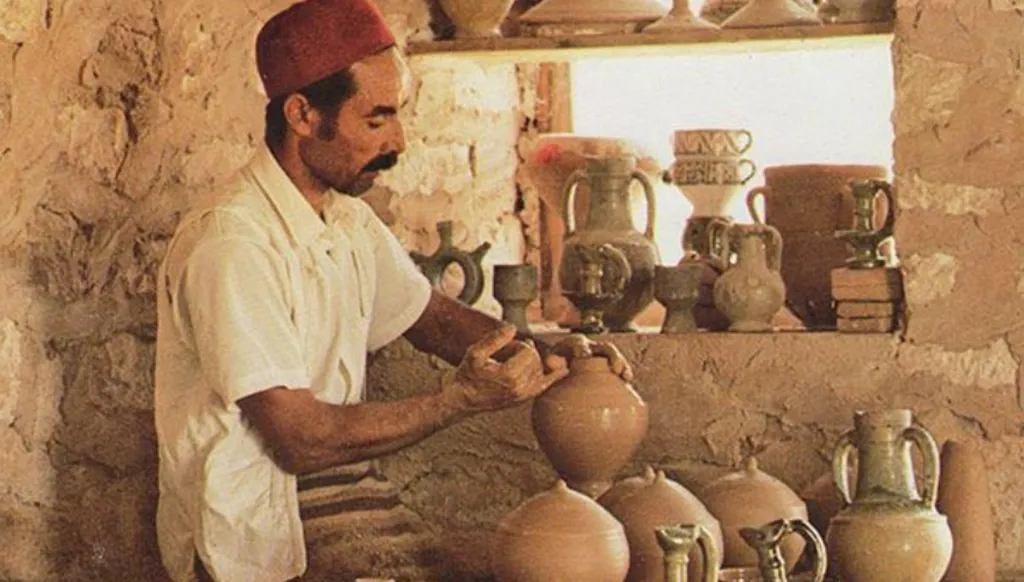
A Tunisian pottery maker carries potteries outside his 500 year-old workshop set in a cave in Guelalla. (AFP)


The pottery of Nabeul, Tunisia has achieved widespread international acclaim, celebrated for its beauty, quality, and its ability to preserve the Tunisian spirit deeply rooted in the rich historical heritage of the Capsians, the Carthaginians, and the many civilizations that have shaped Tunisia throughout history.
While other regions of Tunisia, such as Sejnane in Bizerte, Moknine in Monastir, and Guellala on the idyllic island of Djerba, are also renowned for their pottery, each area’s ceramics possess a distinct character, shaped by the influence of local inhabitants, the climate, and the everyday needs of the community.
In Every Home
The true charm of Nabeul lies in its tourism, local customs, intangible heritage, and authenticity, all of which are reflected in its traditional pottery, found in nearly every Tunisian household and homes throughout the Maghreb. Some even use this pottery outside Tunisia, unaware of its origin, having grown accustomed to it in foreign markets, often believing it to be locally made. Through it, they unknowingly showcase Tunisian culinary traditions and traditional architecture.
Diverse Uses
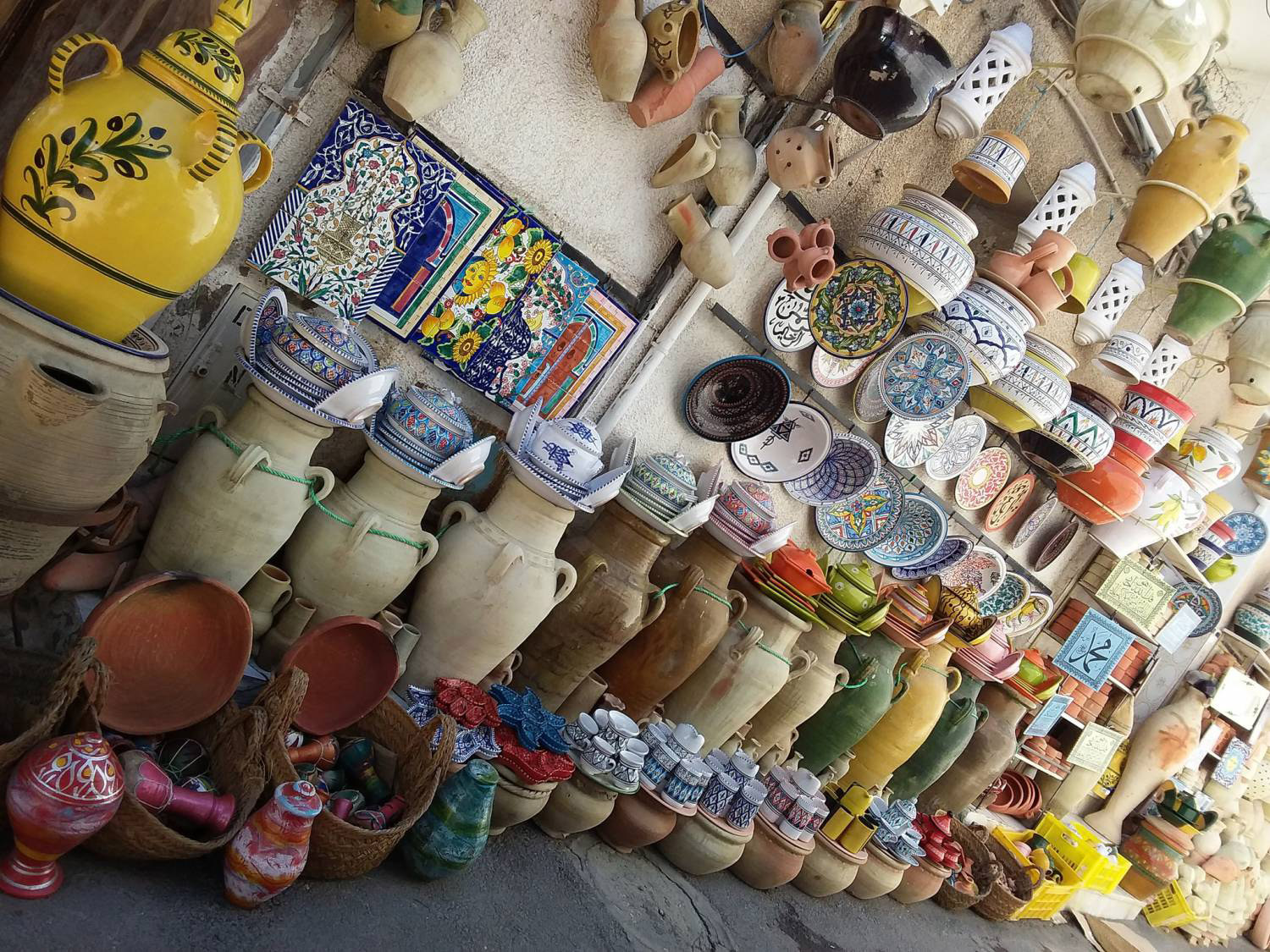
Artisans in Nabeul craft a variety of items, including cooking pots, oil storage jars, water jugs, decorative pieces, vases, and ceramics for wall decoration, house facades, flooring, and garden fountains for both private and public spaces. This wide range of products has turned the city of Nabeul into a hub for traditional ceramics, attracting both Tunisians and international tourists. Nabeul pottery has gained a distinguished reputation, marked with its own unique seal to prevent imitation or misuse by any external party.
Nabeul pottery features intricate geometric patterns and designs inspired by the artistic, architectural, and craft heritage of the Carthaginians. Its decorations are predominantly in blue and white, especially on cooking utensils, jars, and plates. These two colors (blue and white) are also favored in traditional Tunisian architecture and characterize many historic cities across the country, including Sidi Bou Said, the old city of Tunis (Medina of Tunis), Kairouan, Hammamet, Djerba, and others.
Nabeul pottery is exported to numerous countries around the world, and demand for it continues to grow. This has made it a valuable source of foreign currency alongside other traditional crafts, even though exports were significantly affected during the COVID-19 pandemic.
Recently, some foreign sources on social media have begun claiming Nabeul pottery as their own. There are also attempts to imitate it, driven by the desire to capture the markets where this pottery is popular and, in some cases, to appropriate a cultural identity that belongs to others.
Two Distinct Methods
Tunisian pottery artisan Walid Al-Jawadi told Annahar Al Arabi that there are two methods for crafting Nabeul pottery: a traditional one and a modern one. In the traditional method, the process begins with kneading the clay with water for hours to achieve a pliable consistency that can be easily shaped. The artisan works the clay on a circular wheel, which he spins with his feet, and as the vessel takes shape, he smooths it carefully using his hands moistened with water.
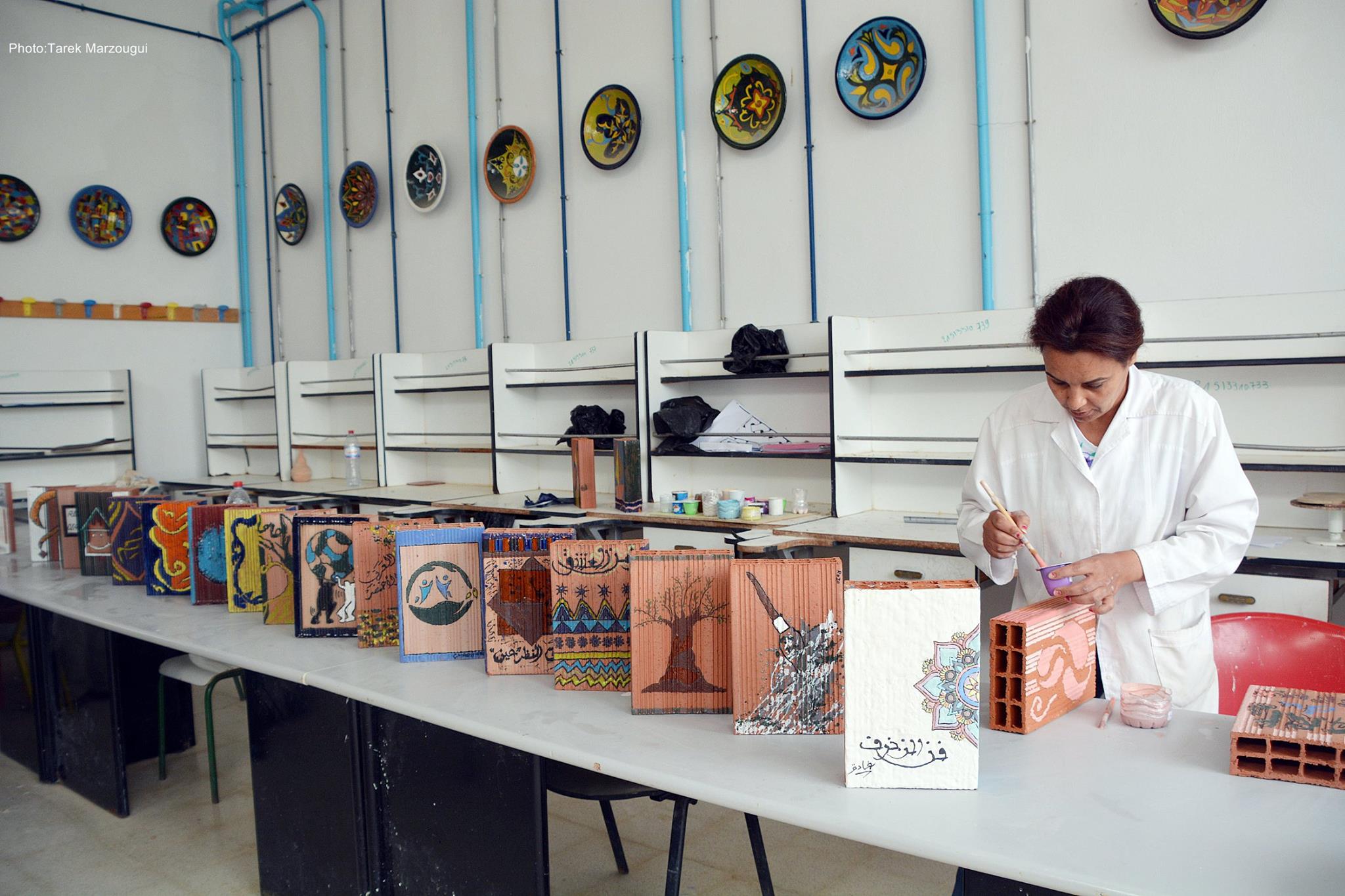
Once the shaping is complete, another artisan leaves the clay vessel out of direct sunlight for two days or more. It is then put in a fire, after which a third specialist takes over to decorate the piece. This finishing artisan colors the pottery or applies glaze, creating geometric patterns inspired by Tunisia’s rich heritage.
Al-Jawadi adds: “The second method of making Nabeul pottery, which differs from the traditional approach, involves purchasing ready-to-use clay from brick factories. This eliminates the need to knead and soften the clay with water as in the first method. Artisans also use molds to shape various vessels, and the wheel on which the molded clay rests is powered mechanically, while the artisan’s role is limited to smoothing the pieces with water and a damp cloth.”
A Source of Income
The Tunisian civil society activist in the field of heritage protection Haitham Shaaban told Annahar Al Arabi that Nabeul pottery provides significant employment opportunities, serving as a source of income for many Tunisian families, whether in the city of Nabeul, its surrounding towns, or other regions. According to Shaaban, many of the artisans are local residents who have inherited the craft from their fathers and grandfathers, with many preserving the small workshops and factories established by their ancestors.
Shaaban adds: “There are also those who came to Nabeul from other governorates within the country, learned this ancient traditional craft, mastered it, and made it their profession, turning it into a source of income to support themselves and their families. In addition, Nabeul pottery also sustains both large and small traders who have opened shops to sell it, whether in the city of Nabeul itself or in other tourist cities in Tunisia, as well as export companies, their employees, and others.”
While other regions of Tunisia, such as Sejnane in Bizerte, Moknine in Monastir, and Guellala on the idyllic island of Djerba, are also renowned for their pottery, each area’s ceramics possess a distinct character, shaped by the influence of local inhabitants, the climate, and the everyday needs of the community.
In Every Home
The true charm of Nabeul lies in its tourism, local customs, intangible heritage, and authenticity, all of which are reflected in its traditional pottery, found in nearly every Tunisian household and homes throughout the Maghreb. Some even use this pottery outside Tunisia, unaware of its origin, having grown accustomed to it in foreign markets, often believing it to be locally made. Through it, they unknowingly showcase Tunisian culinary traditions and traditional architecture.
Diverse Uses
Artisans in Nabeul craft a variety of items, including cooking pots, oil storage jars, water jugs, decorative pieces, vases, and ceramics for wall decoration, house facades, flooring, and garden fountains for both private and public spaces. This wide range of products has turned the city of Nabeul into a hub for traditional ceramics, attracting both Tunisians and international tourists. Nabeul pottery has gained a distinguished reputation, marked with its own unique seal to prevent imitation or misuse by any external party.
Nabeul pottery features intricate geometric patterns and designs inspired by the artistic, architectural, and craft heritage of the Carthaginians. Its decorations are predominantly in blue and white, especially on cooking utensils, jars, and plates. These two colors (blue and white) are also favored in traditional Tunisian architecture and characterize many historic cities across the country, including Sidi Bou Said, the old city of Tunis (Medina of Tunis), Kairouan, Hammamet, Djerba, and others.
Nabeul pottery is exported to numerous countries around the world, and demand for it continues to grow. This has made it a valuable source of foreign currency alongside other traditional crafts, even though exports were significantly affected during the COVID-19 pandemic.
Recently, some foreign sources on social media have begun claiming Nabeul pottery as their own. There are also attempts to imitate it, driven by the desire to capture the markets where this pottery is popular and, in some cases, to appropriate a cultural identity that belongs to others.
Two Distinct Methods
Tunisian pottery artisan Walid Al-Jawadi told Annahar Al Arabi that there are two methods for crafting Nabeul pottery: a traditional one and a modern one. In the traditional method, the process begins with kneading the clay with water for hours to achieve a pliable consistency that can be easily shaped. The artisan works the clay on a circular wheel, which he spins with his feet, and as the vessel takes shape, he smooths it carefully using his hands moistened with water.
Once the shaping is complete, another artisan leaves the clay vessel out of direct sunlight for two days or more. It is then put in a fire, after which a third specialist takes over to decorate the piece. This finishing artisan colors the pottery or applies glaze, creating geometric patterns inspired by Tunisia’s rich heritage.
Al-Jawadi adds: “The second method of making Nabeul pottery, which differs from the traditional approach, involves purchasing ready-to-use clay from brick factories. This eliminates the need to knead and soften the clay with water as in the first method. Artisans also use molds to shape various vessels, and the wheel on which the molded clay rests is powered mechanically, while the artisan’s role is limited to smoothing the pieces with water and a damp cloth.”
A Source of Income
The Tunisian civil society activist in the field of heritage protection Haitham Shaaban told Annahar Al Arabi that Nabeul pottery provides significant employment opportunities, serving as a source of income for many Tunisian families, whether in the city of Nabeul, its surrounding towns, or other regions. According to Shaaban, many of the artisans are local residents who have inherited the craft from their fathers and grandfathers, with many preserving the small workshops and factories established by their ancestors.
Shaaban adds: “There are also those who came to Nabeul from other governorates within the country, learned this ancient traditional craft, mastered it, and made it their profession, turning it into a source of income to support themselves and their families. In addition, Nabeul pottery also sustains both large and small traders who have opened shops to sell it, whether in the city of Nabeul itself or in other tourist cities in Tunisia, as well as export companies, their employees, and others.”

العلامات الدالة
الأكثر قراءة

اقتصاد وأعمال
5/20/2026 12:26:00 PM
توازيا مع عملية الإصدار، ستحتاج المصارف اللبنانية إلى تحديث برمجيات الصرافات الآلية وأجهزة عدّ الأموال للتعرف إلى الفئات الجديدة ومواصفاتها التقنية

اقتصاد وأعمال
5/22/2026 9:14:00 AM
اكتشف جدول أسعار المحروقات الجديد في لبنان مع تفاصيل أسعار البنزين والمازوت والغاز. تابع التحديثات وأحدث الأسعار هنا.
لبنان
5/21/2026 5:38:00 AM
لم يتضح بعد ما إذا كان "حزب الله" نزل عن الشجرة وإذا كان تكليف فضل الله التشاور مع عون فيه تراجع عن الرفض القاطع للتفاوض المباشر

لبنان
5/21/2026 8:26:00 AM
يجد الضباط صعوبة في تحديد الاستراتيجية التي تتبعها القيادات العليا