The simple trick for deeper sleep: Keep your feet and hands warm


شارك على
 مسنجر
مسنجر
 واتساب
 ثريدز
ثريدز
 بريد إلكتروني
 الطباعة
شارك على





Did you know that keeping your feet and hands warm might be the key to deeper, more restful sleep? It may seem simple, but the extremities play a fundamental role in regulating body temperature—a direct factor in sleep quality. Many people suffer from insomnia or disturbed sleep without realizing that the solution might start with their extremities, rather than the number of hours they sleep or even the pillow they use.
A study titled “Effects of Feet Warming Using Bed Socks on Sleep Quality and Thermoregulatory Responses in a Cool Environment” confirmed that people with warm hands and feet fall asleep faster than those with cold extremities.
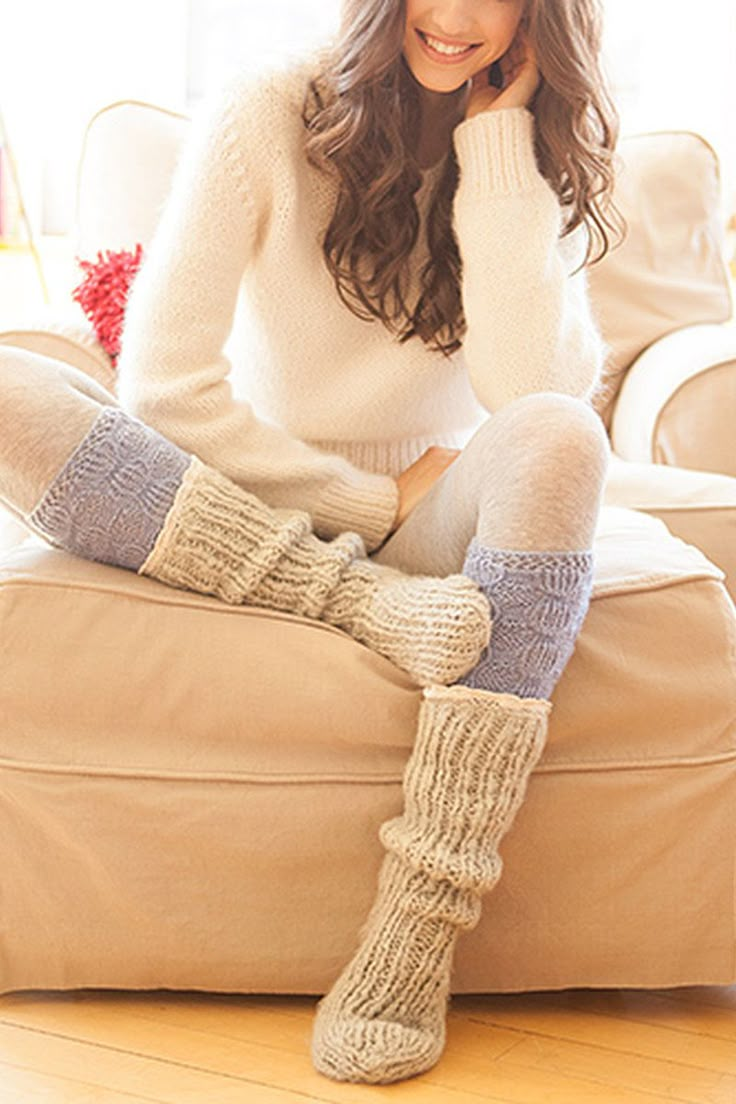
Dr. Jocelyne Sassine Fakhouri, a specialist in internal medicine, respiratory diseases, and sleep disorders, and a lecturer at the Lebanese American University, explained to Annahar: “One of the most important factors for ensuring sleep quality is body temperature, which is closely linked to room temperature. The room should not be too cold or too hot, as body temperature directly affects the sleep cycle.”
Fakhouri explains, “Warming the hands and feet effectively prepares the body for sleep, and as long as they remain cold, a person will not be able to sleep well.”
What is the ideal sleeping temperature?
Therefore, Fakhouri says that the bedroom temperature should be kept moderate and well-regulated, unlike what some people do in winter by turning the heat too high or in summer by lowering it to a minimum.
Experts from The National Sleep Foundation generally recommend a nighttime temperature between 16 and 19 degrees Celsius as ideal for sleep.
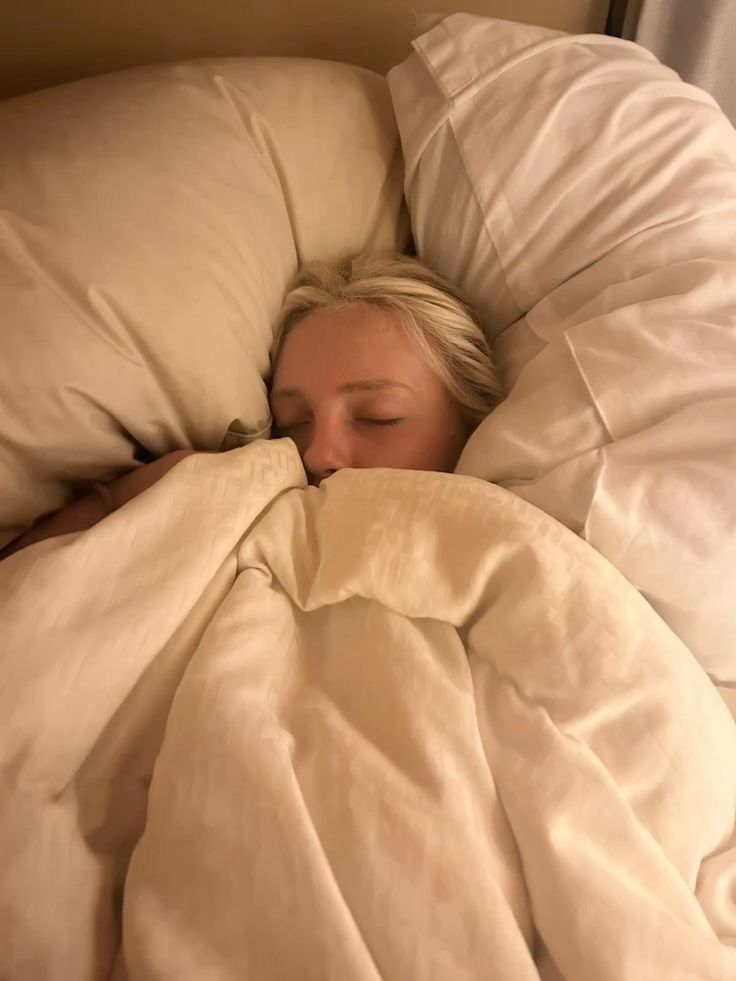
Why is warming extremities key to better sleep?
When preparing for sleep, your body needs to cool down to signal that it’s bedtime. Paradoxically, warming the hands and feet actually helps with this, because the body uses them to dissipate heat. When your extremities are warm, blood flows more easily to the skin, allowing excess heat from the body’s core to escape. As body temperature drops, the brain receives the signal that it’s time to sleep. If the hands and feet remain cold, heat cannot escape as efficiently, making it harder to fall asleep.
Diseases and conditions that cause cold extremities
When the body's extremities are only mildly cold, simply covering them may be enough to ensure a normal sleep process. However, sometimes there are underlying causes for unusually cold hands and feet. Excessive anxiety or fear, for example, can affect blood circulation, and certain sleeping positions—such as inadvertently pressing on hand arteries—can cause numbness and coldness, which may wake a person, according to Fakhouri.
Additionally, conditions like arterial diseases, diabetes, and autoimmune disorders can contribute to cold extremities. Therefore, Fakhouri emphasizes that it is important to identify the cause of abnormal extremity coldness, as simply trying to warm them may not be effective without addressing the underlying issue.

Best ways to warm up
Take a hot bath with water not exceeding 44°C.
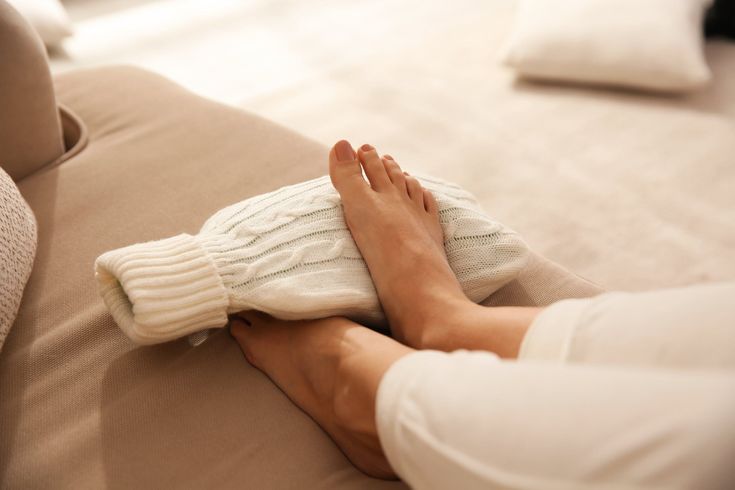
Place a heating pad or hot water bottle under the pillow or at the foot of the bed.
Wear wool socks.
Soak your feet in warm water for 10–15 minutes an hour or two before bedtime.
العلامات الدالة
الأكثر قراءة