Lebanon’s Qoleiat airport project moves ahead as officials dismiss fears of delay


شارك على
 مسنجر
مسنجر
 واتساب
 ثريدز
ثريدز
 بريد إلكتروني
 الطباعة
شارك على


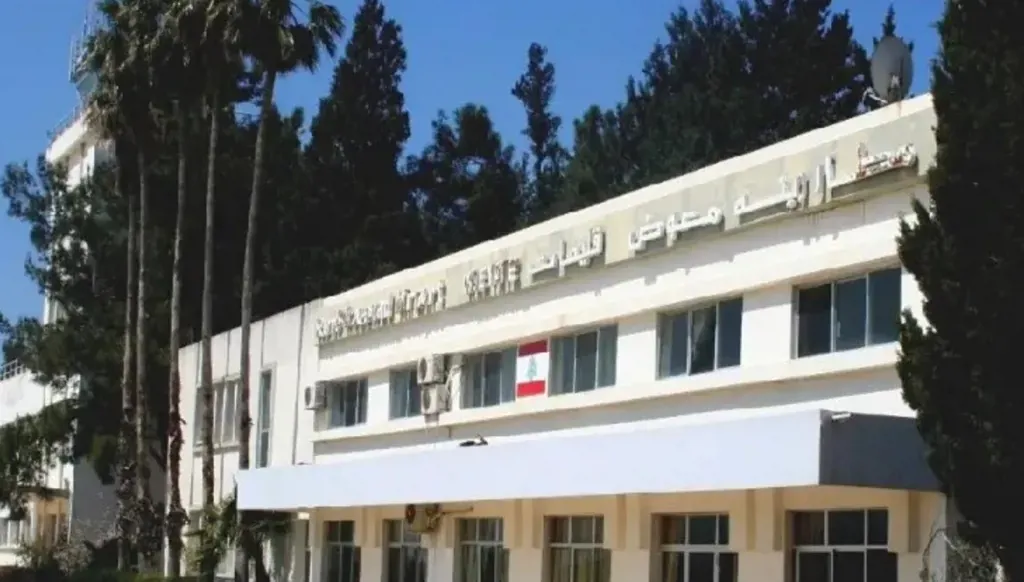


Are there “risks” that could prevent the conversion of Qoleiat Airport in Akkar into a civilian airport? Or are things moving smoothly toward fulfilling the official promise of seeing this project come to light soon?
This question has recently gained relevance. More than five months ago, the government approved an item that had been on its agenda, under which it pledged to establish the legal and legislative foundations required to launch this vital project, long awaited for several decades. The project represents a promising development dream for the residents of Akkar and the North and is expected to serve as a practical application of the policy of balanced development.
It was only natural for this decision to be met with a sweeping wave of relief and to generate high hopes in a peripheral region that has endured chronic deprivation.
It was evident that the deputies of Akkar were the most enthusiastic in celebrating this achievement, as it responds to a fundamental demand for which they made exceptional efforts to put the project on the track toward implementation.
In recent days, a development has brought this long-promised project back into the spotlight, as a reminder and to prevent it from remaining a paper project buried in drawers like dozens of similar initiatives. This development took the form of a warning issued by MP Wajih Al-Baarini, a former member of the Akkar-based National Moderation parliamentary bloc, which had taken on the task of completing this project some time ago and engaged in intensive efforts to that end. He threatened to resort to “peaceful escalation steps” if the government and the relevant official bodies fail to honor what they have legislated and committed to in terms of starting the actual implementation of this highly vital project.
Naturally, Al-Baarini based his warning on a key point, namely the official promise that implementation would begin at the start of the current year. His remarks were therefore understood as a reminder that there are stakeholders standing behind the project, closely monitoring it, and that they are not prepared to be lenient or to accept delay and procrastination, leaving the project confined to studies and papers forgotten in drawers.
However, some interpreted the timing of this warning as a sign that its issuer sensed things were not moving along the hoped-for path. This, in turn, raised questions about the real fate awaiting a project that has required so much effort. By extension, has it entered a danger zone?
Yet MP Sajih Attieh, a member of the National Moderation bloc, firmly rejects this view. He tells Annahar: “With complete ease and frankness, we confirm that the project is moving toward its desired conclusion. The last legislative and regulatory obstacles to its implementation have been removed, it has entered the contracting phase, and therefore there is no room for concern about it, contrary to what is being rumored.”
Attieh adds: “The project was delayed at the General Assembly of Parliament during the boycott of parliamentary sessions caused by political tensions over the electoral law. But once matters returned to normal in Parliament, the General Assembly approved the project, it was signed by the President of the Republic and then published in the Official Gazette, and it thus entered the implementation phase.”
In response to a question, Attieh said: “From now on, the project will inevitably enter the approved implementation mechanisms. It is expected to pass through the Higher Council for Privatization, which is usually chaired by the Prime Minister, in order to incorporate the necessary legal legislation, since the project relies in part on the BOT system.To the best of my knowledge, the implementing companies, contractors, and required funding are ready to begin the project. According to available estimates, this phase requires three months, after which we should start to see signs of implementation.”
He added: “I am expected to meet with the Minister of Public Works, after which I will take part in a meeting of the parliamentary Public Works Committee to put the final legal touches on the project.”
Accordingly, Attieh concludes by stressing that “there is no justification for any fear regarding the project to convert Qoleiat Airport into a civilian airport based on modern standards. We are therefore confident that, in the near future, our region will have a civilian airport that serves local residents and the economy, particularly the marketing of agricultural production.”
Disclaimer: The opinions expressed by the writers are their own and do not necessarily represent the views of Annahar
العلامات الدالة
الأكثر قراءة