Caught between powers: How Iraq became a playground for sectarian politics

Opinion 26-03-2026 | 13:55

Caught between powers: How Iraq became a playground for sectarian politics

Decades of foreign intervention, political manipulation, and educational collapse have left Iraqis struggling to navigate citizenship, identity, and the nation’s future.
Caught between powers: How Iraq became a playground for sectarian politics
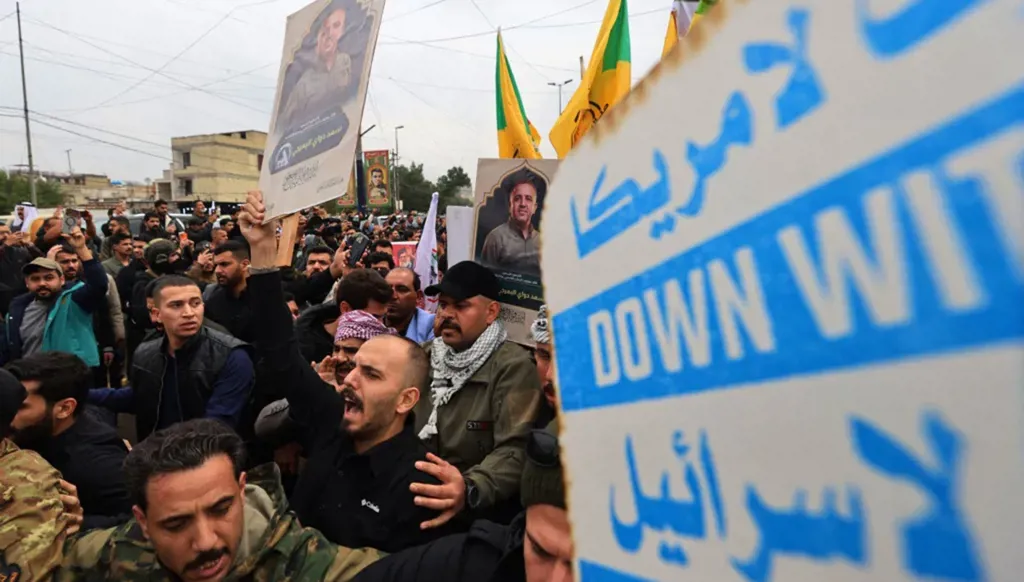
Funeral of Popular Mobilization Forces operations commander in Anbar, March 24, 2026. (AFP)
Smaller Bigger


There is a conceptual distance between one Iraqi and another in viewing the Iraqi issue concerning what the future holds. While one side chooses to pursue a strong and resilient meaning through the faint hope that Iraq might recover and become an influential state in the region, another side resorts to perpetuating a reality imposed by the American occupier since 2003. This reality dictates the nascent state's conditions of weakness in facing regional changes, effectively excluding Iraq from all equations as if it were a non-existent state.

Some might mistakenly believe this is a rational classification between an idealistic side and a realistic side. But that is not the case, given the international entanglements in which Iraq remains one of the key axes. Iraq, which the United States has not abandoned—even if it seemed to have handed it over to Iran after the withdrawal of its forces in 2011—still constitutes an American concern. It is not a meaningless state for the United States, because, at the very least, it represents one of the most important lines of confrontation with, or openings to, Iran. That is not everything, of course. Here, I do not refer only to the American oil companies operating in Iraq, but also to the American embassy in Baghdad, which is one of the largest American embassies in the world.


If Iraqis view their country’s future in terms of black and white—that is, good and evil—then others, whether American or Iranian, see countless colors, each representing a specific state. They are not in a hurry, unlike the Iraqis, who pick fruits before they ripen. Much water has flowed under the bridges without their realizing it.

Doctrinal deception replaces citizenship


In every American-Iranian confrontation, many truths surface in Iraq. Iraq is an American protectorate, regardless of the level of American military presence on its soil, yet it is simultaneously deeply entrenched in Iranian allegiance through the dominance of Iranian militias within its state. Many of the emerging political class failed to grasp this dual equation, having not recognized the reality of the sectarian political system established by the Americans as a substitute for the presidential system that lasted in Iraq for more than fifty years during the republican era.


The sectarian quota system, invented by the Americans, was the trap that paved the way for transforming political sectarianism into social sectarianism. Iraq became a double victim: the occupying authority sought to erase its centrality, which Iran exploited by dominating the state through its proxies. Iraqis, however, are supposed to know their country better than others and care about the future of their generations. Yet that assumption becomes theoretical rhetoric against the wave of doctrinal deception, which replaced sectarian ideology—a theoretical concept—with citizenship, an expression of tangible reality. Due to the collapse of the Iraqi education system, Iraqis lost one of their most important national compasses, as their view of the republican past was reduced to a relic of the Baath era. This served as a prologue to their impoverished imagination, which emptied their collective memory of history.

Detachment from the true meaning of life


When it comes to the question of Iraqis separating from their state’s contemporary history, the issue can be unraveled by looking back over the past three decades, which form the historical background of the current political and social scenes. Adding 13 years of sanctions to the 23 years that followed the American-imposed system on the wreckage of the Baath regime gives us 36 years of Iraqis living detached from the true meaning of life. This means that generations have grown up amid a successive series of deprivation and deception operations.


Iraq's real crisis lies in its youth, who have mostly lost their national compass due to exposure to sectarian brainwashing campaigns. These campaigns primarily rely on mixing narratives—equating the killing of Hussein with that of Soleimani, and portraying Khamenei's assassination as a continuation of Imam Ali's killing. The Iranian funeral narratives have taken hold among youth deprived of seeing their Iraq in its healthy and ideal image.


From this perspective, one can understand the reasons that led to the sectarian language replacing the national language. It is not unrelated to what the new political system did when it removed civic education from the curricula. The religious parties empowered by the Americans to rule were fully aware of their actions, relying on the sectarian isolation plan implemented by the American occupying authority. Consequently, the ruling political class today—most of whom are young—sees in nationalism nothing but a call to return to Baath rule, which they have only come to know through deceptive stories.

Lack of a national incubator


Iraq's current problem lies in its people. This is an approach that cannot be dismissed simply because, as some may assume, it is offensive to peoples. It is true that peoples are generally right, while systems bear the cost of their mistakes. The sectarian parties achieved their historical grudge by tearing the Iraqi people apart and turning them into warring sects. That is true, but it is also true that the Iraqi people bear responsibility for the chaos resulting from their passive stance and lack of resistance when they were divided into warring sects, after previously enjoying a common life in which Iraqi citizenship prevailed.

Modern Iraqi state history has not witnessed a single incident confirming the arrest of a Shiite for being Shiite, or a Kurd for being Kurdish alone. Politics was always the reason. When Iraq was a strong state, its people did not focus on their secondary affiliations, as citizenship served as their unifying foundation. But today, those placing their fate on a sectarian scale face a destiny that will almost certainly be grim. This is their responsibility, which cannot be absolved by the consequences of the war into which they were dragged by a regressive sectarian tendency.


Disclaimer: The opinions expressed by the writers are their own and do not necessarily represent the views of Annahar.

العلامات الدالة

الأكثر قراءة
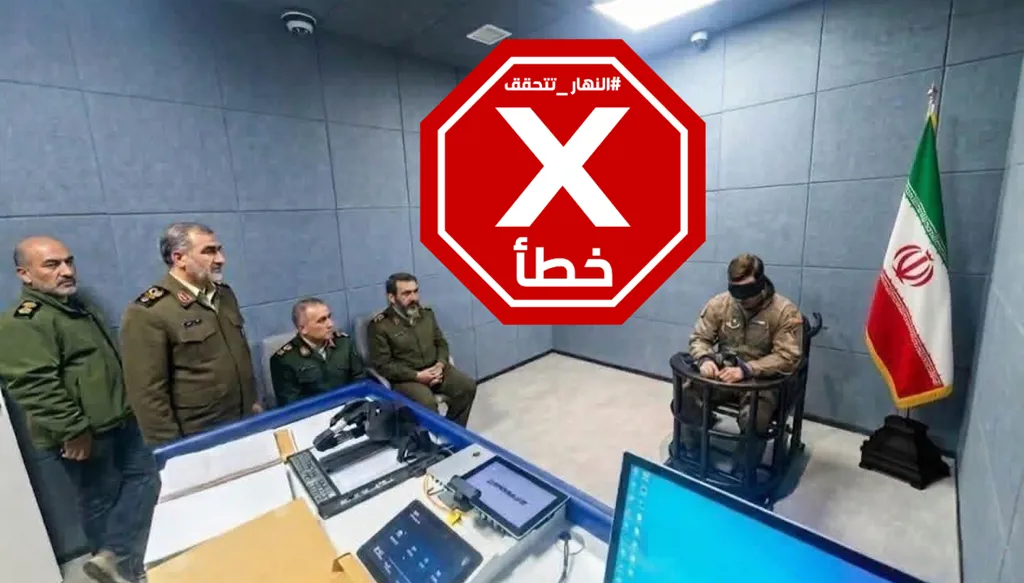
النهار تتحقق 4/4/2026 11:36:00 AM
تظهر الصورة رجلاً معصوب العينين، مقيداً بكرسي يشبه قفصاً، في غرفة رفع فيها العلم الايراني.

"تبدو وكأنك تقول: يا إلهي، كنت في طائرة مقاتلة قبل دقيقتين أحلق بسرعة 800 كيلومتر في الساعة، وانفجر صاروخ للتو على بعد أربعة أمتار ونصف فقط من رأسي"
لبنان 4/4/2026 7:56:00 PM
مقتل جندي إسرائيلي في شبعا بنيران صديقة خلال عملية جنوب لبنان