Netanyahu in Washington: Can Israel shape Trump’s Iran strategy?
With U.S.-Iran talks at a critical juncture, Israel moves quickly to influence Washington’s approach on nuclear limits, missile programs, and regional security.


شارك على
 مسنجر
مسنجر
 واتساب
 ثريدز
ثريدز
 بريد إلكتروني
 الطباعة
شارك على


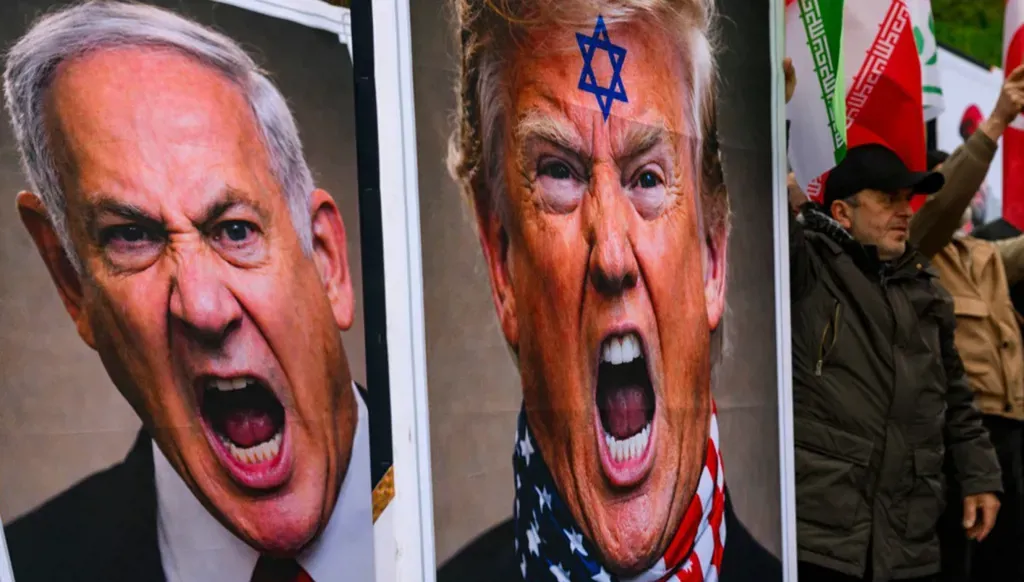


Israeli Prime Minister Benjamin Netanyahu will soon travel to the United States, where he is scheduled to meet with American President Donald Trump. The timing and content of this meeting should not be overlooked, as it comes after the first round of negotiations between Washington and Tehran, and before the second round. They are expected to discuss American, Israeli, and even Iranian red lines.
The round of negotiations in Muscat did not yield tangible results. What is known is that the United States, backed by Israel, insists on an agreement with Iran that includes dismantling the nuclear program, limiting the missile program, and halting support for regional factions. On the other hand, reports indicate that Iran wants to limit negotiations to its nuclear program and enrichment rates—without dismantling—while keeping its missile program and support for regional factions off the table.
Netanyahu's visit to the United States is motivated by several reasons, including anxiety. He fears Trump’s inclination to make agreements and is wary that Iran might offer concessions Israel considers insufficient, which Trump could then accept and finalize, according to Hebrew media reports.
There is a precedent for this. In 2015, then-American President Barack Obama concluded a nuclear agreement with Iran that was limited to controlling uranium enrichment levels. Israelis at the time labeled the deal as "bad" and did not agree with it.
Consequently, Israel fears that the United States might follow the same path and reach an agreement with Iran aimed at bringing the country back to the energy market, while failing to address its military threats.
Red Lines
Netanyahu and Trump will discuss the agreement’s red lines. According to reports, Iran refuses to discuss its ballistic missile program, viewing it as a "fundamental line of defense." The newspaper Yedioth Ahronoth says Netanyahu’s "urgent" move reflects Tel Aviv’s desire to influence Washington’s red lines, in order to prevent any agreement that is limited solely to the nuclear program and enrichment levels.
In the details of the Israeli conditions that Netanyahu will convey to Trump during the U.S. visit, Hebrew media points out that Israel wants to ensure the complete dismantling of Iran’s nuclear program, a full halt to uranium enrichment, and the removal of enriched uranium from Iranian territory, following reports that Iran had protected certain quantities during the American strikes last June.
Guaranteeing the cessation of nuclear activity requires the International Atomic Energy Agency to resume full operations in Iran, granting its inspectors access to all Iranian territory for accurate and comprehensive monitoring of sites.
Added to these conditions are limitations on Iran’s missile program and the range of its missiles to 300 kilometers, as well as a halt to all forms of support for factions loyal to Iran in the region.
The newspaper Yedioth Ahronoth quotes a political source as saying that the reason for Netanyahu’s rush to visit the United States is to "try to influence it to accept Israel’s terms in the negotiations." According to Israeli officials, Tel Aviv "will not abandon" its terms and hopes that the Americans will "adhere" to them.
Discussing the possibility of military action
Meanwhile, Iran views Netanyahu’s visits to the United States with pessimism. At best, the Israeli Prime Minister will try to persuade Trump to toughen the conditions and complicate the negotiations; in the worst-case scenario, he may attempt to push the American president toward a military strike. In this context, the possibility of discussing military operations remains on the table between the two sides, especially with American forces mobilized near Iran.
The visit comes at a very precise time for the region and the world. The upcoming new round of negotiations after the Netanyahu-Trump meeting may be overshadowed by the specter of the U.S.-Israeli meeting, while surrounded by potential political and military flashpoints. The final outcome of the visit could determine the course of the nuclear agreement and the nature of the U.S. strategy in confronting Iran.

العلامات الدالة
الأكثر قراءة