Lebanon under the Quintet lens: International coordination or quiet intervention?

Opinion 19-01-2026 | 16:15

Lebanon under the Quintet lens: International coordination or quiet intervention?

Efforts to stabilize Lebanon through the Quintet Committee reveal deep fractures among foreign stakeholders and reinforce concerns over who truly shapes Lebanese decision-making.
Lebanon under the Quintet lens: International coordination or quiet intervention?
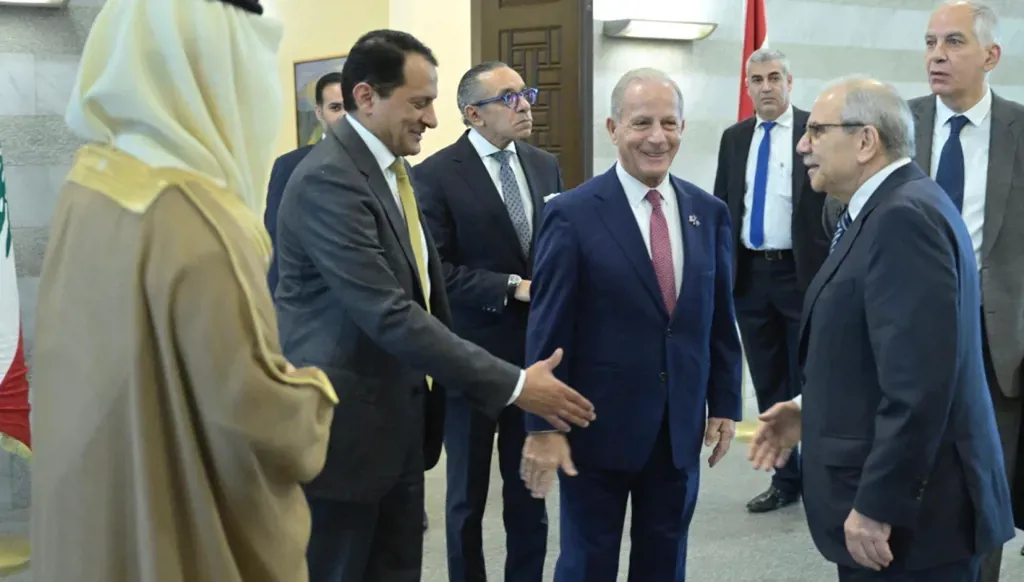
Salam receives the ambassadors of the Quintet. (Nabil Ismail)
Smaller Bigger

There is little doubt that revisiting the factors that prompted the Quintet Committee to act invites skepticism about the role it plays and the scope of maneuver it enjoys under the umbrella of the countries it represents. This, in turn, tempers expectations about the committee’s anticipated contribution to the issues at hand and raises questions as to whether its role could be seen as an intervention in Lebanese affairs.


The campaigns targeting Prime Minister Nawaf Salam over the financial gap bill prompted him to turn to his allies within the committee. He asked the ambassadors representing its member states to issue a unified statement reflecting the praise each had expressed to him individually, in order to demonstrate international support for this governmental achievement and to help steer Lebanon away from the blacklist by advancing the project in parliament.


However, this request exposed the extent of divergence - or, more precisely, the dominance of personal biases - among committee members. This was evident in the separate statements issued by some ambassadors and in the difficulty of agreeing on a single joint statement, which only came after multiple revisions. The same pattern applies to the committee’s handling of other files, as seen in the recent discussions surrounding the Army Support Conference and the committee’s proposed role in replacing the Mechanism Committee, an issue complicated by attempts to expand its mandate from strictly military matters to include economic ones as well.


In preparing for the support conference, it appeared that the parties directly concerned with this file were three: Washington, Paris, and Riyadh. Accordingly, the return of the French envoy Jean-Yves Le Drian to those two capitals, alongside France, was understood. This, however, was met with noticeable Qatari and Egyptian dissatisfaction over their exclusion from the tripartite meeting, effectively narrowing the scope of the Quintet Committee.


Questions were also raised as to why countries that contribute financially or through military equipment to support the army - such as Kuwait, the UAE, and the United Kingdom - remain outside the committee.


In this context, a proposal surfaced in some narrow circles to establish a special committee dedicated to the support conference, while questions were raised as to why the existing committee should not be expanded to include those countries. The answer became evident in the case of the Mechanism Committee, where there was a clear American refusal to broaden its membership to include additional states, going so far as to attempt to exclude France altogether.


If some member states feel threatened by restriction or marginalization in the Lebanese file, the Quintet Committee in its current form - despite the clear differences among its members, most of which center on leadership and the presentation of initiatives - is keen to preserve its presence and role, even though the nature of its work has varied from one file to another. That said, activating the Quintet Committee is not without complications. Foreign involvement, even when framed as coordination or support, remains a double-edged sword: on the one hand, it may exert positive pressure on Lebanese parties toward a potential settlement; on the other, it risks highlighting internal incapacity to generate solutions and reinforcing the perception that Lebanese decision-making remains subject to external balances.


In conclusion, it can be said that the objective of activating the Quintet Committee goes beyond a single dimension. It seeks simultaneously to keep other countries involved as partners in the Lebanese decision-making process, prevent its monopolization by any internal or external party, and contain the collapse so that it does not evolve into a wider regional crisis. However, the success of this role remains contingent on the Lebanese themselves reclaiming the initiative; otherwise, external actors will continue to play a decisive role in shaping the fate of a country that ought to be sovereign over its own decisions.


Disclaimer: The opinions expressed by the writers are their own and do not necessarily represent the views of Annahar.


العلامات الدالة

الأكثر قراءة

العالم العربي 1/19/2026 1:19:00 PM
علمت "النهار " أن فرنسا ستساعد الجيش اللبناني على وضع استراتيجية يقدمها للمؤتمر، لا تشمل فقط لائحة معدات وتمويل ولكن استراتيجية لنزع السلاح في كل البلد 
المشرق-العربي 1/18/2026 10:56:00 PM
تهيئة الظروف الملائمة للمشاريع الاقتصادية والتنموية.
المشرق-العربي 1/19/2026 5:12:00 AM
اشتباكات عنيفة بين "قسد" والجيش السوري في محيط سجن الأقطان بالرقة.
المشرق-العربي 1/19/2026 12:16:00 PM
المخابرات التركية كانت على تواصل مع الولايات المتحدة والحكومة السورية قبل إبرام الاتفاق.