

U.S.–Iran shadow talks and the strategic risk of escalation in the Strait of Hormuz
As indirect negotiations unfold and regional tensions persist, the Strait of Hormuz emerges as the key pressure point where diplomacy, deterrence, and potential escalation intersect without a clear path to resolution.


 Messenger
 Whatsapp
 Threads
 Email
Email
 Print
Print
 X
X
 Facebook
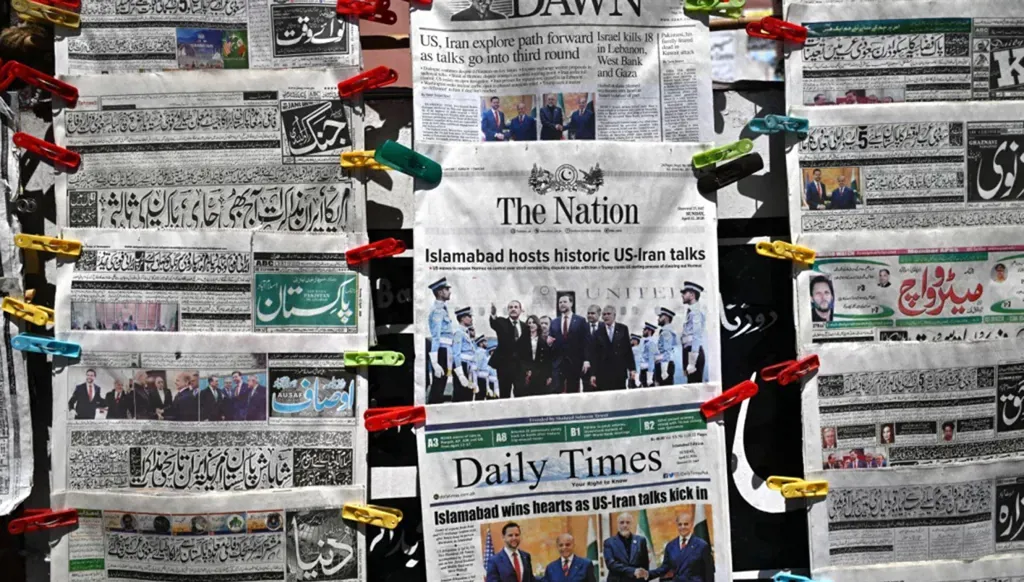


The recent meetings between the United States and Iran in Islamabad on April 11, 2026, point to a notable shift in how the conflict between the two sides is being managed. The issue is no longer about traditional negotiations aimed at reaching a comprehensive agreement, but rather a careful attempt to recalibrate the balance of power and test intentions within what can be described as shadow diplomacy.
Key messages
The choice of Islamabad was not a procedural detail but rather reflects a mutual desire to reduce the sensitivity of the negotiating environment and create a more flexible space away from media and political pressure. In this context, the focus is not on final solutions, but on drawing red lines and redefining the acceptable threshold of escalation. One day of talks was enough to deliver the core messages: neither side is ready for war, but neither side is willing to make concessions.
At the heart of these meetings, both parties appear to recognize that the cost of direct confrontation has become higher than ever before. Washington, preoccupied with multiple international files, tends to manage tension rather than resolve it, while Tehran seeks to break out of economic isolation without offering concessions that would affect the core of its power, whether in its missile program or its regional role. The result is a delicate equation: negotiations without trust, and de-escalation without agreement.
Not merely a passage
The Strait of Hormuz remains the most sensitive factor in this equation. It is not merely a waterway, but a geopolitical pressure card that can turn at any moment into a flashpoint. Any disruption in the negotiating process could quickly be reflected in maritime security, whether through limited field messages or calculated shows of force that raise tensions without sliding into full-scale confrontation.
In this context, the option of American escalation stands out, especially in light of Trump’s rhetoric, which does not rule out harsher tools such as tightening a naval blockade. However, despite its strength, this option remains highly risky, as it could push Iran to respond through indirect means via its network of regional allies, opening the door to a multi-front escalation that would be difficult to contain.
From a European perspective, the stance appears more inclined toward supporting the diplomatic track, albeit with limited influence. European countries understand that stability in the Gulf is not only a political choice but an economic necessity, yet they are at the same time unwilling to engage in an open confrontation.
What we are witnessing today is not the beginning of a solution, but the reproduction of a pattern of conflict management. There is no comprehensive war on the horizon, nor is there a real peace approaching. It is a state of unstable stability, where negotiation channels coexist with pressure tools, and the region, particularly the Strait of Hormuz, remains on the edge of escalation that could erupt at any moment or be postponed indefinitely.
Disclaimer: The opinions expressed by the writers are their own and do not necessarily represent the views of Annahar.