

Two week ceasefire between US and Iran puts war on hold


 Messenger
 Whatsapp
 Threads
 Email
Email
 Print
Print
 X
X
 Facebook
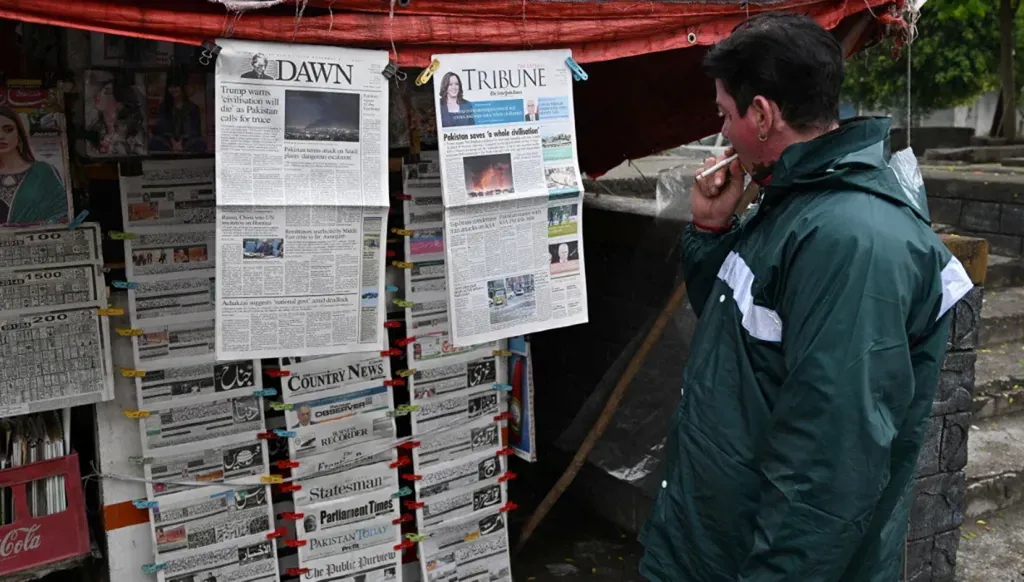


Once again, the US president has postponed carrying out his threat to launch what he described as a decisive strike aimed at destroying Iran’s infrastructure, including bridges, power stations, and land, air, and maritime transport networks. Instead, he agreed to a two week ceasefire to give mediators a chance to reach compromises that would meet US demands, namely the immediate reopening of the Strait of Hormuz and Iran abandoning any efforts to acquire nuclear capabilities or any means that could threaten its neighbors, including Israel, of course.
Several conclusions can be drawn, most importantly:
First, this does not represent a final declaration to end this destructive and costly war for all parties. Rather, it is a temporary and conditional halt to the war against Iran, meaning that whether it becomes permanent will depend on the positions of the parties concerned, especially the United States and the Iranian regime.
Second, the starting point of the agreement hinges on reopening the Strait of Hormuz and ensuring safe navigation for oil tankers congested in the Arabian Gulf, which would help ease global energy pressures that have driven up the prices of many goods.
Third, although Israel is expected to comply with this agreement, which does not align with the preferences of the Netanyahu government or what it sees as Israel’s interests in the current international and regional context, the deal contains no linkage to the war Israel continues to wage in Lebanon. This suggests that Israel alone holds the ability to connect or separate the different fronts.
Fourth, the international and regional pressure to stop this war, which is more costly for the world than the war in Ukraine or Israel’s war in the Middle East, is extremely high and highly effective.
Fifth, what is unfolding is a natural outcome of an asymmetric war between a militarily strong party and a weaker one. However, strength and weakness here do not apply in the same way to the clash of wills, especially when one side, despite its relative weakness, does not acknowledge it and instead sees itself as fighting for its very existence. It is also an asymmetric conflict politically, between a state and a regime that considers itself more important than the state. This is the case with the Iranian regime and similar systems that place themselves above the state and the people, or that equate themselves with the state, the people, or the nation.
In this context, while the idea of continuing the war to its conclusion is primarily an American and Israeli one, the Iranian regime has more at stake than others in finding a middle ground that can defuse the conflict, even if that requires certain concessions. Prolonging the war is not in Iran’s long term interest, as it would amount to a path of self destruction. It risks losing its nuclear capabilities, its regional influence, and possibly Iran itself. Even if the regime does not fall, it would face the loss of economic capacity, the destruction of infrastructure, and severe damage to human development, none of which serves the Iranian people.
Accordingly, when comparing American and Iranian conditions, it is clear that the Iranian regime has responded to pressure from mediators, particularly Pakistan, China, and Russia, by agreeing to a temporary ceasefire, reopening the Strait of Hormuz, and entering negotiations over the nuclear file and other issues, including the details of the disputed matters at the heart of the conflict.