The Immortals of Tehran: Family, revolution, and the shadows of history


شارك على
 مسنجر
مسنجر
 واتساب
 ثريدز
ثريدز
 بريد إلكتروني
 الطباعة
شارك على


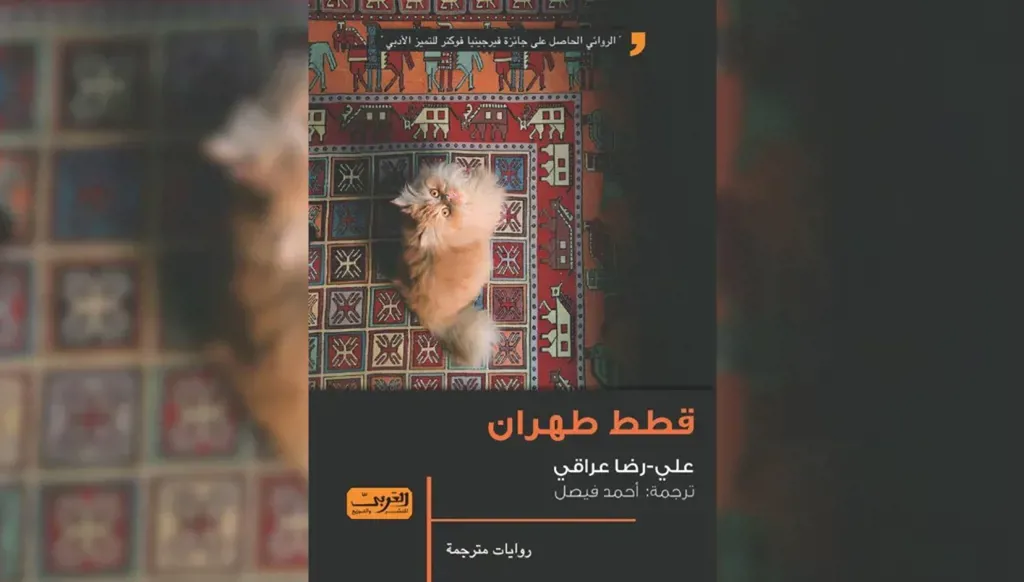


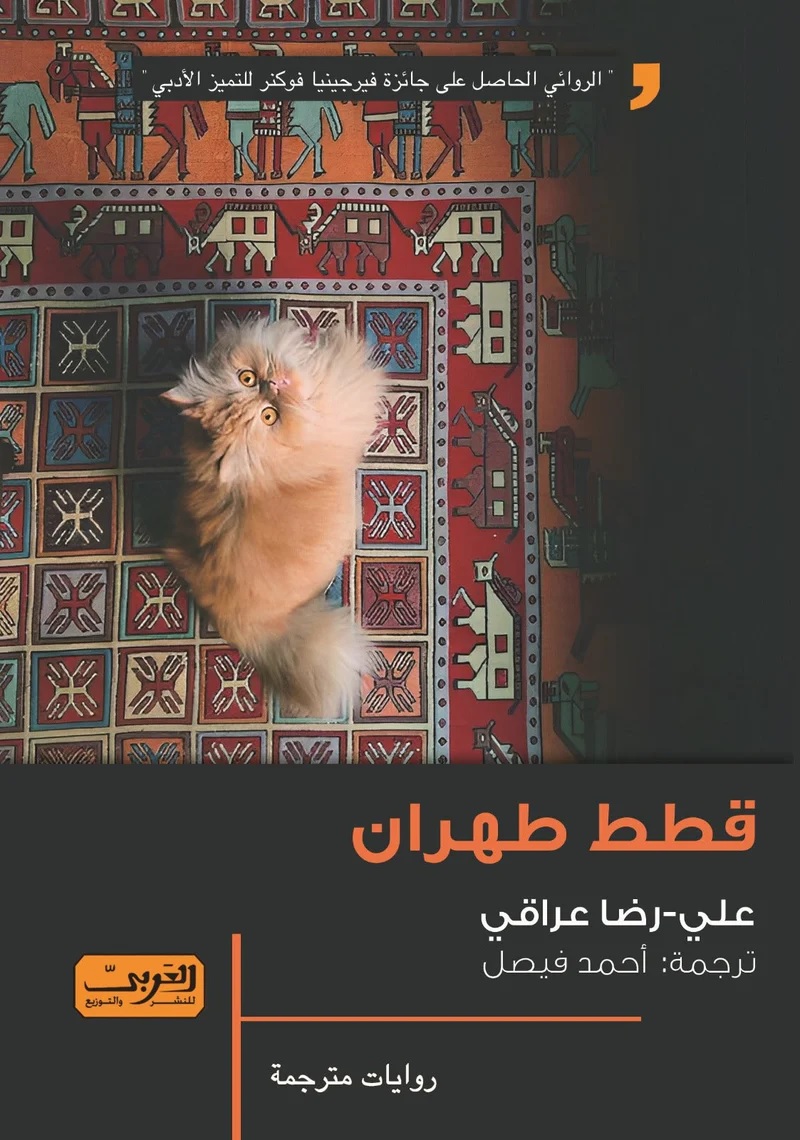
The events of the novel "The Immortals of Tehran" by Iranian writer Ali-Reza Araghi span from the time of World War II, through the Iran-Iraq War, and into the internal unrest caused by armed opposition to the clerical regime in the 1990s. Its central event, however, is the revolution against the rule of Shah Mohammad Reza and its aftermath under the country’s religious government, which began in 1979.
The novel was published in 2020 by Dar Al-Arabi (translated by Ahmed Faisal). Its author, Ali-Reza Araghi, who resides in St. Louis, holds a master’s degree in Ancient Cultures and Languages from the University of Tehran, as well as an MFA from the University of Notre Dame. At the time of its publication, he was pursuing a Ph.D. in Comparative Literature at the University of Washington.
The novel "The Immortals of Tehran," presented in a 496-page Arabic translation, traces the experiences of Ahmad Torkash-Vand's family during these events, including the severe famine that struck Iran during and after World War II. This period coincided with the Allied occupation of Iranian territories, with Russian forces in the north and British forces in the south. The occupation led to widespread food shortages, soaring inflation, and disrupted supply chains, causing millions of deaths. Historical estimates suggest that Iran lost about a quarter of its population to hunger and related diseases, as the occupying forces exploited local resources, triggering an economic collapse and creating one of the largest humanitarian disasters in Iran’s modern history.
An extending curse
American documents indicate that hunger‑related deaths and diseases reached between 3 and 4 million out of approximately 15 million people, representing Iran’s population at the time. The war had severely disrupted grain imports and exports, exacerbating internal shortages to catastrophic levels, despite Iran declaring neutrality as soon as the conflict broke out.
On the day his father, a former soldier, commits suicide, ten-year-old Ahmad recalls the words of his fifth grandfather—a figure more symbolic than real—who told him that his family had been cursed for centuries and that he was destined to confront it. The family itself symbolizes the homeland, perpetually threatened by danger, particularly during World War II and the ensuing political and economic upheavals that accompanied Mohammad Reza’s rise to power, his Western-oriented policies, and his eventual clash with the Marxist-leaning Mohammad Mosaddegh, especially after the decision to nationalize oil. The cats, in turn, symbolize the enemies of the homeland—those who infiltrate its lands and seek to starve its people—according to Mr. Khan, the head of the Torkash-Vand family and a steadfast supporter of royal rule.
Conspiracy theory
This view is embraced by Nasir Khan, who eventually dies by suicide after years of service in the Shah’s army, followed later by his son Ahmad, who is elected as a deputy within a pro-monarchy bloc. Ahmad comes to recognize the fallacy of this conspiracy theory after passing forty, amid growing opposition to the Shah’s rule, and resigns from parliament only to become involved in that opposition himself—most notably through his poetry, secretly circulated among the people.
Before this realization, Ahmad Torkash-Vand spends years haunted by the suspicion that someone is trying to destroy his family—or the homeland itself—struggling to protect it during the famine years and later during periods of political unrest. The world around him changes, and so does he: from a rebellious young man participating in street battles, to a political poet, and a father of two daughters, one of whom secretly joins the armed resistance against the Shah’s rule.
Born in the village of Tajrish, about twelve miles from Tehran, into a well-off family that owned orchards abundant with apple trees, Ahmad’s early life is shaped by upheaval as the village and its orchards soon fall under Russian control. At the age of ten, he witnesses his psychologically troubled father’s suicide, a result of fear of a potential Russian invasion facilitated by foreign agents—figures his father saw symbolized in street cats, which he killed whenever he could. This behavior was influenced by the fifth grandfather’s mythical tale of “cats” opposed to the continuation of the family or nation’s lineage, a curse believed to lead each father to witness the early death of his son, accompanied by signs of psychological disturbance.
The Cat Legend
Khan sold the orchard after losing the ability to protect it from Russian soldiers and moved to Tehran, preceded by his late son’s wife and his grandson, Ahmad, who chose to work on his own in a smith’s workshop and fought in street battles for money to complete his high school and later university education. The family often recounted how grandfather Agha had coexisted with the ruling Qajar dynasty 200 years earlier and was the first to tell the legend of cats harboring hostility toward the family, accompanied by a curse causing their sons to die young after descending into madness—the only way to break the spell being the extinction of the family line.
Ahmad published his poems under the pseudonym “The Silent Fist,” a reference to the loss of his voice after witnessing his father’s suicide. His poems resonated within the Tudeh Party, which supported the nationalization of Iranian oil. In addition, Ahmad published articles criticizing the widespread ignorance among the populace. However, his parliamentary speeches against Mosaddegh’s supporters triggered arrest campaigns and torture carried out by the infamous SAVAK police apparatus.
A revolutionary outcome
The novel addresses Khomeini’s role in inciting the revolution from exile but assigns the main role in its implementation to the middle class, specifically represented by the Torkash-Vand family, who frequently clashed with the village cleric, Mullah Ali, over his opportunism and attempts to impose backward views on the people. After the Shah’s immediate fall, Ahmad was accused by the Revolutionary Guard of involvement in the killing and torture of several Shah supporters due to a vehement parliamentary speech against them. Later, because of his contributions to opposing the Shah’s regime, he received a reduced nine-year prison sentence, which ended a year before the conclusion of the Iran-Iraq War. In this way, he became merely one of the “cats” who played a major role in ending the Shah’s rule—only to allow the clergy to succeed him and imprison those same “cats.”
العلامات الدالة
الأكثر قراءة