Iraq’s militias vs. the State: A growing threat to the Gulf

Opinion 06-04-2026 | 12:51

Iraq’s militias vs. the State: A growing threat to the Gulf

As armed factions operate beyond state control, Gulf nations push Baghdad to take decisive action—or risk destabilizing the region.
Iraq’s militias vs. the State: A growing threat to the Gulf
Are the Iraqi militias outside the state's framework?
Smaller Bigger


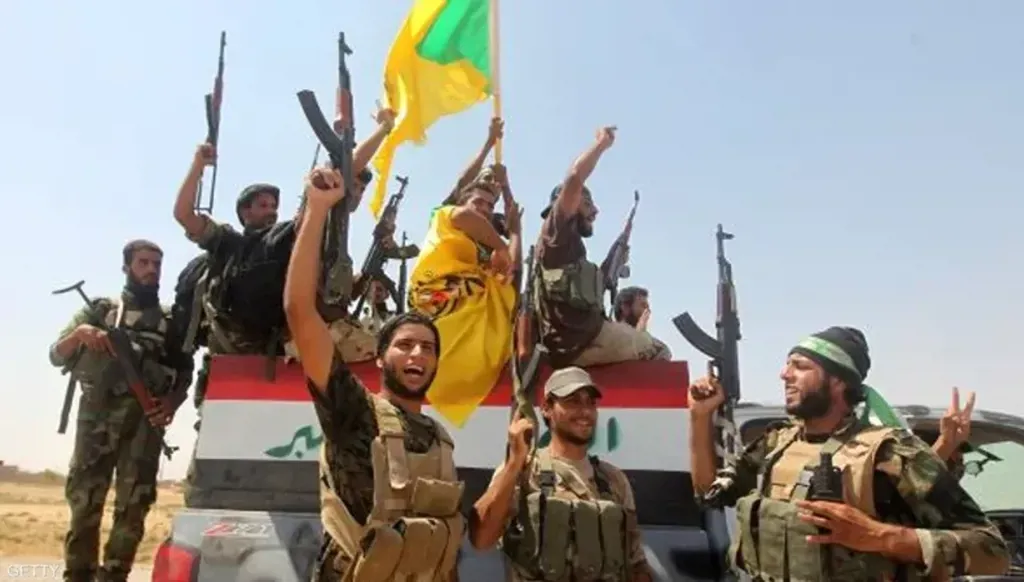
Armed militias in Iraq have become more than just actors outside state authority; they are now a factor that weakens its structure and a threat to Baghdad's relations with Gulf capitals through their continued armed activities—whether targeting the American embassy or bases within Iraq and the Kurdistan region—as well as through their support for the Iranian Revolutionary Guard in its attacks on GCC countries.


The second Kuwaiti memorandum of protest, directed to the Iraqi charge d’affaires in Kuwait on March 30, followed by the Iraqi government’s decisions to detain and investigate security leaders on the same day, are political and security developments indicating a growing gap between the official Iraqi position—rejecting the use of its territory to attack neighboring countries—and the state apparatus’ actual ability to control the security environment and prevent Iran-aligned militias from targeting energy facilities in the GCC, which harms Baghdad’s relations with the Gulf capitals.


The Kuwaiti government recognizes the internal complexities in Iraq and that the armed militias defy the authority of Prime Minister Mohammed Shia' Al Sudani, but this step aims to shift the burden of resolution onto Baghdad itself, as it holds legal sovereignty over all actors on its territory.


On the other hand, the recent Iraqi decisions concerning certain security leaders in the "Mada'in Sector" highlight that the issue can no longer be masked by political discourse or by claiming that the government issues orders without other parties executing them. Therefore, the dismissal and detention of security officials for investigation, following a security breach linked to shelling near Baghdad Airport, indicates that the government itself has acknowledged an operational shortcoming in one of the country’s most sensitive areas.


When these breaches occur around the capital, the problem appears not to be limited to distant or vulnerable areas but strikes at the very core of the state’s security structure.


The official Iraqi rhetoric, expressed by Foreign Minister Fuad Hussein, emphasizes the country’s rejection of launching “any attack” on the GCC and Jordan, considering “the security of sister Arab countries an inseparable part of Iraq’s national security.”


This clarity in the Iraqi Foreign Minister’s position indicates that the government does not view assaults on neighbors merely as a foreign relations crisis, but also as a genuine internal threat that generates chaos and undermines Iraq’s stance, security, and interests.


GCC states and Jordan, in March, released a statement condemning “the attacks carried out by Iran‑aligned factions from the Republic of Iraq against several regional countries and their infrastructure” and urged the Iraqi government to take the necessary measures immediately.


The Gulf states, particularly Saudi Arabia, have sought to support the government of Mohammed Shia' Al Sudani, who assumed the prime ministership backed by the “Coordinating Framework,” which includes politicians friendly to Iran. Despite this, Riyadh has pursued effective diplomacy with high pragmatism, aiming to strengthen the Iraqi state and reduce militia influence over political and security decisions.


The actions of armed factions during these politically and security-sensitive times pose a real threat to neighboring countries, which will certainly not tolerate violations of their sovereignty. Consequently, the GCC and Jordan no longer view Iraq merely as a war-affected state but as a launchpad for threats that must be halted through a decisive decision by the Iraqi government, since the escalating chaos will negatively impact the entire Middle East region, with Iraq itself among the harmed, further weakening the state.


Disclaimer: The opinions expressed by the writers are their own and do not necessarily represent the views of Annahar.


العلامات الدالة

الأكثر قراءة

الخليج العربي 4/5/2026 12:21:00 PM
السعودية: نُدين الإساءات غير المقبولة للرموز الوطنية للإمارات أثناء الاعتداء على سفارتها 

الخليج العربي 4/5/2026 4:30:00 PM
قرقاش: لا يسعني إلا أن أُحيّي صمود وثبات مملكة البحرين الشقيقة
الخليج العربي 4/5/2026 1:44:00 PM
الاعتداءات تسببت بأضرار مادية جسيمة... ولم تُسجَّل أي إصابات بشرية.