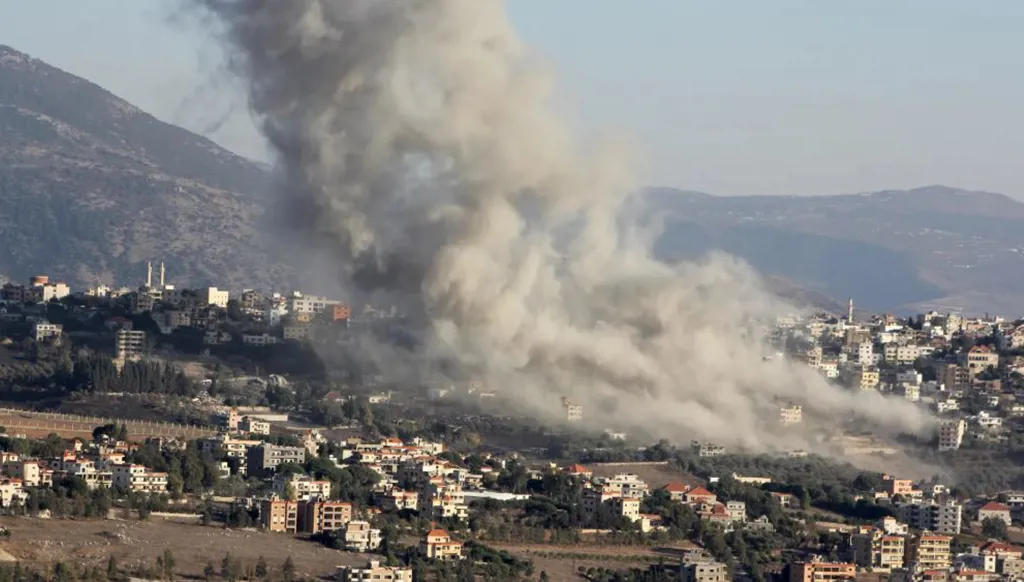
Turkey’s rise as a technical power: From NATO ally to strategic contender

Opinion 05-04-2026 | 15:45

Turkey’s rise as a technical power: From NATO ally to strategic contender

From drones to defense industries, Ankara’s “sovereign code” transforms military strength into geopolitical influence, challenging Israel and reshaping the balance in the Eastern Mediterranean and beyond. 
Turkey’s rise as a technical power: From NATO ally to strategic contender
Naftali Bennett: "Turkey is the new Iran" (AFP)
Smaller Bigger

In the corridors of the Mamilla Hotel in occupied Jerusalem (February 2026), former Israeli Prime Minister Naftali Bennett issued a stark warning, declaring openly: "Turkey is the new Iran." His statement echoed a "chorus" of Western research alerts, as strategic analyst Michael Rubin questioned whether Ankara could become a version of Tehran, cautioning against the independence of Turkish defense decision-making. Meanwhile, military expert Bradley Martin, writing in the Wall Street Journal, urged Washington and Tel Aviv to "contain Turkey," accusing it of seeking to fill the regional vacuum that Iran might leave.


This raises the fundamental question: How did a historical NATO ally come to be seen, in Israel’s eyes, as a “second Iran”? And what makes Ankara’s technology today a source of concern that goes beyond traditional strategic issues?

The current Western and Israeli concern is closely tied to historical memory, recognizing Turkey as the inheritor of Seljuk and Ottoman legacies. During the Cold War, the West leveraged its strategic location as a "buffer wall" against the Soviet Union, integrating it into NATO and transforming it into a vast market for Western weapons.


However, the major turning point came with "President Johnson's Letter" in the 1960s, when he threatened Ankara with the withdrawal of NATO protection if it intervened militarily in Cyprus to defend Turkish Cypriots and barred it from using any American weapons. That moment served as a shock, awakening Turkish awareness that complete reliance on an external ally for armament and political decision-making poses an existential risk, and that "relying on the West definitely leaves one exposed."


The recent pressures to remove Turkey from the F-35 aircraft program reflect a continuation of the same paternalistic mentality. After Ankara insisted on securing its airspace with the Russian S-400 missile system—following the West’s refusal to provide equivalent alternatives—Turkey faced a new embargo. From this adversity, the seeds of national defense industries were sown, leading to the establishment of major companies like Aselsan and TUSAŞ, as well as the creation of a defense industries division within the TÜBİTAK agency, marking a first step toward breaking free from foreign dependency.

Turkey draws its strength from its unique geography, controlling the Bosphorus and Dardanelles straits—critical gateways for global security. From this position, Ankara embraced a “realistic weapons” philosophy: the Bayraktar drone succeeded not because it was the most expensive, but because it was battle-tested, designed to suit the region’s complex terrain and rugged geography, achieving destructive efficiency that surpassed even the most advanced global systems.


The Turks recognized that true sovereignty begins with control over the “source code”; while the West can disable its allies’ weapons with the push of a button, Ankara asserted its digital independence. Today, Turkey overcomes technical challenges with fifth-generation fighter engines like “KAAN” and the “Çelik Kubbe” (Steel Dome) system, earnestly aiming to compete with Israel’s Iron Dome and challenge the “guaranteed qualitative superiority” Israel has long held in the region.


This leads to an inevitable strategic question: Is it impossible for states to achieve genuine political independence in today’s world without controlling the “sovereign code” of their defense systems?

This superiority places Turkey today in a state of “sovereign rebellion”; owning independent defense industries carries strategic weight comparable to the nuclear programs of major powers. In a global system often described as an “international jungle,” where the authority of international law has eroded in the face of raw power, Ankara understands that air defense alone is no longer sufficient. Instead, “offensive deterrence capability” is the only true guarantee against aggression. Possessing fifth-generation technology and smart drones serves as Turkey’s “tough message of peace,” signaling that any encroachment on its interests will come at a high cost, and marking Ankara as a peer capable of asserting “no” within the evolving global order.


What alarms decision-making circles in Tel Aviv, as expressed by Naftali Bennett and Michael Rubin, is not merely the growth of Turkish military capability, but its combination with a “strategic intent” to challenge Israel’s influence over maritime routes and vital gas lines in the Mediterranean. This shift represents a form of “strategic containment” that goes beyond traditional military geography, penetrating the sensitive core Israel considers off-limits—from robust support for the Palestinian cause to an active cultural and political presence in occupied Jerusalem—making today’s Turkish power the “technical umbrella” safeguarding Ankara’s principled positions in international forums.

In conclusion, the rise of Turkish military power is no longer merely a surge in manufacturing, but a “strategic act of rebellion” against a system that has long used weaponry as a tool of control and coercion. Its defense industries have enabled Turkey to evolve from a “functional ally” into a “technical power” that is reshaping the very concept of national security—where strength is measured not by the number of tanks, but by the ability to exercise the “right of refusal” and break free from the “digital locks” imposed by major powers.


These industries have become the true “negotiating table,” granting Ankara “geopolitical veto power” stretching from the Eastern Mediterranean to the Caucasus.


The Turkish experience demonstrates that possessing national “technical claws” is essential for survival in a world where laws are often sidelined, enabling a state to assert itself as an original partner rather than a subordinate under mandate.


Disclaimer: The opinions expressed by the writers are their own and do not necessarily represent the views of Annahar.

العلامات الدالة

الأكثر قراءة
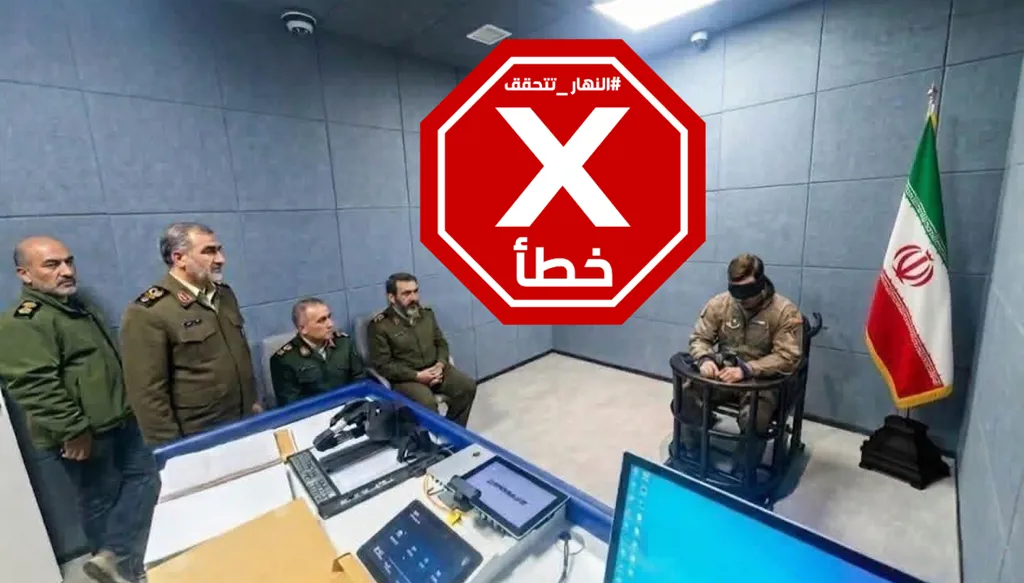
النهار تتحقق 4/4/2026 11:36:00 AM
تظهر الصورة رجلاً معصوب العينين، مقيداً بكرسي يشبه قفصاً، في غرفة رفع فيها العلم الايراني.

لبنان 4/4/2026 7:56:00 PM
مقتل جندي إسرائيلي في شبعا بنيران صديقة خلال عملية جنوب لبنان 
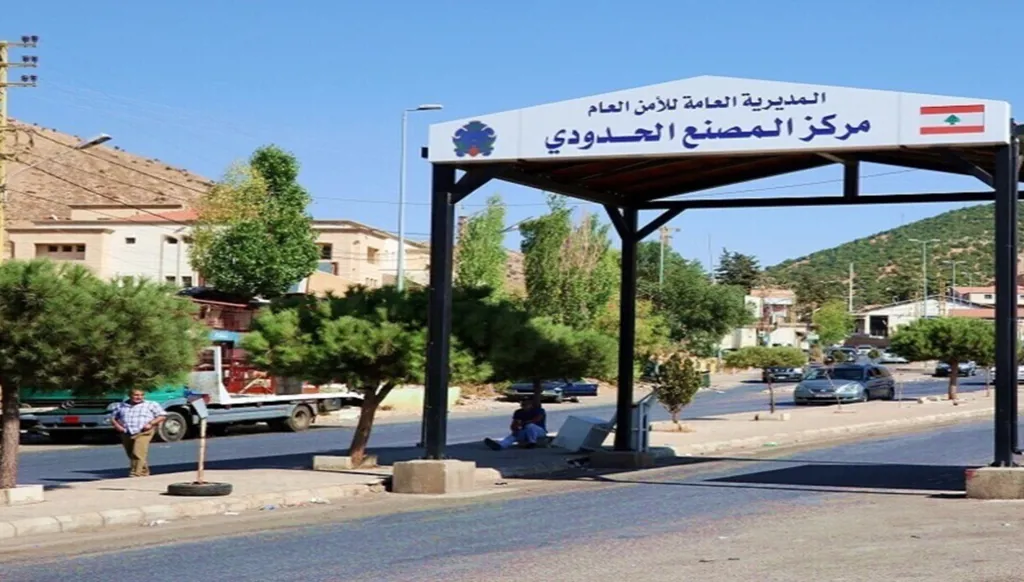
لبنان 4/4/2026 9:34:00 PM
إنذار عاجل إلى جميع المتواجدين في منطقة معبر المصنع على الحدود اللبنانية – السورية، وكذلك إلى المسافرين على طريق M30، داعيا إلى إخلاء المنطقة فورًا.