

GCC strengthens supply chains with strategic ports and green corridors
Amid rising tensions in the Strait of Hormuz, Gulf countries expand logistics networks and operational alternatives to secure trade flows and energy routes.


 Messenger
 Whatsapp
 Threads
 Email
Email
 Print
Print
 X
X
 Facebook
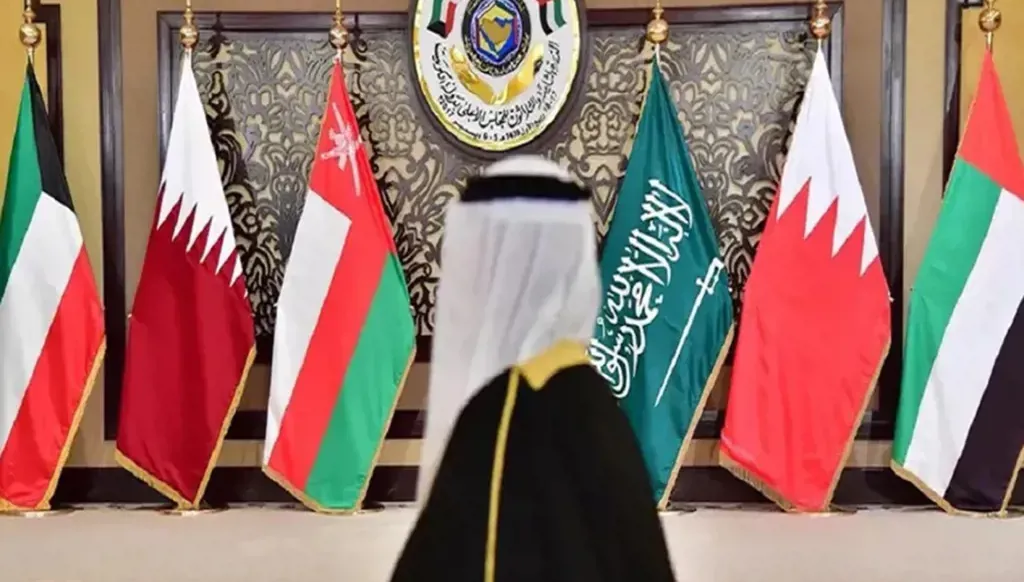


At a highly sensitive regional moment, the Gulf Cooperation Council countries are moving preemptively to protect their commercial lifelines, after Iran’s military escalation placed direct pressure on supply chains and shipping routes, particularly around the Strait of Hormuz.
In this context, the extraordinary meeting of GCC transport ministers gained significant importance, as it addressed the impact of current developments on trade, the readiness of border crossings, and mechanisms to handle operational challenges to ensure the continued smooth flow of strategic goods and prevent market disruptions.
Green corridors
As a practical outcome of the meeting, the activation of the “green corridors” protocol emerged as a key implementation tool, establishing fast-track routes for the movement of food, medicine, fuel, and essential goods through simplified customs and border procedures, reducing clearance times and easing pressure on supply chains.
The recommendations also included strengthening the use of alternative ports and secure transport routes, as well as developing coordination mechanisms to monitor and address any bottlenecks, according to GCC Secretary General Jasem Mohamed Al Budaiwi.
-.jpg)
Supply map and operational alternatives
As risks around the Strait of Hormuz escalate, green corridors have moved beyond being a regulatory measure to become part of a broader logistics network that reshapes the supply map through alternative ports and links them to overland routes, ensuring the continuity of trade flows even in worst-case scenarios of maritime disruption.
Despite the strategic importance of the Strait of Hormuz, Gulf countries have developed operational alternatives to reduce reliance on it. Most notably, Saudi Arabia’s East–West pipeline, Petroline, transports oil from Abqaiq to Yanbu with a capacity of 5 million barrels per day. In the United Arab Emirates, the Habshan–Fujairah pipeline serves as a key pillar of energy security, with a capacity ranging between 1.5 and 1.8 million barrels per day. Meanwhile, the Bab el-Mandeb strait remains part of the regional and international rerouting network, with estimated flows of between 6 and 9 million barrels per day through alternative routes, in addition to Egypt’s Suez Canal.
Initiatives and key ports
As part of efforts to develop alternatives that enhance supply chain resilience, GCC countries have begun launching practical initiatives to support their ports and logistics gateways. Saudi Arabia has introduced several measures, including extending the operational lifespan of trucks, allowing refrigerated trucks from GCC countries to enter empty to transport goods, and establishing storage and redistribution zones at King Abdulaziz Port with a 60-day exemption from storage fees. It has also provided dedicated operational corridors for containers from eastern ports to Jeddah Islamic Port.
Additionally, an international logistics corridor has been launched linking the Eastern Province to the Al Haditha border crossing in the north toward Jordan, along with another logistics corridor between Sharjah in the UAE and the Kingdom.
.png)
These moves take on added importance, as the total capacity of Saudi ports on the Red Sea coast exceeds 18.2 million containers annually. This enables the ports of Jeddah Islamic, King Abdullah, Yanbu Commercial, King Fahd Industrial, and Jazan to receive shipments from Asia, Africa, and Europe without passing through the Strait of Hormuz, and to connect them overland to Gulf markets.
In the United Arab Emirates, safe maritime and logistics alternatives are taking shape, with ports on the eastern coast becoming primary entry points for shipments before they are redirected to major logistics hubs. Khorfakkan Port stands out for transferring containers overland to Jebel Ali and Khalifa Port, while Fujairah Port represents a strategic pillar of energy security through the Habshan–Fujairah pipeline, which transports oil from Abu Dhabi to the eastern coast with a capacity of around 1.5 million barrels per day.
Oman, meanwhile, is emerging as a relatively secure maritime hub. The Port of Salalah supports land bridge routes toward the UAE and Saudi Arabia, Sohar Port facilitates the redistribution of shipments into Gulf markets, and Duqm Port absorbs excess container traffic and enhances supply chain flexibility when pressure builds on Salalah or Sohar.
Strategic alternatives
In this context, economic expert and analyst Wadah Al Taha, a member of the National Advisory Council at the CISI institute in the UAE, told Annahar that developing a unified logistics strategy for GCC countries is critically important in light of the complexities imposed by Iran on safe passage outside the framework of United Nations agreements.
He also emphasized the importance of having strategic alternatives, whether Saudi ports overlooking the Red Sea or ports along the Arabian Sea such as Fujairah and Khorfakkan in the UAE, as well as Oman’s ports. He expects these ports and overland routes to form a vital alternative network that ensures the continuity of supply chains if the situation escalates, and to strengthen the GCC’s ability to mitigate current negative repercussions, given the efficiency of these ports, alternative routes, and the agreements among member states.