Houthis, Iran, and the Red Sea: How proxy wars threaten Yemen and global trade

Opinion 01-04-2026 | 12:19

Houthis, Iran, and the Red Sea: How proxy wars threaten Yemen and global trade

From Bab al-Mandab to the Strait of Hormuz, Iran’s regional maneuvers risk deepening Yemen’s misery while testing the limits of international power and global commerce. 
Houthis, Iran, and the Red Sea: How proxy wars threaten Yemen and global trade
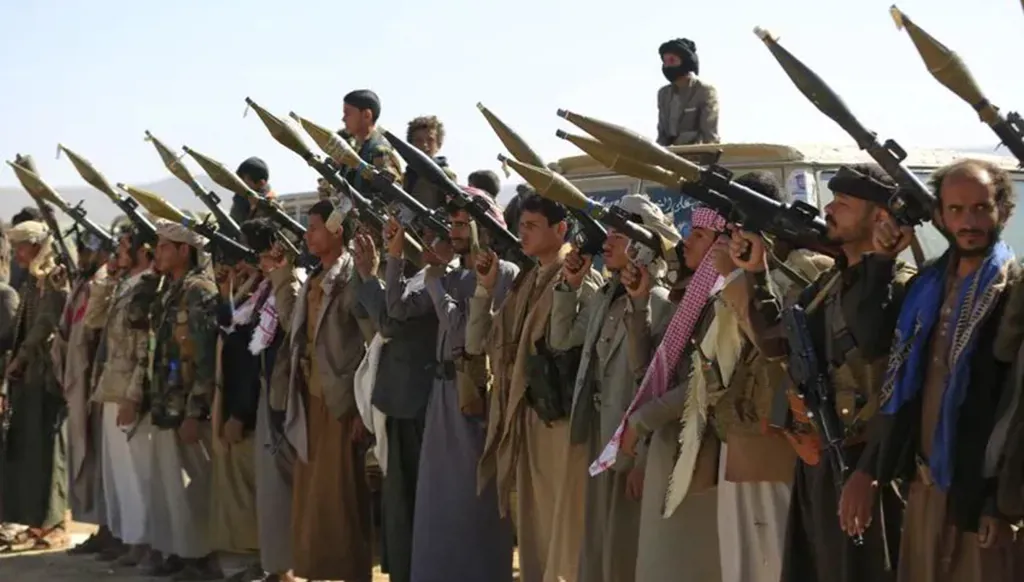
They have no value except in obstructing navigation in the Red Sea. (AFP)
Smaller Bigger


The issue is not about the Houthis entering the war that Iran is currently fighting through the missiles they launched. Rather, it concerns the timing of this entry and the location they targeted. This timing appears to be Iranian, coming a month after the war began, while the chosen target is the Red Sea, with its gateway at Bab al-Mandab.


Ultimately, directing one or more missiles from Yemen toward Israeli territory neither advances nor delays anything. Such action achieves nothing beyond signaling that the “Islamic Republic” seeks to demonstrate its control over Bab al-Mandab, which governs navigation in the Red Sea, just as it controls the Strait of Hormuz.

Just an annoyance


Iran is currently using the Strait of Hormuz to exert pressure on the entire world, particularly on the global economy. Why not do the same, through the Houthis, in the Bab al-Mandab Strait, which could serve to demonstrate the effectiveness of Iranian leverage in the region, including in Yemen?


The missiles launched by the Houthis may cause some annoyance to the Hebrew state, nothing more. However, this annoyance will not affect the current balance of power.


The Houthis have no value except in disrupting navigation in the Red Sea. Such navigation does not concern Israel, given the halt in activity at the port of Eilat. If the Houthis move to threaten navigation in the Red Sea, it will have negative repercussions on the Suez Canal, affecting Egypt, which has sought—and continues to seek—to stop the ongoing war between Iran on one side and the United States and Israel on the other. Disrupting navigation in the Red Sea will also impact global trade flows.


Iran wants to internationalize its war with the United States and Israel. This is what it threatened before the outbreak of the war in late February. The question now is to what extent the “Islamic Republic” will be able to use the cards it holds across the region—from Lebanon to Yemen, via Iraq.


Iran's desperation


The Houthis entered the war at the request of the Iranian “Revolutionary Guards.” Their entry after a full month since the war’s onset can only be explained by the state of desperation within the “Islamic Republic.” The “Islamic Republic” now appears to believe that consolidating its cards will strengthen its position in any negotiations with the United States. It seems that everything it considers a card can, in one way or another, be leveraged in negotiations aimed at preserving the regime in Tehran, which is now fully controlled by the “Revolutionary Guards.”


In Iran, the system has changed without truly changing, as the “Revolutionary Guards” have retained a façade in the form of the “Supreme Leader,” Mojtaba Khamenei. The new “Leader” has become little more than another card in the hands of the “Revolutionary Guards.”


Since the Houthis took control of Sana’a on September 21, 2014, they have sought to seize Aden, the southern capital, and the port of Mocha on the Yemeni side of Bab al-Mandab. The United Arab Emirates played a significant role, through effective Yemeni forces, in ousting the Houthis from Aden and Mocha.


Regional and international conditions prevented the ousting of the Houthis from the port of Hudaydah, which they still control, using it to disrupt navigation in the Red Sea. The question now is whether the Houthis’ presence on the Red Sea will benefit Iran in any way, or whether it will instead strengthen American and Israeli resolve for a military solution—through a ground invasion of certain islands near the Strait of Hormuz or the use of various types of tactical weapons.


There is no doubt that the “Islamic Republic” has endured more than expected against the United States and Israel. Yet the fact remains that it cannot endure indefinitely—not only because its cards are not truly cards, but also because the world will not allow the Strait of Hormuz to remain at its mercy, nor will the countries of the region remain at the mercy of its missiles and drones.


Furthermore, it has become evident that the “Islamic Republic” is willing to go to great lengths to defend the existing regime, which has effectively become a “Revolutionary Guards” regime—focused on denying the extent of its defeat and the concessions that such acknowledgment would entail. It is clear that this refusal to recognize defeat will have catastrophic consequences.


This issue will not be limited to Iran or Lebanon. It appears that the role designated for the Houthis will only plunge a already miserable country, Yemen, into further suffering—nothing more, nothing less.

Disclaimer: The opinions expressed by the writers are their own and do not necessarily represent the views of Annahar.

العلامات الدالة