

NAYA | The Women’s Museum: Unfolding another side to history


 Messenger
 Whatsapp
 Threads
 Email
Email
 Print
Print
 X
X
 Facebook
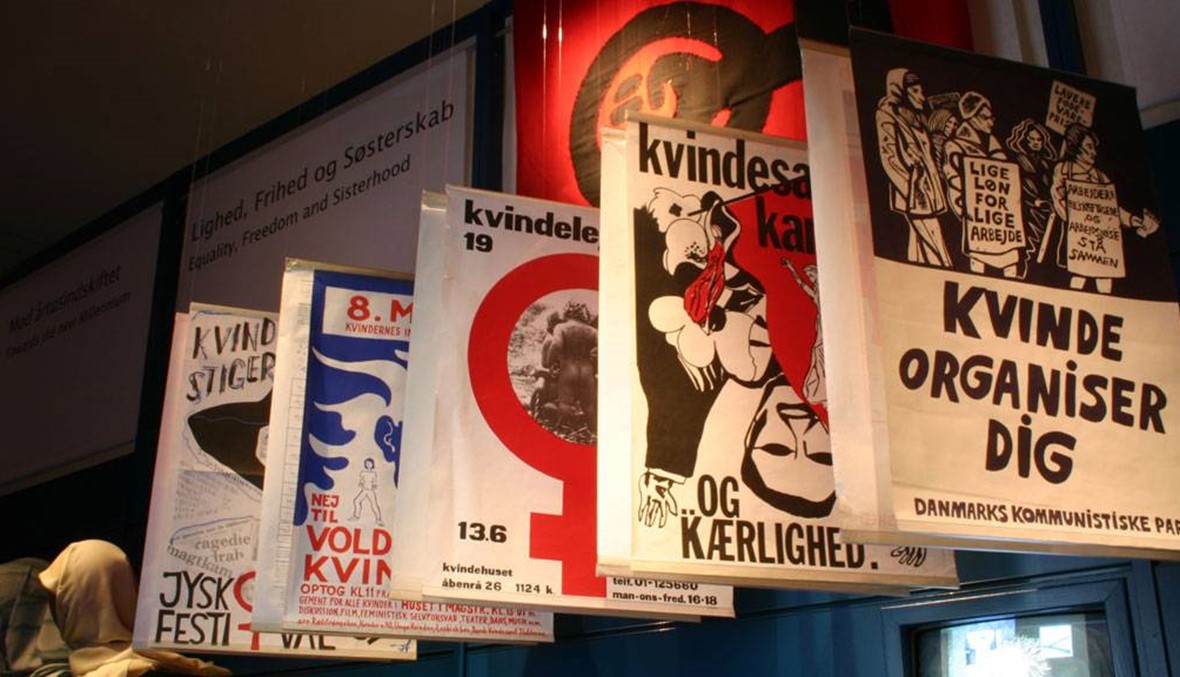


DENMARK: Ever since its inauguration in 1982, the Women’s Museum has thrived to uncover women’s history, while transcribing the present and echoing their future.
Located in the heart of Aarhus, Denmark, the museum is a natural offspring of the 70s women’s movement, a grassroots movement that intended to generate research and disseminate women’s lives in history.
“The place was created in order to enhance women’s history, women’s lives, and to show all of the things that have been eaten up, worn out, and the things that women have created over time yet, still remain invisible,” Julie Rokkjær Birch, Curator of the Women’s Museum, told Annahar. “It was a strong group of women who planned it all,” she added.
After 37 years of its initial launch, the purpose of the museum remains unchanged: to establish knowledge and generate a debate over ‘what does it mean to be born a girl?’
“We want to make people reflect on the importance of gender in society,” said Birch. “Our main goal is to acknowledge that we are all different, but we are all equal. And gender equality is for everyone, all genders.”
Each floor of the old-brick-museum narrates a different story, one that every woman from any part of the world can relate too. From harsh stories of women that hang as ornaments on different walls, to interactive games that shed light on under-reported matters, such as the gender gap and the effect gender has on societies, the museum bitterly recites a melancholic memoir to all its visitors.

Avant-garde exhibition at Denmark's Women's Museum. (HO)
Aside from that, there’s an authentic side to the humblest niceties in a women’s life such as her clothes, her toys, or even the birth pills and, the way those and many other things are integrated in the lives of all women defining who she is from her birth.
“All the unconscious bias that we have in society, we want to point them out. We want to make people look at the
world differently when they walk outside the door,” Birch told Annahar. “We want people to reflect on commercials, on industry and capitalism, and on how gender affects all aspects in society.”
Because the museum bears a massive responsibility in exhibiting women’s image, it’s a must that the former acknowledges that it might replicate gender inequality.
“We are very much aware that we are at risk of reproducing gender expectations, so we are very good at asking questions,” added Birch. “We are not here to say that we are right and to say that our opinion is the right one; we try to be very open-minded in terms of others’ ideas.”
Alongside exemplifying women, the future of the museum enumerates other genders, covering men and others.
“We want to deal with gender issues in the broader sense,” said Birch. “In 1982, there was a huge need to discuss women, but today, we discovered that the need is different,” adding that the museum will never mature or move forward if it were to only examine women without acknowledging the presence of other genders and the influence those have on women.

“We always talk about women as having their gender but, we never talk about men also having a gender,” said Birch. “Stressing and acknowledging the existence of the former might result in discussions on sexism; is it because masculinity is having a hard time that sexism exists? Might be.” Some future exhibitions adopted by the museum will discuss similar questions.
Despite it being situated in Europe, the museum recognizes itself as an international house and a social hub.
“We have a very international mindset. Other museums worldwide are using our museum as a model and are praising us for recording the history of gender,” Birch said. “It’s not something that should be taken for granted; we are aware of that and we work up to that standard.”
--------
Welcome to “Naya,” the newest addition to Annahar’s coverage. This section aims at fortifying Lebanese women’s voices by highlighting their talents, challenges, innovations, and women’s empowerment. We will also be reporting on the world of work, family, style, health, and culture for Lebanese women and various international items of women's news . Naya is devoted to women of all generations — Naya Editor, Sally Farhat: Sally.farhat17@gmail.
Naya on Social Media:
Twitter: @BeirutNaya
Instagram: @NayaBeirut