The Evolution and Strategic Impact of Nuclear Weapons


شارك على
 مسنجر
مسنجر
 واتساب
 ثريدز
ثريدز
 بريد إلكتروني
 الطباعة
شارك على




Annahar Research and Creativity - ARC
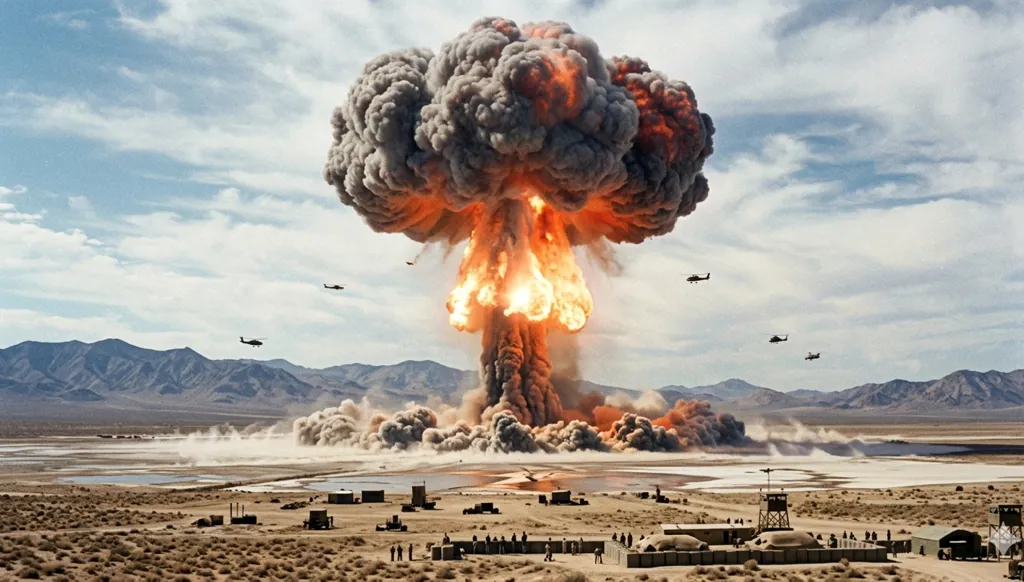
Nuclear weapons have profoundly shaped the course of international politics, security doctrine, and global ethics since their emergence in the twentieth century. Their development and spread transformed scientific discovery into instruments of unparalleled destructive power, redefining the meaning of warfare and deterrence. From their origins in groundbreaking nuclear research to their central role in modern strategic plans, these weapons continue to influence the behavior of states and the structure of the international system. An exploration of their historical evolution, global distribution and strategic purposes reveals the enduring impact of nuclear arms on world affairs.
The origins of nuclear weapons can be traced to the 1938 discovery of nuclear fission in Germany, a breakthrough that revealed the possibility of releasing enormous amounts of energy through atomic chain reactions. Alarmed by the military implications of this discovery, scientists such as Leo Szilard urged the United States government to accelerate research into atomic weapons. This led to the Manhattan Project in 1942, a highly secretive U.S. military initiative that brought together leading scientists and vast industrial resources. The project culminated in the successful Trinity test on 16 July 1945, marking the world’s first detonation of a nuclear device. In the years that followed, the Soviet Union (1949), the United Kingdom (1952), France (1960), and China (1964) developed their own nuclear capabilities, initiating a global arms race.
As of 2026, nine countries are generally recognized as possessing nuclear weapons: United States, Russia, China, France, United Kingdom, India, Pakistan, Israel (which maintains a policy of deliberate ambiguity), and North Korea. Together, these states possess an estimated 12,000 nuclear warheads, with the United States and Russia accounting for nearly 90 percent of the global total. In addition, several countries host nuclear weapons under alliance arrangements, while dozens more operate civilian nuclear energy programs, reflecting the dual-use nature of nuclear technology.
The strategic objectives behind nuclear weapons programs vary significantly according to national security priorities. The United States and Russia maintain a “nuclear triad” consisting of land-based intercontinental ballistic missiles, submarine-launched missiles, and strategic bombers. This structure ensures a survivable second-strike capability, reinforcing deterrence through redundancy. For Washington, nuclear weapons also underpin extended prevention commitments to allied nations. Meanwhile, Moscow views its arsenal as central to preserving great-power status and offsetting conventional military asymmetries.
China has historically adhered to a “No First Use” doctrine, pledging not to initiate nuclear conflict, though it is currently expanding and modernizing its arsenal to enhance survivability. The United Kingdom and France maintain independent nuclear deterrents as symbols of sovereignty and strategic autonomy. In South Asia, India and Pakistan developed nuclear capabilities largely in response to one another, creating a delicate balance of prevention in a region marked by recurring tensions. In contrast, North Korea’s nuclear program is widely understood as a mechanism for regime survival, aimed at deterring external intervention. Furthermore, Israel follows a policy of nuclear opacity, neither confirming nor denying possession while maintaining what analysts describe as an existential deterrent.
Nuclear weapons have been used in combat only twice in history, both instances occurring during the final days of the Second World War. On 6 August 1945, the United States dropped the uranium-based bomb “Little Boy” on Hiroshima. Three days later, the plutonium-based “Fat Man” bomb was detonated over Nagasaki. The stated rationale for these bombings was to compel Japan’s immediate surrender and avoid a prolonged invasion that could have resulted in massive casualties. Some historians have also argued that the bombings served as a demonstration of power to the Soviet Union, shaping the geopolitical landscape of the postwar era.
The human and environmental consequences were catastrophic. By the end of 1945, approximately 140,000 people had died in Hiroshima and 74,000 in Nagasaki. Entire urban areas were destroyed by blast waves and firestorms, while survivors suffered severe burns and injuries. In the months and years that followed, many victims developed acute radiation syndrome, leukemia, and other cancers. Long-term studies of survivors, documented elevated rates of illness and enduring psychological trauma. The bombings thus revealed not only the destructive force of nuclear weapons but also their profound humanitarian impact.
Beyond their immediate effects, nuclear weapons fundamentally transformed international relations. The Cold War era was characterized by the doctrine of Mutual Assured Destruction (MAD), under which the prospect of total extinction deterred direct conflict between nuclear-armed superpowers. This precarious balance contributed to strategic stability but also fostered persistent anxiety over accidental or miscalculated war. Efforts to mitigate these risks led to the establishment of arms control agreements and the Nuclear Non-Proliferation Treaty (NPT), which sought to prevent the spread of nuclear weapons while promoting peaceful nuclear cooperation and disarmament.
Today, the world confronts new challenges in what some analysts describe as a “third nuclear era.” Technological advancements, including cyber capabilities and artificial intelligence, may compress decision-making timelines and introduce new vulnerabilities into nuclear command-and-control systems. Meanwhile, geopolitical rivalries and regional conflicts continue to test the resilience of the non-proliferation regime.
In conclusion, nuclear weapons remain among the most consequential inventions in human history. They have deterred large-scale wars between major powers while posing existential risks to civilization. Understanding their origins, strategic logic, and humanitarian consequences is essential for informed policymaking and for sustaining global efforts to reduce the likelihood of nuclear catastrophe.
العلامات الدالة
الأكثر قراءة